Fear Keeping Employees Silent on Workplace GBV, Despite Knowing Policies
By Delicious Mathuthu — Gweru stakeholders are calling for stronger workplace gender-based violence policies after a survey by Women in Communities (WICO) found high awareness of workplace GBV but widespread fear of reporting. Government, local authorities, civil society and private entities have been urged to strengthen reporting systems, survivor support, confidentiality and accountability to ensure workplace GBV policies are implemented effectively.
 Delicious Mathuthu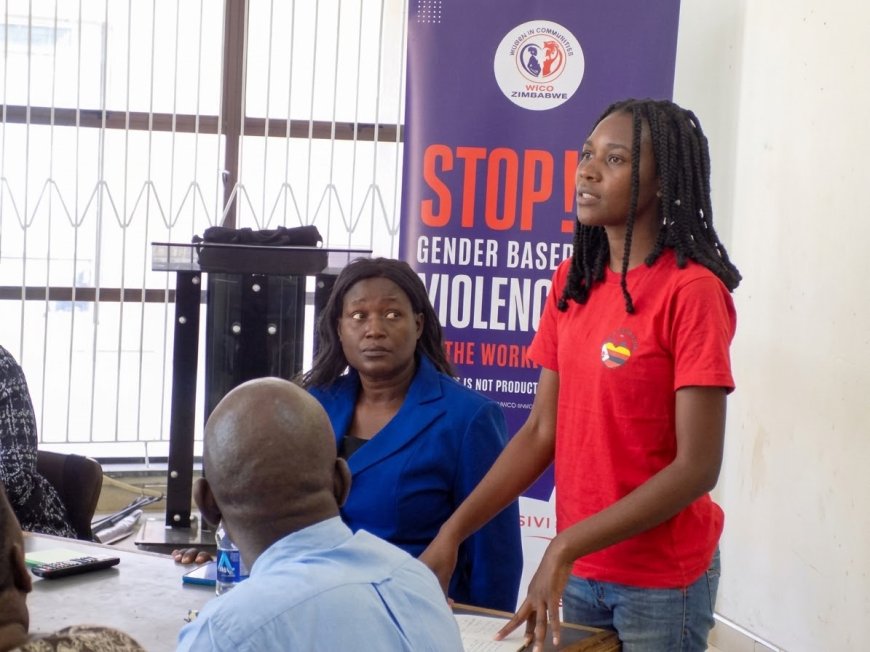
Gweru — Gender-based violence continues to thrive quietly in Zimbabwean workplaces, with employees fully aware of the problem yet deeply reluctant to report it for fear of victim-blaming and retaliation, a new survey has revealed.
Women in Communities Zimbabwe (WICO), working with the National Association of Non-Governmental Organisations (NANGO) Midlands Region, presented the findings at a Workplace GBV Policy Review and Reflection Meeting held recently at the Ministry of Women Affairs, Community, Small and Medium Enterprises Development boardroom in Gweru.
The session brought together representatives from Gweru City Council, Musasa Project, Sexual Rights Centre, Multi Aid Support Organisation (MASO), Catholic Commission on Justice and Peace (CCJP), Young Man Christian Association (YMCA), the Ministry of Social Welfare and other partners. Also present was WICO Director, Rebecca Chirenga.
WICO Monitoring and Evaluation Officer, Tendai Ncube, outlined the Knowledge, Attitudes and Practices (KAP) survey findings, saying despite a high percentage of workers knowing what GBV is, they are reluctant to come forward once affected.
“89.3% of respondents knew what GBV in the workplace is,” she said.
Despite most people resenting GBV in the workplace, most tend to feel helpless.
She said while the 89% claimed they would report GBV, the figure dropped sharply if it involved their own case.
Only 7.1% of respondents in the KAP survey said they might consider reporting, and 4% said they would not.
“There is fear in the system… the 89 percent said they will report if it’s not their case,” Ncube explained.
“There is also victim-blaming syndrome. Respondents said they don’t report because they fear being blamed," she said.
Verbal abuse ranked as the most common form, followed by emotional and psychological abuse.
Farai Marembo, representing the Ministry of Women Affairs, opened the meeting by stressing the need for collective action.
“The issue of gender-based violence in the workplace is critical and it needs all our attention,” he said.
“Following our last meeting, there was a need for us all to share the key findings and outline the proposed way forward for strengthening prevention, reporting, and response," Marembo said.
Gender consultant, Locadia Mavhudzi, who was the core facilitator for the meeting, said it's time for a shift from awareness to responsibility on workplace GBV.
“We spend 80% percent of our time at the workplaces and 20% at home,” she said.
“A lot of GBV is happening at the workplaces and we need to be open. This affects the nation, affects our productivity as affected individuals, our wellness, mental, physical and emotional wellness," Mavhudzi said.
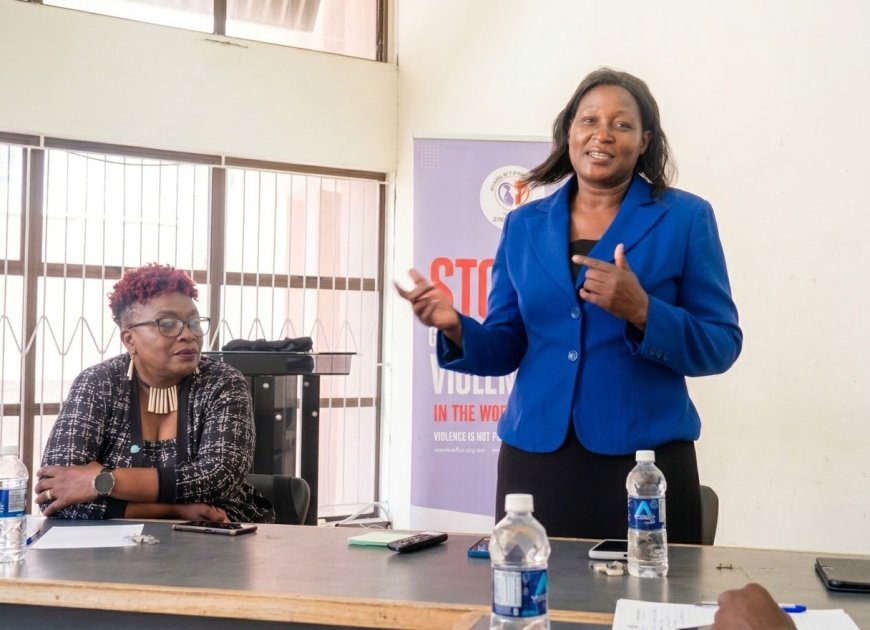 Gender Consultant, Locadia Mavhudzi (standing) during the WICO workplace GBV policy review and reflection meeting.
Participants identified how institutions can unintentionally enable workplace GBV through abuse of authority, unequal power relationships, poor supervision, weak reporting systems, victim-blaming and the normalisation of sexual jokes.
Barriers to reporting included fear of victimisation, lack of knowledge among junior staff and graduate trainees, fear of losing jobs and lengthy investigation processes.
Mavhudzi said risks exist across physical spaces such as offices, corridors, bathrooms, parking areas, field visits, conferences and staff retreats, as well as in the digital environment through WhatsApp groups, emails and private messages.
She said power imbalances between managers and subordinates, supervisors and interns, or senior and junior staff further heighten vulnerabilities.
Workplace policies must align with the Zimbabwe Constitution and the Labour Amendment Act of 2023, she said, which explicitly addresses gender-based violence and harassment.
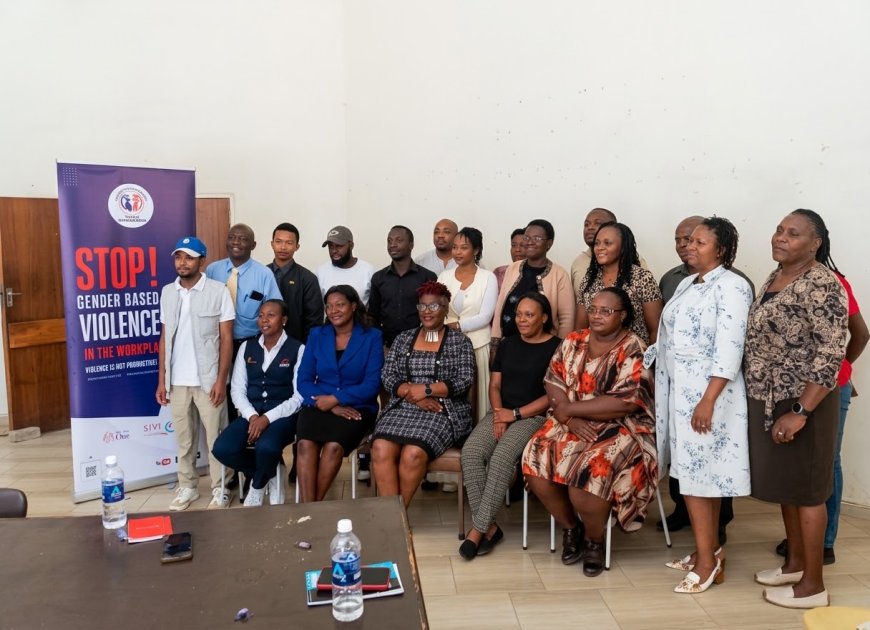 Participants who were part of the WICO workplace GBV policy review and reflection meeting.
She said policies should include a clear statements, prohibited conduct, have multiple reporting channels, survivor support pathways, confidentiality, accountability mechanisms, conflict-of-interest safeguards and fixed turnaround times.
“We can alm agree that reporting is not easy; it is the duty of the organisation to make sure the reporting is systemic and easy to follow,” Mavhudzi said.
NANGO Regional Coordinator, Honour Sinampande, speaking on behalf of Regional Chairperson, Charles Mazorodze, called for action beyond paper commitments.
“Having policies on workplace GBV, sexual harassment, safeguarding and grievance handling is only the beginning.
"What matters most is how effectively these policies are understood, implemented and accessed by employees in practice,” he said.
National data reinforces the WICO KAP findings, line sexual harassment rates in Zimbabwean newsrooms which reached 42% in 2025, while earlier surveys showed significant under-reporting across sectors.
Stakeholders agreed that policies exist in many institutions but remain poorly implemented, leaving workers exposed in the very places where they spend most of their lives.