Minister Moyo Launches AI‑Driven Energy Vision as Zimbabwe Positions SAEIS 2026
Zimbabwe's Energy Minister July Moyo calls for AI-driven clean energy, regional investment and sustainable infrastructure at the Southern Africa Eco-Infrastructure Summit (SAEIS) 2026 in Victoria Falls, as Government positions the event as Southern Africa's premier eco-infrastructure investment platform.
 Dumisani Ndlovu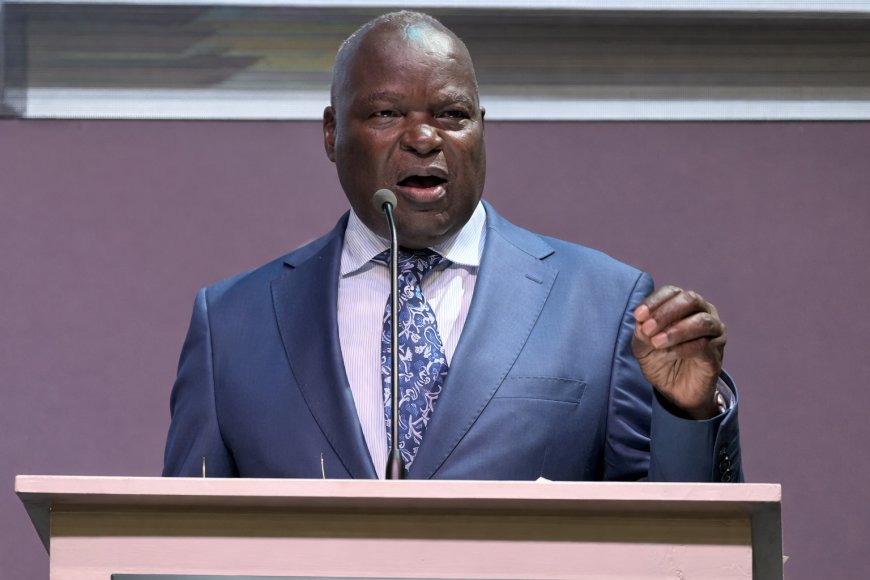
Victoria Falls — Zimbabwe has reaffirmed its commitment to leading Southern Africa's transition to sustainable infrastructure and clean energy, with the Ministry of Energy and Power Development using the Southern Africa Eco-Infrastructure Summit (SAEIS) 2026 to unveil an ambitious vision that places artificial intelligence (AI), renewable energy and regional investment at the centre of the region's future development.
Officially opening the three-day summit in Victoria Falls on Wednesday, July 15, on behalf of the Government, the Minister of Energy and Power Development, Honourable July Moyo, said sustainable infrastructure is no longer an option bit an economic necessity and a strategic imperative as Southern Africa grapples with rising energy demand, rapid urbanisation, climate change and widening infrastructure financing gaps.
Held under the theme "Reimagining Southern Africa's Future: AI-Driven Eco-Infrastructure for Sustainable Real Estate and Development" and the sub-theme "Energy Efficiency and Clean Energy as Enablers of Sustainable Infrastructure and Real Estate Development," the summit has drawn government leaders, municipalities, development finance institutions, investors, utilities, technology firms, academia, real estate developers and sustainability experts from across Africa and beyond.
The event follows the Ministry of Energy and Power Development's formal endorsement of SAEIS 2026, positioning it as Southern Africa's premier eco-infrastructure investment platform and aligning it with Zimbabwe's Vision 2030 agenda to accelerate infrastructure development, industrialisation, energy security and sustainable economic growth.
As Lead Policy Ministry and Co-Host, the Ministry is spearheading discussions aimed at connecting policymakers, financiers, investors and project developers to unlock strategic infrastructure opportunities across Zimbabwe and the wider region.
Addressing delegates, Minister Moyo said reliable, affordable and sustainable energy remains the backbone of economic transformation.
"Without reliable, affordable and sustainable energy there can be no industrialisation, no competitive agriculture, no digital economy, no quality healthcare, no modern education and no inclusive economic growth," he said.
He said Zimbabwe's National Development Strategy 2 identifies energy infrastructure as a key driver of economic transformation, while the country's National Energy Compact under the Mission 300 initiative provides a roadmap to transform the energy sector by 2030.
The compact targets expanded electricity access for households, institutions and productive sectors, accelerated renewable energy deployment, improved energy efficiency, modernised transmission and distribution infrastructure, increased private sector investment, stronger regional electricity trade, wider adoption of clean cooking technologies and improved financial sustainability of the electricity sector.
Minister Moyo also said Government is already implementing these commitments through transmission and distribution upgrades, grid reinforcement projects and expanded Independent Power Producer programmes, particularly captive power plants, to improve electricity reliability while integrating more renewable energy into the national grid.
He said mini-grid and off-grid renewable energy systems are also being deployed to communities beyond the national electricity network, supporting Zimbabwe's commitments under the Paris Agreement and Sustainable Development Goal Seven on universal access to affordable and clean energy.
Recognising that energy efficiency offers one of the cheapest ways to meet growing electricity demand, Moyo described it as the world's "first fuel."
He highlighted the recently launched National Energy Efficiency Policy, which promotes efficient appliances, industrial energy management, efficient lighting, reduced electricity consumption in public institutions and green building practices.
The Minister also revealed that Zimbabwe is working with the African Energy Commission (AFREC) to develop modern national building energy codes that will improve the performance of new buildings while ensuring they remain affordable, comfortable and energy efficient.
Government, he added, continues to strengthen the country's legal and regulatory framework to provide greater policy certainty for investors while reforms under the Electricity Act encourage increased private sector participation in electricity generation, transmission and distribution.
The Zimbabwe Electricity Transmission and Distribution Company (ZETDC) is targeting more than 300,000 new household electricity connections annually through partnerships with independent developers that will finance, build and maintain electricity networks in underserved urban and peri-urban communities.
Artificial Intelligence (AI) featured prominently throughout the Minister's address.
He said AI is transforming infrastructure development by improving electricity demand forecasting, enabling predictive maintenance of transmission networks, optimising renewable energy integration, supporting intelligent buildings, improving urban planning and powering smart transport systems.
He called for stronger collaboration between governments, universities, technology companies, utilities and innovators to develop African solutions tailored to the continent's infrastructure needs.
Minister Moyo also reaffirmed Government's commitment to strengthening public-private partnerships, improving project preparation and creating bankable investment opportunities capable of attracting long-term finance.
He described the summit's Investment Arena as a key platform linking credible projects with credible investors, encouraging financiers to explore Zimbabwe's growing pipeline of renewable energy, transmission, housing, digital infrastructure and sustainable urban development projects.
One of the summit's major attractions is the launch of the SAEIS Investment Arena Challenge, the first live eco-infrastructure investment pitching platform in Southern Africa.
Widely described as a "Shark Tank for Infrastructure," the initiative gives ten shortlisted projects from across the region an opportunity to pitch directly before investors, development finance institutions, corporate executives, government ministers and infrastructure specialists seeking investment-ready projects.
The challenge showcases projects in clean energy, smart cities, climate-resilient infrastructure, digital connectivity, sustainable real estate, water and sanitation, while providing developers with direct access to financiers and strategic partners capable of accelerating implementation.
The summit also features a dedicated Future Leaders Track, providing Universities, research institutions, start-ups and young innovators with an international platform to present technologies and ideas capable of shaping Africa's sustainable future.
SAEIS 2026 has attracted influential regional and international stakeholders, including former European Union Head of Development Cooperation for East Africa Caroline Adriaensen and representatives from Greenpeace Africa, who are contributing to discussions on climate action, responsible infrastructure investment and environmental accountability.