Australian Advocates Demand Urgent Action at World's Largest Refugee Camp
Human rights advocates from Settlement Services International and Amnesty International Australia have called for urgent regional action from Cox’s Bazar refugee camp, warning that dwindling funds and shrinking resettlement pathways have pushed the region to a breaking point.
 Harry Taruva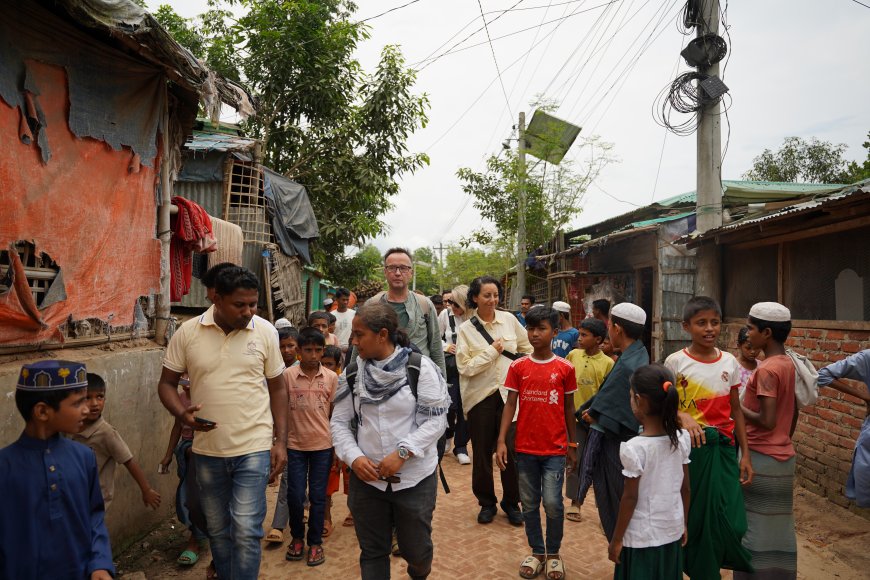
Cox's Bazar, Bangladesh – A delegation of prominent Australian humanitarian advocates stationed at the world’s largest refugee camp has issued an urgent appeal for collective regional action to combat the unprecedented growth of displaced populations across the Asia-Pacific.
Representatives from Settlement Services International (SSI) and Amnesty International Australia, joined the Asia Pacific Refugee Rights Network (APRRN) in Cox’s Bazar to issue the warning.
The joint mission coincides with the release of the United Nations High Commissioner for Refugees (UNHCR) annual Global Trends report, which monitors international forced displacement.
Advocates warned that the humanitarian infrastructure in the region is nearing a breaking point due to a severe convergence of shrinking third-country resettlement pathways, systemic funding cuts and hardening political resistance to international refugee protections.
The strain is visible in Cox’s Bazar, which currently shelters more than 1.2 million Rohingya refugees who fled military crackdowns and genocide in neighbouring Myanmar.
The camp's infrastructure has been pushed to its limits following the arrival of an additional 150,000 Rohingya since early 2024, with no clear diplomatic framework in place for a safe return home.
"At a time when displacement is reaching record levels and international support is under pressure, countries like Australia have an opportunity to step up with regional actors and help shape a more coordinated and compassionate regional response," Violet Roumeliotis, Chief Executive Officer of SSI, Violet Roumeliotis said.
Roumeliotis said the Australian government possesses distinct legislative and diplomatic levers to demonstrate regional leadership, specifically by increasing its humanitarian intake, expanding complementary visa pathways and advancing regional responsibility-sharing frameworks.
The delegation highlighted the growing reliance on refugee-led organizations (RLOs) to maintain basic protection and social infrastructure as formal international institutions face funding shortfalls and retreat from historical commitments.
"I have long believed, and my recent visit reinforced, that refugee-led organisations are among the most needs-based, practical and community-centred actors in humanitarian response," said Hafsar Tameesuddin, a Rohingya refugee and APRRN’s Co-Secretary General.
"They understand their communities best and consistently deliver meaningful impact," Tameesuddin said.
Tameesuddin added that APRRN will continue to advocate for the decentralisation of humanitarian funding and the localisation of executive decision-making to recognise displaced communities as equal partners in aid delivery.
The conditions on the ground remain severe, with advocates describing overcrowded shelters and a critical lack of basic educational infrastructure for the youth population trapped inside the perimeter.
"The Rohingya people cannot remain trapped in refugee camps forever," said Zaki Hairari, Refugee Rights Campaigner for Amnesty International Australia.
"The international community must increase humanitarian support, expand resettlement pathways and invest in education and livelihoods," Hairsri said.
The UNHCR Global Trends report is expected to formalise the field observations, signaling a broader crisis of containment across the Asia-Pacific if third-party nations fail to expand legal resettlement channels.