Parliament Approves Controversial Mnangagwa Presidential Term Extension
The Parliament of Zimbabwe has passed the controversial Constitution Amendment Bill No. 3 (CAB3) with a 216 to 42 vote, extending governance terms, including itself, to seven years and moving presidential elections to Parliament.
 Harry
Harry
By Own Correspondent
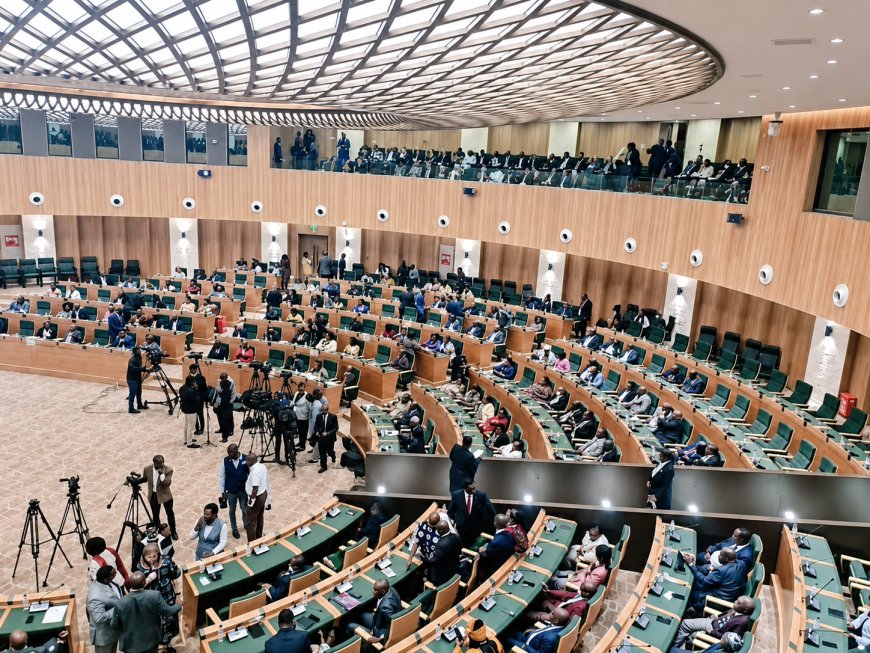
Harare — The National Assembly has passed the controversial Constitution of Zimbabwe Amendment Bill No. 3 (CAB3), securing the mandatory two-thirds majority required, which the ruling ZANU PF party says will refine the country's supreme law and align it with the national developmental milestones of Vision 2030.
Following rigorous and allegedly biased legislative debate, a total of 216 lawmakers voted in favour of the bill during the third reading stage, while 42 legislators voted against it.
Out of the 280 members constituting the National Assembly, 22 Members of Parliament Ps) abstained from voting.
The outcome cleared the constitutional threshold for amending the supreme law, allowing the piece of legislation to advance to the Senate.
First gazetted on February 16, 2026, the bill underwent a reported restrictive, violent and politically charged statutory 90-day public consultation process which saw journalists and alternative voices being intimidated and quashed by suspected ZANU PF activists across the country's administrative districts.
This followed its formal introduction to the house by the Ministry of Justice, Legal and Parliamentary Affairs.
The structural adjustments brought by CAB3 introduce key institutional changes, including transitioning the election of the President from a direct popular poll to an indirect parliamentary electoral system.
Under the new framework, the Head of State will be elected by a joint sitting of the National Assembly and the Senate.
The bill also broadens technical expertise within the legislative body by allowing the President to appoint ten additional Senators, expanding the upper house from 80 to 90 members.
Furthermore, it harmonises governance timelines by extending the official terms of office for the President, Parliament and local authorities from five years to seven years.
Presenting the bill for its final stages, the Minister of Justice, Legal and Parliamentary Affairs, Honorable Ziyambi Ziyambi, dismissed assertions that the changes compromised the nation's democratic structures, saying the reforms are meant to insulate the country from recurring electoral hostilities, which some opposing MPs dismissed.
"This bill introduces a set of constructive reforms that, taken together, reinforce constitutional governance, strengthen democratic structures, clarify institutional mandates and harmonise Zimbabwe's constitutional order with tested and successful practices in other progressive nations," Minister Ziyambi claimed.
"First, it does not give the President a term extension or a third term.
"Second, it does not take away the right to vote, which is enshrined in the time honoured principle of universal adult suffrage.
"Third, it does not at all concern itself with succession in any political party. Fourth, it does not postpone the nation’s elections to some distant or unknown year.
"Fifth, it does not concentrate power, or the running of our elections, in the hands of the President," Minister Ziyambi said.
During the floor debates, ZANU-PF legislator and analyst Dr. Masimba Mavaza lauded the passage of the bill as a necessary step toward absolute policy continuity and structural stability.
"Transitioning to an aligned governance framework introduces a parliamentary pathway for electing the President, which will reduce political tension and align Zimbabwe's governance system with the ambitions of Vision 2030," Dr. Mavaza stated.
However, the legislative overhaul drew sharp criticism from opposition benches and civil society groups who expressed reservations over the reduction of direct public participation in the executive selection process.
Citizens Coalition for Change (CCC) Legislator, Gift Ostallos Siziba, argued that the bill concentrated substantial authority within state structures.
"One of the things that we must be honest about is that CAB3 is not for the people, and it is not coming from the people.
"It is purely for the ZANU-PF elites," Siziba said, adding that "Our people are not going to be voting for the President. It's going to be a few people who take part in that process."
In contrast, alternative political figures called for absolute transparency during the voting process to safeguard the independent expression of lawmakers.
Movement for Democratic Change (MDC) leader, Douglas Mwonzora, confirmed that his party had engaged the presiding officers of the house to seek specialised voting procedures.
"I wrote to the Hon. Speaker of Parliament to request that the voting by MPs on CAB3 be by secret ballot," Mwonzora said.
"No one will lose anything if voting is by secret ballot," he said at the time, however the voting was open.
Administratively, the bill also restructures specific electoral functions. It shifts the compilation of the voters' roll and voter registration from the Zimbabwe Electoral Commission (ZEC) back to the Registrar-General's Office, while establishing a standalone Zimbabwe Electoral Delimitation Commission (ZEDC) tasked specifically with boundary management.
Following its successful passage through the National Assembly, the bill is scheduled for transmission to the Senate, where it is widely expected to secure identical legislative endorsement before being sent for presidential assent.