Mahere Blasts Govt’s Disability Support As ‘Political Theatre’
n By Dumisani Ndlovu n nn n Harare - Recent government distribution of cars and wheelchairs to a small group of young people with disabilities at State House has ignited a fierce political backlash, with opposition leader and advocate, Fadz
 anostrofy
 By Dumisani Ndlovu
Harare - Recent government distribution of cars and wheelchairs to a small group of young people with disabilities at State House has ignited a fierce political backlash, with opposition leader and advocate, Fadzai Mahere, dismissing the event as a “hollow spectacle” and political tokenism.
Mahere accused the government of neglecting Zimbabwe's 1.4 million citizens living with disabilities, arguing that the selective donations reduce vulnerable persons to "props in political theatre" used to score cheap points, rather than providing the dignity of sustainable, policy-driven support.
While the government framed the distribution as evidence of its commitment to inclusive development, Mahere detailed a long list of systemic failures, stressing that sporadic acts of charity cannot substitute for deliberate state investment.
Mahere highlighted that despite 9.5 percent of the population living with a disability, there remains no robust national disability policy to guarantee equal access to essential services like education, healthcare, and mobility.
She condemned the indignity faced by citizens forced to beg for basic assistive devices on social media, contrasting this crisis with the vast sums spent annually on government luxury vehicles.
She also pointed to the effective "invisibility" of the Department of Social Welfare in communities and the lack of transparent accounting for funds meant to support vulnerable citizens.
“The silence of the Department of Social Welfare is deafening,” Mahere stated.
She was critical of government's tax policy affecting persons with disabilities (PWDs).
She condemned the imposition of a 15 percent Value Added Tax (VAT) on essential items such as wheelchairs, braille materials, and other assistive devices, a tax set to rise to 15.5 percent in the 2026 budget.
She argued that exempting these necessities from tax would be a far more sustainable and equitable way to empower citizens than donating cars, many of which are inaccessible to large portions of the disabled community.
The opposition leader also noted that disability is more prevalent in rural areas, where children with mobility challenges are often left behind while their peers walk over ten kilometres to school.
Instead of creating a national disability register to ensure equitable support across all provinces, Mahere argued the government has chosen only to reward those with high visibility and social media followings.
Education remains a critical area of failure, according to Mahere, noting that only one in three children with disabilities are currently enrolled in school.
She questioned the fate of the remaining two-thirds, reiterating that inclusive education requires deliberate, large-scale investment, not just occasional handouts.
Mahere also pointed out the systemic exclusion of the deaf community, citing the absence of mandatory sign language interpretation at major state events and the failure to introduce sign language teaching in schools.
Shifting the focus to national finances, Mahere said the issue is fundamentally one of leadership and resource allocation, not charity.
She highlighted that Zimbabwe loses approximately US$2.2 billion annually to corruption, citing a recent example where US$7 million was allegedly looted in a fraudulent goat scheme.
“That US$7 million could have purchased over 40,000 wheelchairs and spared citizens the indignity of begging online,” she said.
“Arbitrary, stunt-master handouts can never substitute the need for deliberate, government-led support and a sustainable disability policy.”
Mahere's hard-line critique drew immediate response from the disability advocacy community.
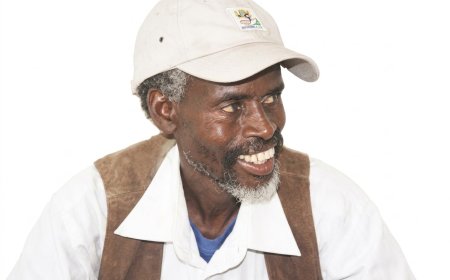
Tongai Gwaze (pictured), popularly known as Greaterman, of the Greatman Foundation, took to his Facebook page to directly address the opposition leader.
While acknowledging her potential for positive change, Greatman pivoted the call for action back onto Mahere, requesting that she "lead by example" and provide material support."
Dear Fadzai Mahere, I hope this message finds you well. I truly believe that your leadership has the potential to bring positive change to our community.
"As a leader, I humbly request that you lead by example and demonstrate your commitment to serving others. I am reaching out to you on behalf of Greatman Foundation, and we are in need of wheelchairs to support individuals with mobility challenges.
"If you could kindly consider providing 20 wheelchairs, it would be a tremendous contribution to our cause.
"Your support would not only be a significant help to those in need but also demonstrate your dedication to serving others. We believe that true leadership is about empowering others and making a positive impact. Thank you for considering our request. We look forward to your response," he said.
The appeal attempted to challenge Mahere’s focus on policy by demonstrating a pressing need for immediate, material charity.
Mahere concluded her remarks by stressing that true inclusion can only be achieved when the government abandons token gestures and embraces transparent, sustainable policies that prioritize the rights and dignity of every citizen, ensuring no one is left behind.