Arts Visionary Cont Mhlanga Remembered
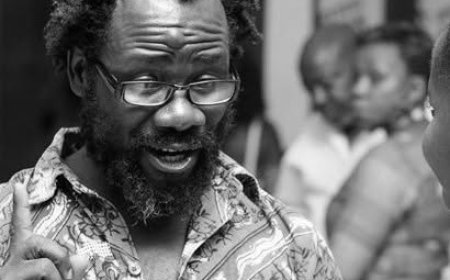
A memorial lecture held in Bulawayo has honoured the late theatre icon, Cont Mhlanga, highlighting his transformative role in Zimbabwean theatre as a tool for social commentary, accountability and community development.
 Dumisani Ndlovu
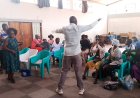
Bulawayo — The legacy of late theatre icon Cont Mhlanga came under renewed focus, Sunday, August 16, as artists, academics, politicians and civil society gathered in Bulawayo for a memorial lecture celebrating a man whose work transformed Zimbabwean theatre into a powerful vehicle for social commentary, accountability and community development.
Organised by the Public Policy and Research Institute of Zimbabwe (PPRIZ) as part of its annual remembrance of Mhlanga, the memorial lecture was delivered by multi-award-winning musician and actor, Albert Nyathi, who described the late playwright as a visionary leader whose greatest contribution was giving ordinary people, particularly young people in the townships, the confidence to dream.
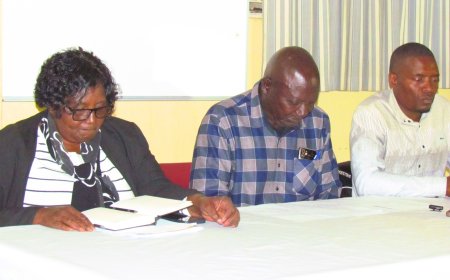
The gathering is held every August, the month Mhlanga died, attracted prominent figures including former Minister and former PPRIZ Executive Director Gordon Moyo, Member of Parliament Descent Collins Bajila, Dr. Qhubani Moyo, Dr. Zwide Kalanga Khumalo, Chief Dakamela, UmAfrikhazi, members of the Mhlanga family, academics and civil society representatives.
For many in Zimbabwe's creative sector, Mhlanga, affectionately known as Malume, was much more than a playwright, he was a pioneer who helped change perceptions of the arts at a time when theatre and other creative pursuits in the townships were largely dismissed as hobbies rather than viable careers.
Nyathi said Mhlanga's leadership was rooted in a clear vision, arguing that a leader without dreams had already failed before beginning the journey.
Mhlanga's contribution was particularly evident through his commitment to theatre for development and advocacy, using performance to confront social and political realities while encouraging communities to question leadership and demand accountability.
His enduring influence is illustrated by the continued relevance of his 1998 play, The Members, which was recently revived by theatre guru, Daves Guzha, and staged at Theatre in the Park in Harare.
Nearly three decades after it was first performed in Bulawayo and Harare, the play continues to resonate with audiences because of its examination of the relationship between elected representatives and the communities that put them into office.
The production centres on a character, a Member of Parliament, Mujaji, who is an arrogant legislator who abandons his constituency after winning an election and becomes inaccessible to the people he represents.
One of the central conflicts revolves around the community's struggle to secure water, with villagers eventually mobilising their own resources to address the problem after repeated attempts to engage their MP fail.
When the project succeeds, Mujaji attempts to claim credit for the community's achievement, only to be rejected by voters at the next election.
The storyline has ensured that The Members remains more than a historical theatrical production. Its themes of political accountability, constituency engagement, service delivery and responsible leadership continue to speak to contemporary Zimbabwe.
The revival, which featured Guzha alongside Memory Kumbota, Eunice Tava and Zenzo Nyathi, also demonstrated the extent to which Mhlanga's creative vision continues to influence a new generation of performers.
Guzha, a close friend of Mhlanga, directed the revived production as both a tribute to the late playwright and an effort to preserve the tradition of theatre for development that he championed.
Mhlanga's body of work extended beyond The Members. He wrote books and numerous plays, directed theatre and films, and used creative expression to interrogate social and political issues.
His works included Stitsha, Workshop Negative, Makorokoza, Sinjalo, Dabulap and Nansi Le Ndoda, productions that helped establish him as one of Zimbabwe's most influential theatre practitioners.
His work through Amakhosi Theatre in Bulawayo also provided opportunities for young artists and helped demonstrate that Zimbabwean stories could move from township stages to national, continental and international platforms.
At Sunday's memorial lecture, Mhlanga's legacy was examined in all its dimensions, as a social figure, businessman, creative, political actor, mentor and cultural pioneer.
Nyathi said Mhlanga's importance lay not only in the productions he created, but also in the doors he opened for others.
He argued that at a time when few people imagined local artists taking their stories to international audiences, Mhlanga helped create that possibility and gave young Zimbabweans the courage to believe that their stories mattered.
Mhlanga also understood art as a mirror of society, using theatre and film to expose injustice, challenge complacency and stimulate public debate.
His work occupied a space between entertainment and civic education, demonstrating how culture can contribute to conversations about governance, social justice and development.