
Theatre Takes Constitutional Rights Education to Underserved Dorset Community in Shurugwi
 Delicious Mathuthu
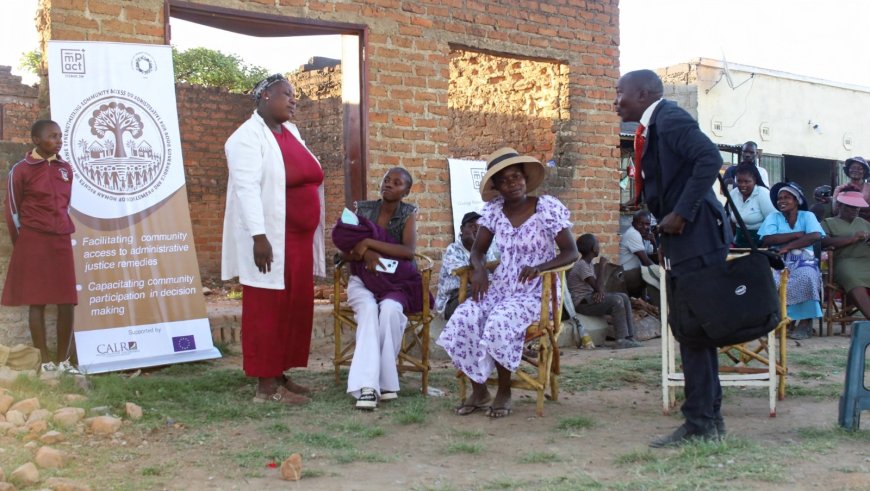
Dorset, Shurugwi — Villagers in Dorset Resettlement community on Sunday, November 1, received a rare opportunity to experience live theatre as two productions addressing corruption and administrative injustice brought entertainment and constitutional rights education to an area with limited access to organised cultural activities.
The performances, held at Dorset Business Centre, staged by Hodzeko Arts and Culture Association (HACA) in partnership with Impact Stories Zimbabwe, is under an initiative promoting administrative justice in the Midlands Province.
The productions, Manje So!! – The Missing File and Dangerous Bharanzi-Huku Yambuya, used familiar experiences of public-sector corruption, abuse of office and demands for unofficial payments to educate audiences on their rights when accessing government services.
For Dorset, a resettlement community with limited opportunities to access organised theatrical entertainment, the event also provided a platform for cultural participation and exposure to live performing arts.
The productions brought together actors Nyasha Mafukidze, Sarah Mangena, Delight Ndlovu, Siphosami Ndlovu, Devon Musesengwe and Dumisani Ndlovu, joined by Darlington Hlongwane whose contribution added a disability inclusive dimension to the performance.
They used characterisation, dialogue and dramatic storytelling to translate complex governance issues into relatable stage performances.
In Dangerous Bharanzi – Huku Yambuya, Mangena portrayed Rhoda, a pregnant woman seeking medical assistance, while Siphosami Ndlovu played her husband, Tinashe.
Mafukidze took on the role of Mbuya Gladys, a clinic midwife whose conduct exposes demands for unofficial payments within public healthcare facilities.
Devon Musesengwe portrayed Gede, a learner receiving assistance through the Basic Education Assistance Module (BEAM), while Dumisani Ndlovu played a community-rights facilitator who explains the constitutional protections available to citizens.
The character of Mr Maramba, who appears as a teacher, a clinic queue-jumper and an examination-board official, provided a connecting thread between the different scenes, illustrating how corruption can manifest across public institutions.
The role employed quick costume changes, including a tie, sunglasses and jacket, to distinguish the character's different identities.
Written by Siphosami Ndlovu, Dangerous Bharanzi – Huku Yambuya examines how demands for chickens, groceries and money before the delivery of public services undermine citizens' dignity and equal access to education and healthcare.
The production follows Gede, a financially disadvantaged learner whose BEAM status does not protect him from a teacher demanding payment in exchange for examination passes.
The narrative shifts to a healthcare facility where Rhoda and her husband, despite paying the prescribed clinic fees, encounter demands for a chicken before receiving assistance.
By linking the classroom and clinic experiences, the production highlights how corruption disproportionately affects people with limited financial resources.
The second play, Manje So!! – The Missing File, centres on Chipo Ndoro, whose University ambitions are threatened by the disappearance of her late father's pension file after 30 years of public service.
Her attempts to retrieve the document expose a public official demanding an unofficial US$50 payment under the pretext of searching for the missing file.
The narrative takes a decisive turn when Chipo learns about her constitutional rights and approaches the Zimbabwe Human Rights Commission (ZHRC), challenging the official's conduct and securing the processing of her father's pension documentation.
The production draws on Section 68 of the Constitution, which guarantees the right to administrative conduct that is lawful, prompt, efficient, reasonable, proportionate and fair.
It also introduces audiences to the investigative mandate of the ZHRC under Section 243.
Through the two productions, villagers were introduced to administrative justice through recognisable situations rather than conventional legal presentations, demonstrating the potential of theatre as a tool for public education and community engagement.
The performances also relied on character interpretation, costume changes, props, scene transitions and ensemble coordination to maintain the flow between different settings.
Stage management played an important role in coordinating the performers and supporting the presentation of the scripts before the audience.
The event was funded by the European Union, with the Centre for Applied Legal Research (CALR) as the lead implementing partner and the Alliance for Community Based Organisations (ACBOS) as a community partner.
Impact Stories Zimbabwe is the local implementing partner while Hodzeko provided the theatrical performance support.
The partnership brought together legal and community development organisations with local creative practitioners to use artistic expression in advancing awareness of administrative justice.
Beyond the rights-awareness component, the performances addressed the limited availability of organised entertainment and cultural activities in Dorset, demonstrating the importance of extending artistic programming to resettlement communities outside major urban centres.