ZLHR in High Court Bid to Halt Harare Pre-Paid Water Scheme
A Harare resident, backed by Zimbabwe Lawyers for Human Rights, has approached the High Court seeking a suspension of the city's pre-paid water meter roll-out, arguing the project violates existing municipal by-laws and constitutional administrative duties.
 Delicious Mathuthu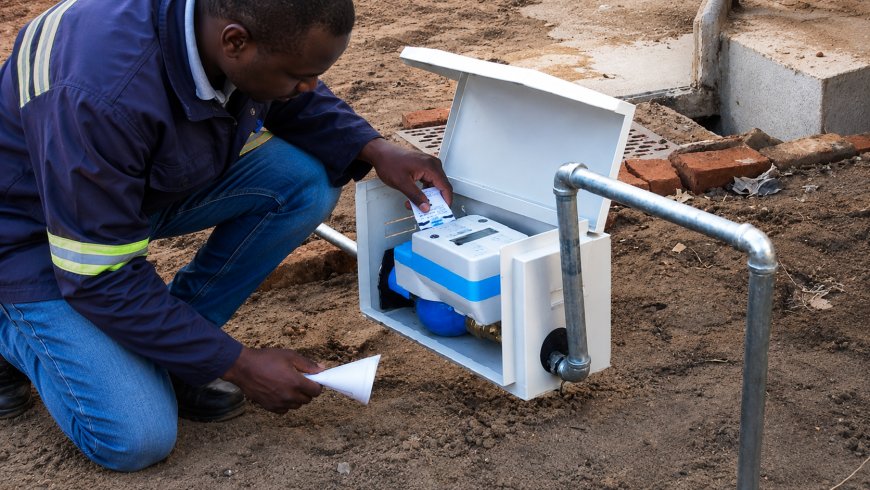
Harare — The High Court has been petitioned to suspend the implementation and roll-out of the controversial pre-paid water metering system in Harare, amid growing legal arguments that the council and its private partner acted outside the parameters of existing urban council laws.
In an urgent application filed on Monday, Harare resident Bernadette Makaya, through her legal representative, Tinashe Chinopfukutwa of the Zimbabwe Lawyers for Human Rights (ZLHR), is seeking an order to halt the joint initiative by the City of Harare and Helcraw Water.
The applicant contends that the introduction of pre-paid meters completely lacks subsidiary legal backing.
ZLHR says the court papers state that distribution of water within the capital remains strictly governed by the Harare Water By-Laws of 1913 alongside the provisions of the Urban Councils Act.
The litigant argues that these legal frameworks explicitly provide for a post-paid water distribution system, where residents consume the commodity and receive monthly statements, rather than paying upfront.
Consequently, the ZLHR maintains that the local authority and Helcraw Water breached Section 3 of the Administrative Justice Act, which compels administrative authorities to act lawfully, reasonably and in a procedurally fair manner.
The legal challenge comes at a critical juncture for the local authority, which has historically struggled with a massive water deficit and an aging distribution network.
Statistics indicate that the capital city requires approximately 800 megalitres of water per day, yet the primary treatment plant, Morton Jaffray Water Works, frequently operates well below its optimal capacity, often producing less than 350 megalitres daily.
The deficit leaves over half of the city's estimated 1.5 million residents facing severe supply interruptions.
To address a compounding revenue collection crisis, municipal authorities initially conceptualised the pre-paid metering project as a mechanism to curb non-revenue water loss, which has hovered between 50 to 60 percent due to bursts, illegal connections and commercial billing inefficiencies.
Official estimates suggested that the city was losing millions of dollars monthly in uncollected revenue, prompting the partnership with Helcraw Water to pilot and scale the pre-paid infrastructure.
Human rights defenders have however consistently cautioned against the commercialisation of water delivery services.
The ZLHR and various residents' trusts argue that pre-paying for water directly threatens vulnerable households, particularly in high-density suburbs where access to disposable income is limited.
The civil society organisations maintain that access to clean, potable water is a fundamental human right enshrined under Section 77 of the Constitution of Zimbabwe, and that blocking access automatically via a pre-paid valve when funds deplete constitutes a retrogressive measure.