West Bank Violence Deepens as Settlement Expansion Fuels Displacement and International Alarm
Escalation of violence, forced displacement, and settlement expansion in the occupied West Bank continues as the United Nations and the International Court of Justice, reports highlight a record surge in settler attacks and large-scale military operations by the Israelis that have displaced tens of thousands of Palestinians. While Israeli authorities state these operations target militant groups, international bodies warn that a climate of impunity and accelerating settlement expansion are causing severe humanitarian crisis and systematically undermining the feasibility of a two-state solution.
 Delicious Mathuthu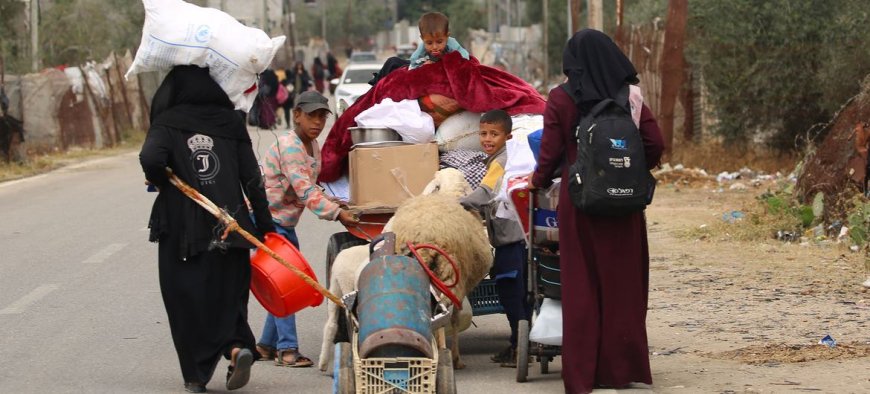
Johansburg, South Africa/ Harare, Zimbabwe — The occupied West Bank has become the latest flashpoint in the decades-long Israeli-Palestinian conflict, with mounting evidence from the United Nations, international legal bodies and human rights investigators pointing to a sharp escalation in settler violence, forced displacement and settlement expansion that has intensified since the outbreak of the Gaza war in October 2023.
The latest warning comes from the International Coordinating Committee for Palestine (ICCP), a coalition comprising the Anti-Apartheid Movement for Palestine, the Global Alliance for Palestine and the Global Coalition Against Occupation of Palestine.
In a statement issued on June 15, the organisation accused Israel of pursuing what it described as a systematic policy of violence, land confiscation and de facto annexation of occupied Palestinian territory.
"Armed settlers daily attack Palestinian communities using shootings, beatings, arson, destruction of homes and farmland, theft of livestock and the forced expulsion of families from their land," the ICCP said in the statement.
Reverend Frank Chikane of the Anti-Apartheid Movement for Palestine said what Israel is doing equates to terrorism.
“Israel’s actions amounts to state terrorism...Not only in the West Bank, but also in Gaza and in countries neighbouring Palestine," he said.
The ICCP's statement follows a growing body of reports from the United Nations (UN) and other international institutions documenting an unprecedented deterioration in conditions across the West Bank.
According to the UN Office for the Coordination of Humanitarian Affairs (OCHA), attacks by Israeli settlers have risen dramatically over the past three years, with 2025 recording the highest annual number of settler attacks documented by OCHA since the agency began systematically recording such incidents nearly two decades ago.
By late May this year, the UN had already documented more than 870 settler attacks in 2026, averaging approximately six incidents every day.
The attacks include shootings, assaults, arson, destruction of homes and agricultural land, theft of livestock and intimidation of Palestinian communities.
Entire rural communities have increasingly been forced to abandon their homes amid repeated attacks and restrictions on access to farmland.
UN humanitarian officials say dozens of Palestinian communities have been wholly or partially displaced since 2023, particularly in vulnerable parts of Area C of the West Bank, where Israel maintains full security and administrative control.
The northern West Bank has been particularly affected, especially following Israel's large-scale military operations launched in early 2025 targeting armed groups operating in refugee camps.
Anas Altikriti, of the Global Alliance for Palestine says large-scale Israeli military operations in Jenin, Tulkarem and Nur Shams refugee camps have displaced tens of thousands of Palestinians since early 2025, creating what UN officials describe as the largest displacement crisis in the territory for decades.
He highlights that there are more than 33,000 Palestinians who remain displaced from northern refugee camps since January 2025, and over 37,000 Palestinians displaced across the West Bank during 2025 alone, the highest annual total on record.
Altikriti says more than 12,000 children have been forced from their homes.
Many displaced families remain unable to return because of continuing military operations and extensive damage to homes and infrastructure
"The UN recorded 1,732 settler attacks causing casualties or property damage in 2025, while more than 950 attacks have already been documented in 2026, an average of six attacks every day.
"Since October 2023, Israeli forces and settlers have killed more than 1,000 Palestinians, including women and children, in the occupied West Bank, and injured thousands more.
"October 2025 saw 264 settler attacks, the highest monthly figure since UN records began in 2006," the ICCP said in the June 15 statement.
The ICCP argues that the violence cannot be viewed in isolation but forms part of a broader pattern aimed at consolidating permanent Israeli control over occupied territory through settlement expansion and the removal of Palestinian communities.
That argument mirrors conclusions reached in the advisory opinion issued by the International Court of Justice in July 2024.
In its advisory opinion issued in July 2024, the International Court of Justice concluded that Israel's continued presence in the Occupied Palestinian Territory is unlawful under international law.
It further found that Israeli settlements in the West Bank and East Jerusalem violate international law.
It said Israel's policies, including land confiscation, movement restrictions and failures to prevent settler violence, contribute to the forcible displacement of Palestinians and amount to the annexation of significant parts of the occupied territory.
The court called on Israel to cease settlement activity and evacuate settlers from the Occupied Palestinian Territory while urging other states not to recognise or assist the unlawful situation.
International scrutiny has intensified further this month, June, 2026.
A UN Independent International Commission of Inquiry reported that settler violence is increasingly occurring with the protection or support of Israeli security forces.
The commission concluded that violence by settlers functions as part of a broader state policy aimed at expanding settlements, displacing Palestinians and entrenching Israeli control.
The report also documented abuses against Palestinian children and incidents of sexual violence allegedly committed during settler attacks.
The same inquiry also condemned abuses committed by Hamas against Palestinians in Gaza, saying civilians have suffered serious violations by multiple parties to the conflict and stressing that accountability should apply universally.
Israeli authorities say the operations in the West Bank are aimed at dismantling armed groups, including Hamas, Palestinian Islamic Jihad and other militant organisations, which they accuse of carrying out attacks against Israeli civilians and security personnel.
Israel has also said its security forces act against unlawful settler violence and rejects allegations that the state systematically supports attacks on Palestinians.
International human rights organisations and UN investigators however argue that prosecutions of violent settlers remain rare, creating what they describe as a climate of impunity that encourages further attacks.
Meanwhile, settlement expansion continues at a pace that many analysts believe is making prospects for a negotiated two-state solution increasingly remote.
More than 750,000 Israeli settlers now reportedly live in settlements across the occupied West Bank, including East Jerusalem, while new settlement outposts continue to emerge despite repeated international objections.
The escalation has also coincided with continued approval of new settlement construction and the legalisation of several settlement outposts that were previously considered unauthorised, even under Israeli law.
International legal experts argue that such measures further entrench Israeli control over occupied territory and complicate efforts to revive negotiations towards a two-state solution.
Israel disputes that the settlements violate international law.
The expansion has also been accompanied by military seizure orders, new buffer zones around settlements and growing restrictions on Palestinian movement, agriculture and access to natural resources.
The ICCP is now urging governments to move beyond diplomatic condemnation by imposing sanctions against individuals involved in settler violence, halting trade linked to settlements and enforcing the ICJ's advisory opinion.
Analysts say whether such calls translate into concrete international action remains uncertain, but the occupied West Bank is experiencing one of its most volatile periods in recent history.
Rising violence, mass displacement and expanding settlements deepen a conflict that continues to draw increasing legal, diplomatic and humanitarian concern from across the international community.