The unscheduled truth--When the President finished his state of the nation address in darkness
n The unscheduled truth: When the President finished his state of the nation in the dark n nn n By Harry Taruva and Kwacha Mahachi for Kwedu News n nn n HARARE—The velvet-draped pomp of the Zimbabwean Parliament was shattered on Tuesday, no
 anostrofy
 The unscheduled truth: When the President finished his state of the nation in the dark
By Harry Taruva and Kwacha Mahachi for Kwedu News
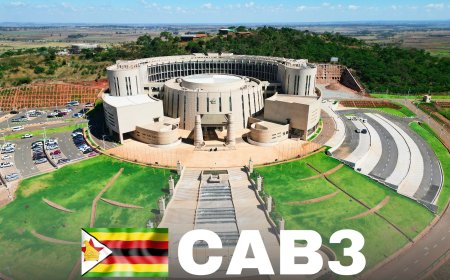
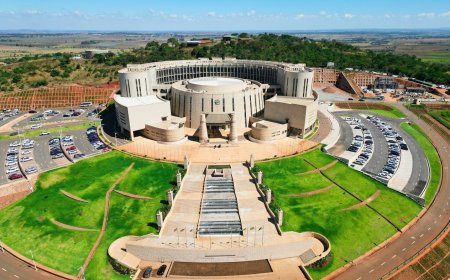
HARARE—The velvet-draped pomp of the Zimbabwean Parliament was shattered on Tuesday, not by protest, but by sudden, absolute darkness.
President Emmerson Mnangagwa, deep into his annual State of the Nation Address (SONA), found himself abruptly stripped of the bright stage lighting and the illusion of control. For the final, crucial ten minutes of his speech, the Head of State was reduced to a silhouette, illuminated only by the frantic beam of a mobile phone torch held steady by an unblinking aide.
The moment was more than a technical failure; it was a potent, humiliating national metaphor.
In the hallowed chamber, the silence that followed the initial click of the tripped breakers was deafening. The event, designed to project governance and national stability, instead offered a brutal, unscheduled footnote: The energy crisis that plagues Zimbabwe’s hospitals, schools, farms, and factories had finally gatecrashed the highest seat of power.
Mnangagwa pressed on, his voice determined but strained in the gloom, delivering his perorations about economic recovery with a cone of white light focused directly on his text. The image—the President of a sovereign nation reading policy under a makeshift spotlight—was beamed live across a populace intimately familiar with such scenes.
The indignity was palpable. Moments after the final word was uttered and the President had collected his notes, the lights flickered back on.
Visibly incandescent, Mnangagwa offered no pleasantries. He strode immediately from the chamber, demonstrating the clear fury of a leader brought face-to-face with the inconvenient reality his government often attempts to sanitize.
The Speaker of Parliament, after the fact, issued a flustered apology, vowing to "find whoever was responsible." But the nation knows who is responsible: a decades-long cycle of decay, debt, and chronic underinvestment.
This power failure was not an anomaly; it was a pattern. Last year, the national budget presentation was similarly afflicted by a blackout. These incidents serve as unavoidable proof that the government’s repeated claims of a "stable energy situation" are, at best, wishful thinking and, at worst, cynical deception.
For millions of Zimbabweans, the experience of darkness is not a ten-minute interruption, but a daily standard. Frequent and punishing load-shedding schedules routinely switch off entire cities for periods lasting up to 18 hours. Businesses operate on expensive diesel generators, hiking costs, slashing output, and bleeding jobs in a cycle that analysts say costs the country approximately 6% of its GDP annually.
The numbers detail the devastation. As of mid-2025, Zimbabwe’s peak energy demand stands at a demanding 4,000 megawatts (MW). Yet, the nation’s aging generating capacity can muster only about 1,400 MW. This dramatic, two-thirds shortfall makes extensive load-shedding an operational necessity, regardless of ministerial assurances.
The roots of the crisis run deep, touching on environmental disaster and institutional rot.
The primary source of hydropower, the Kariba Dam, has seen dangerously low water levels due to persistent droughts. In January, usable water storage for power generation was reported to be critically insufficient, severely limiting output.
Crucially, the country’s main thermal infrastructure, particularly the Hwange Thermal Power Station, is a dilapidated liability. While the government frequently highlights the commissioning of new units as evidence of progress, the systemic failures—including corruption and mismanagement within the state-owned Zimbabwe Electricity Supply Authority (ZESA)—limit the ability to sustain consistent output or invest in necessary maintenance. ZESA is mired in debt, failing to pay regional power suppliers and unable to afford crucial imports.
Yet, despite this reality, the political imperative remains to project an image of functionality. By framing outages as isolated, momentary incidents—rather than symptoms of systemic failure—the ruling apparatus attempts to deflect accountability and salvage investor confidence.
When President Mnangagwa, speaking from his prepared script, highlighted plans for private sector participation in electricity distribution, the irony was thick enough to cut. The success of any such venture is entirely predicated on the stable regulatory and macroeconomic conditions that the very incident disrupting his address proved do not exist.
For the brief, dark ten minutes in Parliament, the gap between official rhetoric and national experience collapsed. The torch beam, held steady by an anxious aide, illuminated the uncomfortable truth: that the crisis the government denies is so pervasive, so thorough, that it cannot even guarantee light for its own head.
The Speaker may search for a scapegoat technician, but the nation understands that the responsibility for the darkness lies much higher than the breaker box.