Stakeholders Call for a Clear 2027 Budget and Fair Funding
By Delicious Mathuthu — Civil society organisations in Gweru have called for simplified national budget information in different local languages, fair and timely funding releases, transparent public spending and stronger citizen monitoring as Zimbabwe prepares its 2027 National Budget
 Delicious Mathuthu
Gweru — Civil society organisations, residents associations, community leaders and rights advocates have called on the Government if Zimbabwe to simplify budget information, ensure fair and timely funding releases and strengthened public expenditure monitoring as Zimbabwe prepares its 2027 National Budget.
The demands were raised during a dialogue organised by Transparency International Zimbabwe (TIZ) in Gweru, where participants discussed funding gaps and service delivery challenges, especially in the health and education sectors.
The meeting sought to identify practical ways of strengthening citizen participation in budget formulation, monitoring public expenditure and holding authorities accountable for the use of public funds.
The calls come as Zimbabwe’s 2027 National Budget process moves towards parliamentary public consultations, following earlier government-led budget outreach activities that began in June 2026.
Parliament’s nationwide public hearings started on October 5, providing another opportunity for citizens and stakeholders to submit their views on national spending priorities.
One of the key demands from the Gweru dialogue was for the Ministry of Finance to produce simplified citizen budgets in different official languages, enabling ordinary Zimbabweans to understand government spending plans and participate meaningfully in budget discussions.
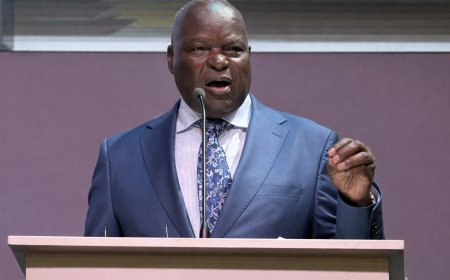
“Let's advocate that the government simplifies the budget to the extent that any ordinary citizen can comprehend it,” Zimbabwe Open University Senior lecturer, Associate Professor Tobias Guzura said while making a presentation during the meeting.
“We have 16 official languages... there must be a summarised version in all official languages, so that people may quickly comprehend key issues, not the whole volume, but the summarised version; that may actually work," he said.
Prof. Guzura, who is also a researcher and public policy consultant, called for changes to Treasury’s cash disbursement system, arguing that approved budget allocations do not always translate into funding for services and projects on the ground.
He urged the Government to prioritise needs-based and predictable cash releases, particularly for water and sanitation, primary healthcare, maternal services and rural school infrastructure.
He warned that arbitrary funding schedules and mid-quarter spending limits could undermine the implementation of programmes by Ministries, even when money has been approved in the national budget.
“When we look at issues of allocation gaps, we want to ask ourselves, is the envelope adequate or not?” Prof. Guzura said.
“The risk gap is whether the approved money is released or not... Do we see the budget figures being released?" He asked.
The dialogue also called for stronger measures to ensure that national budget allocations address inequalities affecting women, girls, persons with disabilities and older people.
Under gender-responsive budgeting, participants called for the Government to move beyond general commitments by setting measurable allocation targets, performance indicators and expected outcomes for programmes benefiting women and girls.
They also called for clear accessibility standards in capital projects, including rural clinics and upgrade of some hospitals to University teaching hospitals, as well as the provision of assistive learning equipment for persons with disabilities in schools.
On public procurement, participants demanded greater transparency in tender awards, payments to suppliers and the transfer of devolution funds to local authorities.
Prof. Guzura said publishing the information would enable communities and independent watchdogs to scrutinise expenditure and identify possible gaps between approved allocations and actual spending.
Beyond calling for government reforms, participants agreed to strengthen citizen-led monitoring through joint coalitions involving civil organisations such as TIZ, Zimbabwe Coalition on Debt and Development (ZIMCODD) and several others.
The proposed initiatives include conducting independent social audits, submitting technical position papers during parliamentary budget hearings and tracking the distribution of public resources down to individual service facilities.
The participants said continued monitoring would be necessary to establish whether allocations approved in the national budget were released and translated into improved services for communities.
The demands centred on transparency, equitable resource distribution and stronger public participation as Zimbabwe moves towards finalising its 2027 National Budget.