














‘Who is our chief?’: Dorset community awaits return of a lost identity
After decades of displacement and changing administrative boundaries, Dorset residents hope Chief Lukhuluba's return will restore their traditional identity and give the community a stronger voice.

By Siphosami Ndlovu
Shuruwi— For years, young people from Dorset have carried a question they could not easily answer: Who is your chief?
For a community with deep roots in Hogo, between Gweru and Bulawayo, the question became more than a matter of identity.
It could affect everyday life.
When some residents applied for identity documents, they were required to provide the name of their chief. Yet they had grown up being told that Dorset had no chief.
Now, residents believe that may finally be changing.
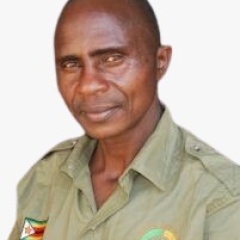
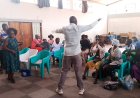
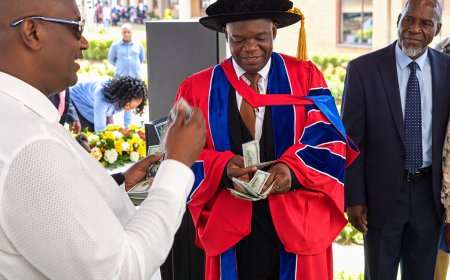
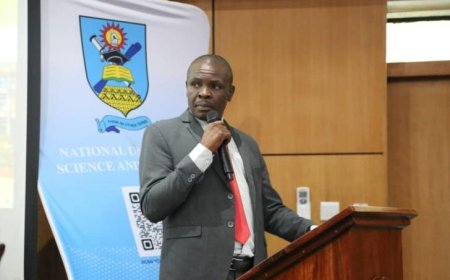
On October 2, more than 800 people gathered at Dorset Secondary School for the school's Speech and Prize Giving Day, where Chief Lukhuluba, born Joseph Sayi, addressed the community for the first time in more than 20 years.
For many residents, his appearance was significant not simply because a traditional leader had spoken to them, but because he gave a name and a voice to a community that had spent generations negotiating questions of belonging.
“Hogo is my home. Dorset is my home. You are my children. For too long you were told you have no Chief. That ends today,” Chief Lukhuluba told the gathering.
The words were met with applause.

For Luce, a community member who asked to be identified by her first name, the absence of a chief was something residents encountered in practical ways.
“The problem comes when you take your ID for the first time. You are required to provide your Chief's name in full. We were told Dorset has no Chief. Yet we are told there is no place without a Chief.”
She said residents sometimes lost time and money trying to resolve the problem.
“This process delays us. It costs us a day or a fortune, between $20 and $50 through middlemen.”
The story of Dorset cannot be separated from the history of the Hogo/Lukhuluba people.
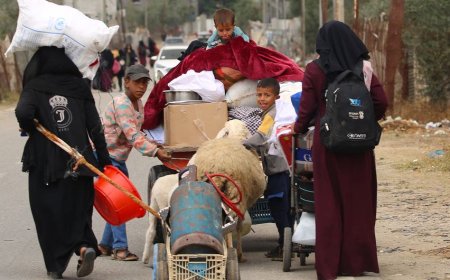
According to community accounts, the people were forcibly moved from their ancestral home in the 1940s by the Rhodesian government to Silobela to make way for white commercial farmers.
The displacement disrupted the community's traditional leadership and scattered families away from their ancestral home.
Decades later, the Land Reform Programme brought another chapter in the community's story.
Dorset Resettlement was established about two decades ago and eventually grew into a community of eight villages.
Administratively, the community was originally under Vungu Rural District Council. With time, political boundary delimitation placed Dorset in Shurugwi South Ward 21, under Tongogara Rural District Council.
The boundaries changed, but residents say the question of traditional leadership remained.
For years, they were told that Dorset was a resettlement area without a chief.
Chief Lukhuluba's appearance has now raised hopes that the community's traditional identity could be formally restored.
But the chief's address was not only about history.
He also spoke about the future of the children growing up in Ward 21, strongly condemning child marriage and urging parents to keep their children in school.
“Education is the only inheritance we must give our children. A 14-year-old belongs in a classroom, not in a marriage. Do not legalise child marriage in our villages.”
He warned that those who impregnated or married school-going children would face the full consequences of the law and traditional authority.
“We cannot build a new Ward 21 on the tears of abused girls. Send your daughters to school, not to early marriages.”
For residents, the message was significant because the return of traditional leadership is being viewed not only through the lens of ancestry, but also through what it could mean for the community's future.
Villagers also hope having recognised traditional leadership will help them raise longstanding development concerns.
Luce said the community's distance from Tongogara Rural District Council offices and poor roads made access to services difficult.
“Our Council, Tongogara, is very far. We are last to get farming inputs, sometimes after the rains, because our roads are very bad.”
For a community that has experienced displacement, resettlement and administrative changes, residents now hope their traditional leadership can give them a stronger voice when engaging government authorities.
Whether that expectation will translate into better roads, easier access to services and faster delivery of farming inputs remains to be seen.
Attention is now turning to October 9.
Unconfirmed information circulating in the community indicates that Chief Lukhuluba is expected to be formally installed by the Government at Somabhula Secondary School.
The venue, programme and Government participation had not been independently confirmed by the time of publication.
But anticipation is already building.
For older residents, the return of Chief Lukhuluba represents a connection to a history disrupted more than 80 years ago.
For younger people, it could resolve a much more immediate question — the one they have repeatedly faced when filling out forms, applying for documents or explaining where they come from.
For years, Dorset residents struggled to answer.
On October 2, Joseph Sayi stood before them and said:
“Hogo is my home. Dorset is my home. You are my children.”
For a community that has moved through displacement, resettlement and changing administrative boundaries, those words offered something residents say they have long lacked — a sense that their history and identity are finally being recognised.
What's Your Reaction?
 Like
0
Like
0
 Dislike
0
Dislike
0
 Love
0
Love
0
 Funny
0
Funny
0
 Angry
0
Angry
0
 Sad
0
Sad
0
 Wow
0
Wow
0