Three More Iranian Female Footballers Backflip on Asylum Decision, Choose to Return Home from Australia
Three additional members of Iran's women's national football team, including captain Zahra Ghanbari, have reversed their decision to stay in Australia on humanitarian visas amid the AFC Women's Asian Cup 2026, opting to return home despite initial fears of reprisals following a national anthem protest.
 Harry Taruva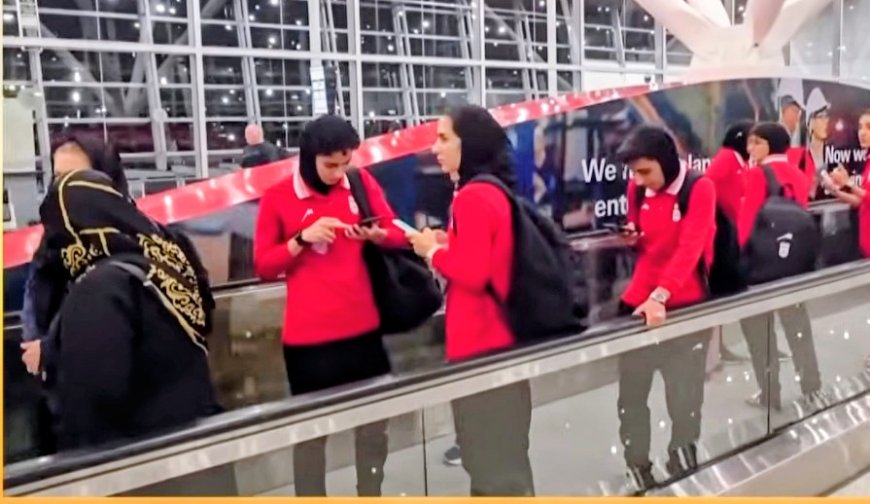
Sydney - Three additional members of Iran’s women’s national football team who had been granted humanitarian visas to remain in Australia have reversed course and chosen to return home, Australian authorities confirmed on March 15, 2026.
The latest developments, including the withdrawal by team captain Zahra Ghanbari, mean that five of the seven delegation members who initially accepted offers of protection have now opted to leave, leaving just two in the country.
The saga unfolded during and after the AFC Women’s Asian Cup 2026, hosted on Australia’s Gold Coast.
The team, known as the Lionesses, was eliminated after losing all three group-stage matches.
The story gained international attention amid a backdrop of heightened tensions in the Middle East, including US-Israeli strikes on Iran that killed Supreme Leader Ayatollah Ali Khamenei and prompted Iranian retaliation.
The turning point came during Iran’s opening match against South Korea on March 2. The players stood silent as the national anthem played, an act interpreted by some as protest or tribute amid the conflict.
Iranian state television branded them “wartime traitors,” with one presenter calling for harsher punishment in wartime conditions.
In subsequent matches against Australia and the Philippines, the players sang the anthem and saluted it.
FIFPRO, the global players’ union, urged the Asian Football Confederation (AFC) and FIFA to protect the athletes.
Human Rights Watch later highlighted the broader context of repression of women’s rights in Iran, linking the incident to the legacy of the “Woman, Life, Freedom” protests following the 2022 death of Mahsa Amini.
As the team prepared to depart, several players allegedly slipped away at their Gold Coast hotel.
Australian Federal Police assisted in moving them to a secure location.
Home Affairs Minister Tony Burke personally met the group in the early hours and granted temporary humanitarian visas, valid for 12 months with a pathway to permanent residency, to an initial five players.
Two more, one player and one staff member, later received visas, bringing the total who accepted to seven.
Named individuals in initial reports included captain Zahra Ghanbari, Mona Hamoudi, Zahra Sarbali, Fatemeh Pasandideh and Atefeh Ramazanzadeh, among others.
Burke described the athletes as great people who would “feel at home in Australia” and said the government had prepared for the possibility.
One player changed her mind shortly after the initial grants and contacted the Iranian embassy.
Then, on March 14–15, three more, identified by Iranian diaspora activists and media as Mona Hamoudi, Zahra Sarbali and Zahra Soltan Meshkehkar (a technical staff member), decided to return.
They travelled to Kuala Lumpur to rejoin the squad. Captain Ghanbari followed, with Iranian state media, IRNA and Mehr, hailing her decision as a patriotic return to the embrace of the homeland.
Tasnim News Agency, affiliated with Iran’s Islamic Revolutionary Guard Corps, reported the trio had resisted “psychological warfare, extensive propaganda and seductive offers.”
Iran’s sports ministry claimed the national spirit had defeated the enemy’s plans, accusing Australia of aligning with external influences.
The group is reportedly routing back to Iran via Malaysia due to closed airspace from the regional conflict.
One returnee reportedly told protesters in Malaysia they were going home willingly and had been promised they would be “treated like princesses.”
Burke acknowledged the reversals in a statement.
“The Australian government has done everything it could to make sure these women were provided with the chance for a safe future in Australia… While the Australian government can ensure that opportunities are provided and communicated, we cannot remove the context in which the players are making these incredibly difficult decisions," he said.
Treasurer Jim Chalmers expressed pride in the government’s efforts to offer a genuine choice.
Exiled Iranian futsal player Shiva Amini and other activists alleged intense pressure from Iran’s Football Federation and the IRGC, including threats to families in Iran.