Midlands Rugby to Usher in New Substantive Board
Midlands Rugby Union concludes its interim administrative phase with an AGM set for the 20th of March at Chaplin High School to elect a substantive provincial board and formalise its rugby governance.
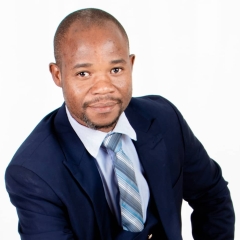 Delicious Mathuthu
Gweru - Midlands rugby is set to revive its administration structure in the province with a transition phase to a substantive governance board having been set for the 20th of March 2026, at Chaplin High School where an elective Annual General Meeting (AGM) will be held.
The scheduled meeting marks the conclusion of a 90-day interim period mandated by the Midlands Rugby Union (MRU) constitution to stabilize rugby administration within the province.
The upcoming elections follow a period of "diligent" management by the interim board, led by Chairperson Darren Levendale.
During his tenure, the union maintained core rugby activities while implementing a strict governance checklist in collaboration with the national mother body, the Zimbabwe Rugby Union (ZRU).
The collaboration has notably resulted in the adoption of a new digital registration system to ensure administrative integrity for all regional clubs.
MRU Secretary, Takudzwa Chaparadza formally issued the notice for the meeting, saying the objective is to regularise governance structures in the Province, previously falling under the Matebeleland Football Rugby Board.
The agenda is set to include the presentation of the interim board's report, and the election of substantive office bearers.
"We have been in constant communication with the ZRU interim board... to ensure we are fully compliant with the new directives," said Midlands Rugby Development Officer, Tobias Mdlongwa, in an interview with Kwedu News.
"This ensures every player in the Midlands is properly registered and accounted for, which is a massive boost for our administrative integrity," he said.
On the grassroots development front, under the guidance of the MRU interim Chairperson Levendale, Mdlongwa says his portfolio has focused on establishing a talent pipeline stretching from primary schools to senior provincial levels.
Central to this initiative, Mdlongwa said, has been partnerships with school-level administrators, especially the National Association of Secondary School Heads (NASH) Rugby Provincial structure based at Chaplin High School.
The focus on school-based rugby aligns with broader Zimbabwean sports strategies to utilize educational institutions as the primary scouting ground for national talent.
Mdlongwa said the efforts also aim to use the sport as a "character-building tool" for the region's youth.
"The schools are the lifeblood of our game," Mdlongwa added, "with the help of dedicated educators like Mr. Mawuka, we are ensuring that rugby is also a character-building tool for young people across the Midlands".
A primary highlight of the transition period has been the growth of the girls' rugby program.
Increased uptake of the sport, both club and school levels, recently led to provincial trials coordinated by the MRU to identify talent for the Sables ladies' selection camp scheduled for May 2026, Mdlongwa said.
He said the trials are a critical component in building the national U-20 women’s squad.
"To see so many girls coming into the sport and to witness the quality on display at the trials, is incredibly rewarding," Mdlongwa stated, adding, "it shows the future of rugby in Zimbabwe is promising."
The March 20 AGM is expected to formalize the progress made over the last three months in reviving the provincial administrative structure, providing the incoming board with a solid governance structure and a clear development pathway for the upcoming season.
The current interim provincial board consists of Levendale as Chair, Malvean Mapfumo as the Vice Chair, Takudzwa Chaparadza as the Secretary, Beatrice Nyeve as Treasurer, Mdlongwa as Development Officer, Enjeline Kambamura as board member women's representative, and board member Benjamine Wuriga.
Midlands province rugby in Zimbabwe mostly centers on cities such as Gweru, Kwekwe and Zvishavane, operating under the national governance of the ZRU, with efforts to reach out to the outer layers of the province being mooted.
In professional competitions, the province has produced some fo the best players feeding into the national teams, with Gweru Sports Club, then, competing at premier level in the National Rugby League and later the Intercity Rugby League.
Four other clubs, Thornhill Airforce Rugby, Kwekwe Rugby Club, Zvishavane and Midlands State University, participated in some of the national competitions, especially tournaments.
School programs, notably at institutions such as Chaplin High School in Gweru, have historically supported junior development through clinics and events hosted by the national side, the Sables.
Development efforts in Midlands have long been constrained by centralization of resources and activities to the capital, Harare, and a serious shortage of infrastructure.
Provincial stakeholders have repeatedly called for decentralisation, including expanded junior leagues (U20 and U23), revival of inter-provincial competitions, a structured national league and greater technical and financial support for smaller clubs to enable broader participation and equitable pathways to national selection.
Challenges persist due to Zimbabwe's economic difficulties, limited corporate sponsorship and governance issues at grassroots level.
In September 2025, the Sports and Recreation Commission dissolved the ZRU board citing maladministration and incompetence, which they claim had contributed to poor national team performances and stagnation in domestic leagues.
An interim management committee was appointed to stabilize operations, restore financial sustainability and implement reforms through 2027.
Midlands representatives then welcomed the leadership change as a potential opportunity for peripheral regions.
Clubs have urged the interim committee to prioritize developmental programs, decentralize activities and incorporate stakeholders from across the country to address long-standing marginalization.
Despite the recreation commission's maladministration claims, Zimbabwe's national rugby team, the Sables, qualified for the 2027 Rugby World Cup following victory in the 2025 Rugby Africa Cup.
The sables are two time Africa Cup Champions, back to back, having won the 2024 rugby continental competition as well.
Increased government engagement with Rugby Africa and strategic workshops involving provincial and club representatives has raised hopes for renewed investment in grassroots structures.
Midlands rugby however remains underdeveloped relative to its historical role in the sport, with ongoing calls for equitable resource distribution to revitalise local competitions and talent pathways.