Australia Grants Asylum to Seven Iranian Women’s Soccer Players Following Anthem Protest
Australia has provided humanitarian visas to seven members of Iran's women's national soccer team after players refused to sing the national anthem at the AFC Women's Asian Cup. The decision follows international concern for their safety and a public intervention by U.S. President Donald Trump amid escalating regional tensions.
 Harry Taruva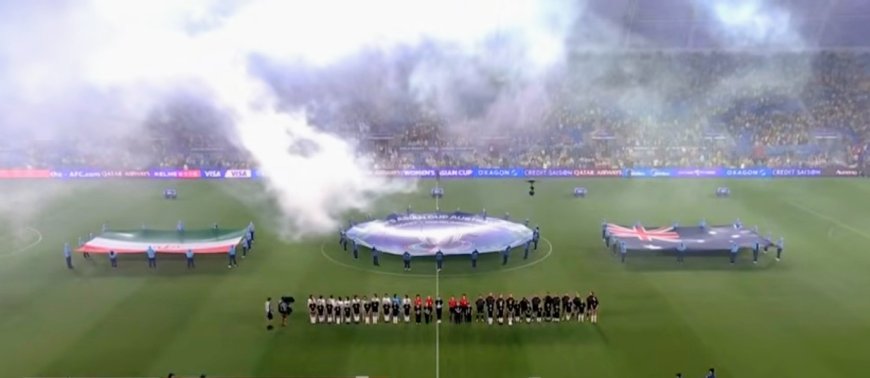
Sydney - Australia has granted humanitarian visas to seven members of Iran's women's national soccer team, including five players and two others from the delegation, after they sought asylum citing fears of persecution back home following their refusal to sing the national anthem at the Asian Football Confederation (AFC) Women's Asian Cup, government officials said on Tuesday.
The move came after a tense standoff at the team's hotel on the Gold Coast, where protesters reportedly gathered to urge the athletes not to return to Iran amid an escalating war involving the United States, Israel and Iran that began last month.
The Iranian team, which traveled to Australia for the tournament with a squad of 13 players plus staff, was eliminated after a 2-0 loss to the Philippines on Sunday.
The Australian Federal Police (AFP) issued a statement on Tuesday acknowledging its role in assisting relevant agencies and the Home Affairs department over the past 72 hours in relation to the team.
The AFP highlighted its longstanding relationships with the Iranian diaspora through community liaison teams and thanked community leaders, not-for-profit groups and ordinary Australians for their assistance and advocacy.
The players who received visas are Fatemeh Pasandideh, Zahra Ghanbari, Zahra Sarbali, Atefeh Ramazanzadeh and Mona Hamoudi, along with one additional player and a support staff member.
The visas, which provide a pathway to permanent residency, allow the recipients to live, work and study in Australia.
The incident stems from the team's opening match against South Korea last week, when several players stood silent during Iran's national anthem, an act interpreted by hardliners in Tehran as treason amid the ongoing conflict.
Iranian state media branded them "wartime traitors," prompting international concern for their safety.
In subsequent matches, the players sang the anthem and gave military salutes, amid reports of pressure from Iranian officials.
Protesters outside the team's bus after Sunday's defeat chanted "save our girls" and used hand signals for help, with some players appearing to respond.
On Monday night, the five initial players left their hotel with AFP assistance and were moved to a secure location.
The remaining delegation departed Australia via Sydney on Tuesday, after each member was individually offered asylum by officials at the airport, though only two more accepted.
Iran's airspace closures due to the war complicated the team's return, with flights routed through Kuala Lumpur.
Iranian officials dismissed the asylum claims as "psychological warfare" and insisted the players would be welcomed back safely.
U.S. President Donald Trump commented publicly on Monday, posting on Truth Social that Australia was making a "terrible humanitarian mistake" by potentially forcing the team back to Iran, where he said they could be killed, and offering U.S. asylum as an alternative.
He later said he had spoken to Australian Prime Minister Anthony Albanese, adding that five players had already been taken care of and the rest are on their way.
Albanese confirmed the call, describing it as a very positive discussion and noting that officials had been working on the matter for some time, reports say.
He said the government extended the asylum offer to the entire team. Human rights groups, including Amnesty International, called on Australia to protect the players, citing obligations under the UN Refugee Convention.
Reza Pahlavi, son of Iran's ousted shah, praised the players' brave act of civil disobedience and urged their safety.
Iran's football federation called for a review of Trump's involvement as direct political interference.
FIFA said the team's safety was its priority and it remained in contact with authorities.
"They are safe here. They will be at home here. They are welcome here in Australia," Home Affairs Minister Tony Burke said in a post on X, formerly Twitter, after meeting the players.
"We’re willing to provide assistance to other women in the team, noting that this is a very delicate situation, and it is up to them, but we say to them, if you want our help, help is here and we will provide that," Albanese said.
"They wanted to make clear they are not political activists. They're athletes who want to be safe and are very grateful that Australia is making that opportunity for them," Burke said.
"Personally, I would like to return to my country as soon as possible and be with my compatriots and family," Iran coach Marziyeh Jafari is reported having said after Sunday's match on CBS Sports.
"Iran welcomes its children with open arms and the government guarantees their security," Iran's First Vice President Mohammad Reza Aref said regarding the issue.
The AFP said it would make no further comment at this stage.