The crime of calculus: When Opposing the Proposed Presidential Term Extension - becomes a crime for Subverting the State
n Feature n nn n By Dumisani Ndlovu n nn n On a humid afternoon in August 2025, three young men at the Midlands State University (MSU) Gweru campus crossed an invisible, yet potentially deadly, line. n nn n Milton Muchayana (21), Anenyasha
 anostrofy
 Feature
By Dumisani Ndlovu
On a humid afternoon in August 2025, three young men at the Midlands State University (MSU) Gweru campus crossed an invisible, yet potentially deadly, line.
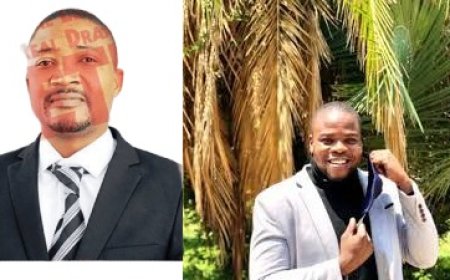
Milton Muchayana (21), Anenyasha Moyo (22), and Langton Muhoma (22) were not accused of treason, corruption, or violent armed insurrection. Their alleged crime was simple political arithmetic: they opposed a proposed two-year extension of presidential power—the manoeuvre to shift President Emmerson Mnangagwa’s term limit from 2028 to 2030.
For this act of political dissent—for daring to suggest that a constitutional timeline should be respected—they now stand accused of the gravest offence short of outright rebellion: subverting constitutional government.
Confirmed by the Zimbabwe Lawyers for Human Rights (ZLHR) in early October 2025, the prosecution of these students is not merely a legal proceeding; it is a chilling signal sent to Zimbabwe’s youth: the cost of questioning power is the loss of your freedom.
The narrative presented by the state prosecutors focuses on the tools of modern academic organization, now re-purposed as instruments of state destruction. Seized from the students were an HP laptop, an Epson printer, and two mobile phones (an Honor X6A and an Itel P65). These items—the mundane apparatus used to print assignments and communicate lecture notes—are now held as exhibits, proof of their alleged sedition.
The "weapons" they deployed were not rifles, but words. According to court documents, their printed fliers contained messages that were both philosophical and inflammatory, including the stark declaration: “Call for rebellion against 2030 vision.” Another inscription allegedly read: “If humanity must thrive, then individuals are compelled to outmanoeuvre others.”
In a functioning democracy, these phrases would be robust—if provocative—political rhetoric, protected under freedom of expression. In the current Zimbabwean climate, however, expressing dissent against a ruling party’s timeline modification is immediately escalated into a threat against the fundamental existence of the state itself.
The alternative charge—incitement to commit public violence—is the predictable legal fallback, often used to bridge the gap between printing a leaflet and actually orchestrating a violent overthrow. It ensures that the state maintains maximum leverage, even if the primary charge fails.
The case of Muchayana, Moyo, and Muhoma speaks volumes about the deepening impatience of Zimbabwe’s youth, who face crippling economic prospects and a political system resistant to generational change.
Students are often the barometer of national frustration. MSU, located in the heart of the Midlands, has historically been a nexus of political debate. These three students represent a generation who came of age after the promise of the 2017 transition evaporated, replaced by familiar patterns of repression and economic mismanagement. Their resistance to the 2030 vision is fundamentally an objection to the political stagnation they believe this extension represents.
What the state seeks to criminalize is not a conspiracy to commit violence, but a failure of obedience. The prosecution sends a clear message: the boundaries of political debate are defined exclusively by the ruling elite. When an objection targets the very mechanism of presidential succession, the response is immediate, severe, and designed to generate a profound chilling effect.
The use of Section 22(2) of the Criminal Law Act (Subverting Constitutional Government) is a legal sledgehammer applied to a political nail. This law, often reserved for high-profile opposition figures, demonstrates the authorities’ determination to crush campus activism before it can metastasize into broader national opposition.
After spending two weeks in detention—a punitive measure regardless of eventual guilt—the students were eventually granted bail by Masvingo High Court Judge Justice Regis Dembure. They return to court on October 9, 2025, represented by the diligent legal protection provided by the Zimbabwe Lawyers for Human Rights (ZLHR) through advocate Reginald Chidawanyika.
Their legal battle is a microcosm of the larger struggle for democratic space in Zimbabwe. Every courtroom appearance is a reminder that the simple act of demanding adherence to the constitution can cost a young person years of their life, jeopardise their education, and potentially brand them as enemies of the state.
The trial of the MSU Three will be watched closely, not just by legal analysts, but by every student, activist, and citizen who understands that democracy is not merely about holding elections, but about the guaranteed freedom to oppose those in power—even when that opposition pertains to a mere two-year extension of a political mandate.
If the simple act of printing a flier challenging a political timeline is deemed subversion, then the constitution itself is merely a suggestion, and the future of free expression in Zimbabwe is bleak indeed. For Muchayana, Moyo, and Muhoma, the fight is now one for survival, framed by the state as the difference between 2028 and the total overthrow of the nation.