Museveni Wins Seventh Term in Uganda Amid Fraud Claims and Internet Blackout
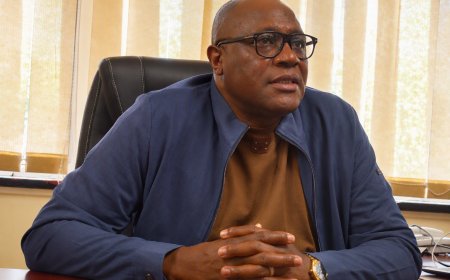
n By Delicious Mathuthu n nn n Kampala - Ugandan President Yoweri Museveni (pictured) was declared the winner of the January 15 general elections, securing a seventh term with 71.65% of the vote, according to official results released by th
 anostrofy
 By Delicious Mathuthu
Kampala - Ugandan President Yoweri Museveni (pictured) was declared the winner of the January 15 general elections, securing a seventh term with 71.65% of the vote, according to official results released by the country's Electoral Commission.
The 81-year-old leader, who has ruled the East African nation since 1986, received approximately 7.94 million votes out of more than 11 million cast, extending his grip on power amid widespread allegations of rigging, voter intimidation and a nationwide internet shutdown that critics say undermined the poll's credibility.
Main opposition challenger, Robert Kyagulanyi, popularly known as Bobi Wine, garnered 24.7% or about 2.7 million votes, the commission said.

Wine, a 43-year-old musician-turned-politician and leader of the National Unity Platform (NUP), immediately rejected the outcome as "fake" and called for peaceful protests, citing ballot stuffing, arrests of polling agents and security forces' interference.
"This is the most fraudulent election in the history of Uganda," Wine said in a video message recorded from an undisclosed location, alleging that members of polling staff were kidnapped to manipulate results.
He claimed to have escaped a raid on his home by police and military, hours before the results were announced, though authorities denied any arrest or abduction.
The election, which also filled 529 parliamentary seats, saw a voter turnout of around 57% of the 19.6 million registered voters, down from 59% in 2021, according to preliminary data from the Electoral Commission.
Museveni's National Resistance Movement (NRM) retained a strong parliamentary majority, winning about 336 seats, while NUP surged to 61 seats, up from 57 in 2021, reflecting growing urban youth support for the opposition.
Independent candidates and smaller parties claimed the rest.
Regional breakdowns showed Museveni dominating rural areas and his western Ugandan stronghold, where he polled over 80% in districts like Kiruhura and Ntungamo.
Wine performed strongly in the central region, including Kampala, where he secured 65% of votes, highlighting a generational and urban-rural divide.
Youth under 35, who make up 78% of Uganda's population, were a key demographic; pre-election polls by Afrobarometer indicated 52% favored opposition candidates, driven by unemployment rates hovering at 9.2% and economic frustrations.

The poll unfolded against a backdrop of heightened restrictions, including a government-imposed internet blackout that began on Jan. 13 at 6 p.m. local time and lasted until January 17 evening, affecting an estimated 27 million internet users, about 60% of the population.
The Uganda Communications Commission (UCC) justified the shutdown as necessary to curb "misinformation, disinformation, electoral fraud and related risks," including blocking social media, email and streaming services across mobile broadband, fiber optic and satellite networks.
Minister of State for Youth and Children Affairs, Balaam Barugahara, later attributed the outage partly to a ship damaging undersea cables in Mombasa, Kenya, though experts and opposition figures dismissed this as a cover for deliberate censorship.
The blackout echoed the 2021 election, when internet access was also cut for a week amid protests that left dozens dead.
This time, it prevented real-time vote verification and communication, with Wine's team alleging it facilitated rigging.
Amnesty International condemned the move as a "brazen attack on the right to freedom of expression," urging an immediate lift of the restrictions.
Compounding concerns, the National Bureau for Non-Governmental Organisations (NGOs) suspended permits for several civil society organizations on Jan. 9, including Chapter Four Uganda, the National Coalition of Human Rights Defenders, the Uganda National NGO Forum, the Alliance for Finance Monitoring (ACFIM), the African Centre for Media Excellence (ACME), the Human Rights Network for Journalists-Uganda (HRN-J) and the African Centre for the Treatment and Rehabilitation of Torture Victims (ACTV).
The African Commission on Human and Peoples' Rights (ACHPR) expressed deep concern over these actions in a Jan. 16 press release, stating.
"The Commission is deeply concerned by the directive of the Uganda Communications Commission (UCC) dated 13 January 2026... directing all licensed Mobile Network Operators (MNOs) and Internet Service Providers (ISPs) to suspend (a) public internet access; (b) the sale and registration of new SIM cards; and (c) outbound data roaming services," the commission said.
The ACHPR added that these measures "restrict the rights to freedom of expression, association and assembly... under Articles 9, 10, 11 and 13 of the African Charter on Human and Peoples’ Rights."

Photo Credit- seneweb.com
It urged Uganda to immediately restore full internet access and mobile communication services and reinstate the permits of all suspended Civil Society Organizations, emphasizing the need for protections during the electoral period.
Post-election, tensions escalated into violence. At least seven people were reported killed and three injured in overnight clashes between police and opposition supporters in central Uganda on Jan. 16, with reports of tear gas and live ammunition used to disperse crowds as well.
In Butambala district, killings were linked to disputed local results. @Hotmictalks Protests erupted in Kampala and Mbale, with Wine's call for nonviolent action echoing on social media platforms like X, where users shared leaked videos purporting to show Wine leading with 69.76% in unofficial tallies, claims unverified but reportedly fueling unrest.
International reactions were mixed. The African Union Commission commended the election's conduct and congratulated Museveni, with Chairperson Mahmoud Ali Youssouf praising the commitment to consolidating democratic gains.
A joint AU-COMESA-IGAD observation mission, led by former Nigerian President Goodluck Jonathan, issued a preliminary report on January 17 noting peaceful voting but acknowledging challenges like the internet blackout.
The United Nations Human Rights Office criticized the atmosphere of repression, while the United States and the European Union called for transparency in result verification.
As of January 18, internet services were gradually restoring, but sporadic outages persisted in rural areas.
Security forces remained deployed in hotspots, with police warning against "unlawful assemblies."
Wine's whereabouts been unclear so far, and his party reported dozens of arrests.
Analysts say the results reinforce Museveni's dominance but expose deepening divisions, with youth unemployment and corruption, Uganda currently ranking 142nd on Transparency International's Corruption Perceptions Index, likely to fuel ongoing discontent.
Museveni, in a victory address, pledged to focus on economic recovery, citing GDP growth of 6.2% in 2025 and oil production ramp-up from the Lake Albert fields as priorities.
The ACHPR reserved the right to issue urgent appeals, signaling potential further scrutiny.