"I Am Back"
 Delicious Mathuthu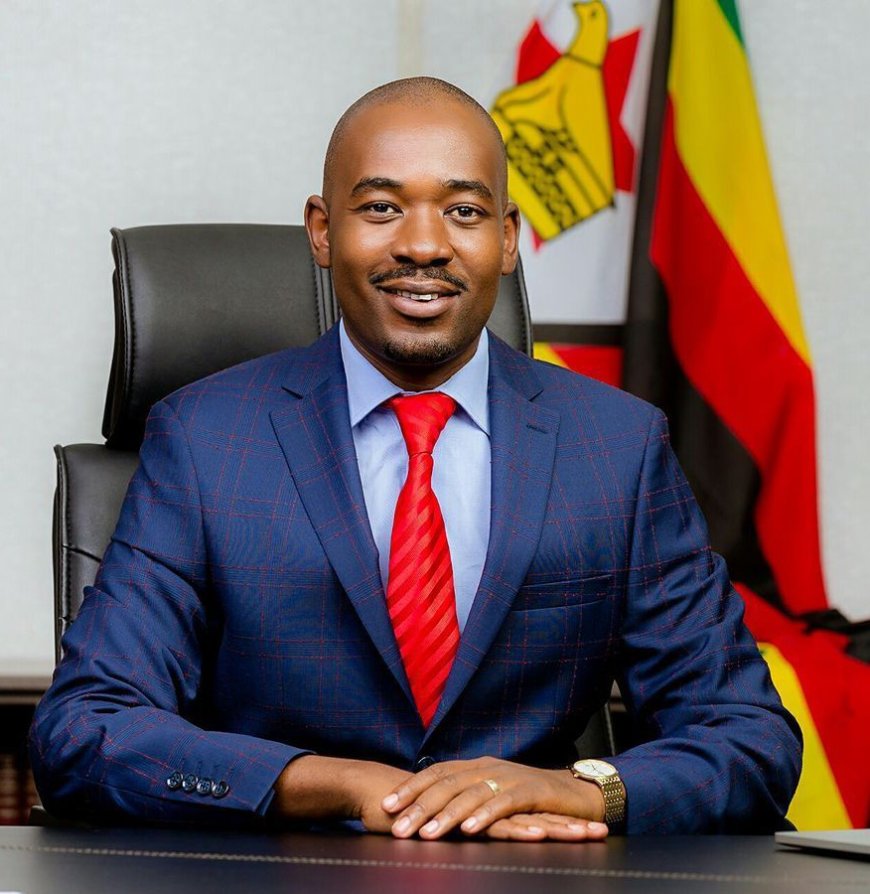
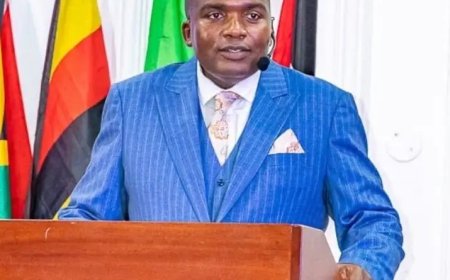
Harare - Firebrand former leader of Zimbabwe’s main opposition, Nelson Chamisa, has declared his return to the frontlines of the country's turbulent political landscape, vowing to reignite hope after two years of self-imposed absence from the official stage.
In a move that points to a shift in his strategy to challenge ZANU PF and President Emmerson Mnangagwa, the 47-year-old lawyer and preacher announced he is "back on the floor" to lead what he describes as a broad citizen-based movement rather than a traditional political party.
"I come to you at such a critical moment in the history of our country, possibly after two years, having left the dancefloor, hoping that somebody else would occupy that dancefloor," Chamisa told members of the press in Harare on Friday, January 23, 2026.
"But I see there's none who has chosen to occupy the dancefloor and the dancefloor is vacant.
"And I've seen it fit that I'm back on the floor to dance for my nation, to dance for the citizens, and to dance for the future," he said.
Chamisa’s political trajectory has been defined by his status as a prodigy of the opposition.
Emerging from the Zimbabwe National Students Union (ZINASU), he became the country's youngest Member of Parliament at age 25 in 2003.
By 31, he was the youngest cabinet Minister in the Government of National Unity, serving as Minister of Information Communication Technology.
His rise to the helm of the then Movement for Democratic Change (MDC) following the death of founding leader Morgan Tsvangirai in 2018, was however marred by bitter internal power struggles and subsequent party splits.
Despite these fractures, he proved his electoral potency in the 2018 general election, narrowly losing to President Mnangagwa in a result he still refuses to accept.
In 2022, after losing the MDC name and assets to a rival faction led by Douglas Mwonzora in a series of court battles, Chamisa founded the Citizens Coalition for Change (CCC).
But history repeated itself following the disputed 2023 elections; Chamisa abruptly resigned from the CCC in January 2024, claiming the party had been hijacked and infiltrated by state-sponsored actors following the infamous Sengezo Tshabangu recalls of publicly elected officials from Parliament and councils.
His latest announcement, framed as Agenda 2026, attempts to distance his future ambitions from the rotten compromise of the past.
He argues that the traditional opposition model is exhausted, having been weakened by entitlement, fatigue and being bought.
"This agenda is not about personalities. It's not about individuals," Chamisa said, adding that "It is not about political parties either, but about citizens, about a movement that embraces all citizens".
The strategy for his return centers on five pillars, including building a "new national consensus" and "reclaiming citizen agency".
Chamisa claims to have spent his time away from the public eye engaging with regional bodies like the Southern African Development Community (SADC) to find a remedy for what he describes as Zimbabwe’s vicious cycles of violence and disputed mandates.
Critics, however, remain skeptical, noting that his previous departure from the CCC left his supporters in chaos and the opposition without a clear institutional structure.
Others argue that his focus on organic movements may be another attempt to maintain centralized control without formal party oversight.
Despite the skepticism, Chamisa’s message remains one of defiance against the status quo.
"We have endured decades of crisis, political intolerance... Hatred has become a religion," he said, painting a bleak picture of the current state of the nation.
"Zimbabwe must reset. Zimbabwe needs a fresh start," he said.