
From Hustling to Building a Business
A three-day boot camp in Gweru challenged entrepreneurs and creatives to rethink their ideas, protect their work and explore sustainable business opportunities.
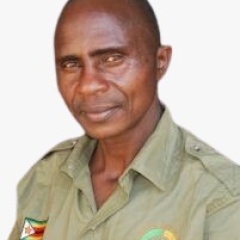 Dumisani Ndlovu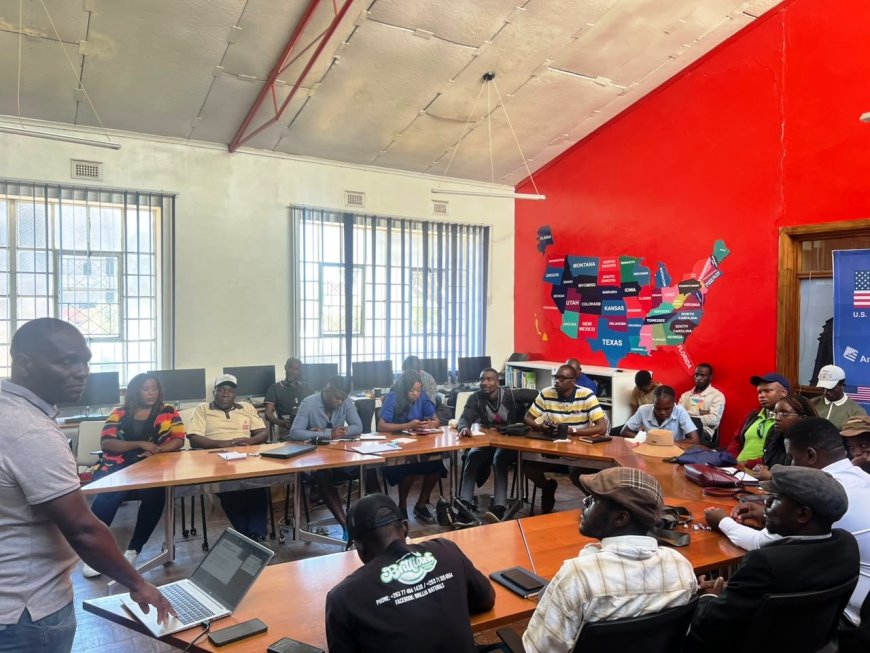
Gweru — For Sisasenkosi Ndlovu, making money from different activities had always been simply a matter of hustling.
The word captured the reality of finding opportunities wherever they appeared, taking on different activities and looking for ways to generate an income.
But after spending three days learning about intellectual property, market validation, technology transfer, licensing and commercialisation, Ndlovu began looking at that hustle differently.
Could some of what had been treated as informal income-generating activity become a structured business?
“I was just hustling, actually,” Ndlovu said.
That question became one of the central lessons for Ndlovu and three other participants at the Advancing Tech Transfer and Commercialisation Boot Camp held at the American Corner Gweru from September 10 to 12.
The four came from different worlds — event management, beauty, journalism and filmmaking, as well as informal income-generating activities — but the programme encouraged them to examine something they had in common: whether the work they were already doing could be developed, protected and taken to the market as a business.
“They gave a difference between a hustler and an entrepreneur,” Ndlovu said.
“So now, as someone who has learned, I can then learn how to be an entrepreneur from what I'm hustling on.”
That shift in perspective was perhaps more important than any single lesson delivered during the three-day programme.
For event creator Precious Zvimba, the training opened her eyes to something she had previously regarded as too technical to have much relevance to her day-to-day business.
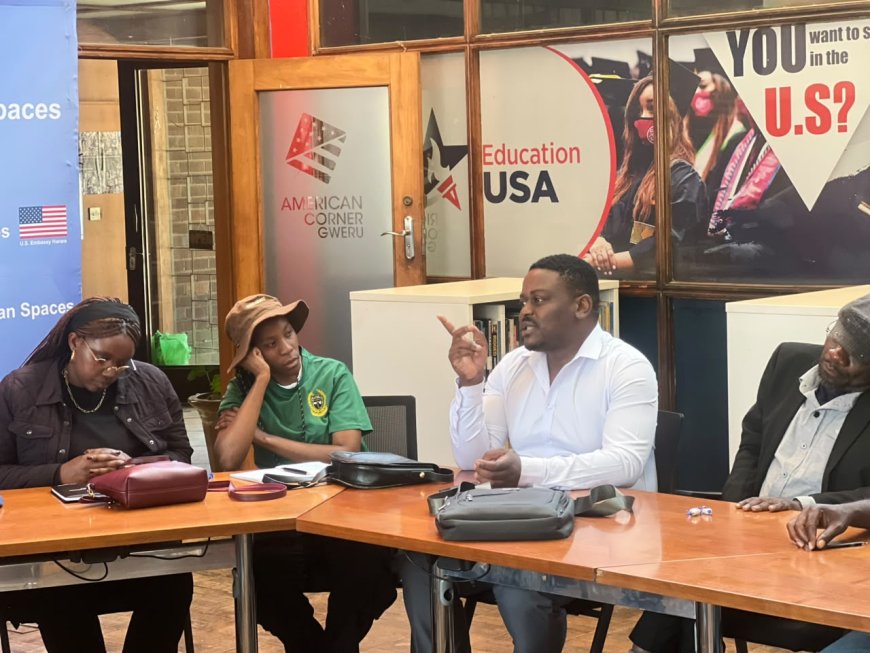
Zvimba runs Assured Elegance, an event-creatorship business involved in concept development, vendor sourcing and event execution.
Before the boot camp, intellectual property had seemed distant from the practical business of organising events.
“I thought it was too technical,” she said.
But the sessions made her consider the co
mmercial value of things she had previously taken for granted — her business name, logo, concepts and other creative work.
“We think that we know these things and the implications that those things have,” she said.
“As a person who is in business, I actually need to follow the processes when it comes to registration, when it comes to IP, when it comes to patents when necessary.”
For Zvimba, intellectual property was no longer simply a legal or administrative subject. It was part of building and protecting a business.
The same realisation came from a different direction for beauty entrepreneur Fadzai Polite Zamba.
Through Polite Beauty, Zamba deals in wigs, makeup and skincare products in an industry where products, trends and customer preferences are constantly changing.
The training made her think more carefully about the ideas and commercial assets that businesses develop — and the importance of understanding how they can be protected.
“We might actually fight to say, you know what, I'm the one who came up with the idea first,” she said.
But beyond intellectual property, Zamba left with another lesson: an entrepreneur cannot afford to stop learning.
“With this technology world that we are in, things are advancing on a daily basis,” she said.
“There is need for you to research daily on what's happening in your aspect of business.”
For her, remaining commercially relevant means paying attention to changes in the industry, understanding customers and continually researching developments that could affect the business.
Freelance journalist and filmmaker Kelvin Karima came to the programme with a different experience.
His relationship with the American Corner had begun months earlier, when he attended programmes covering digital skills, online safety and applications relevant to professional work.
The commercialisation boot camp extended that learning into an area he had not always associated with journalism and filmmaking — business.
“When I started coming here sometimes in March, it was about how best one can digitalise yourself and stay safe online and all those applications that you might deem necessary in whichever area of field that you are partaking,” he said.
The new training challenged what he described as a common perception that media work is simply a profession rather than a business.
“People would think the media sector is not a business,” he said. “It's just an approach that you are just doing outside there. But it's a business on its own way.”
For Karima, content production, filmmaking, digital publishing and social media could all form part of a commercial enterprise if approached with the right mindset.
“Someone can actually earn a living with social media,” he said.
He pointed to Zimbabwean content creators such as The Mighty Teens and Madam Boss as examples of people who have developed commercial opportunities through digital platforms.
But he stressed that simply being on social media did not automatically create an income.
“The approach at which you partake determines if you want actually to monetise it or you're just taking it as an entertainment tool.”
That distinction — between participating in an activity and deliberately building a commercial model around it — ran through the experiences of the participants.
It was also central to the thinking behind the boot camp.
For business development expert Daniel Cholele, the programme was designed to address a problem that affects many innovators and startups: ideas that remain ideas.
“The event was aimed at capacitating innovators and startups with practical knowledge and skills on how to upscale their startups, how to move from the point of innovation into having commercially viable products on the market,” he said.
The sessions covered intellectual property and its different forms, intellectual property filing, customer discovery, market validation, commercialisation and pitching innovations to potential funders.
Cholele said many innovators had good ideas and even prototypes, but lacked the knowledge required to move them into the marketplace.
“You know, most of them, they've got ideas, most of them have got innovations, but some of these innovations, they just die as innovations without seeing the light of the day,” he said.
The objective was therefore not simply to generate more ideas, but to help participants understand what comes after the idea.
That includes identifying customers, protecting intellectual property, finding partners, developing commercialisation strategies and understanding how an innovation can eventually reach the market.
Engineer Reginald Chirapa said the programme was developed against the background of what he described as fragmentation within Zimbabwe's innovation ecosystem and a persistent gap between innovation development and successful commercialisation.
Zimbabwe has university research, grassroots innovations and emerging technologies, but promising ideas can struggle to progress from concept and prototype to viable products and enterprises.
The boot camp sought to give participants a clearer understanding of where their innovations fit into that wider ecosystem, which institutions they may need to engage and how they can connect with markets, industry, investors and strategic partners.
The emphasis, Chirapa said, was ultimately on application.
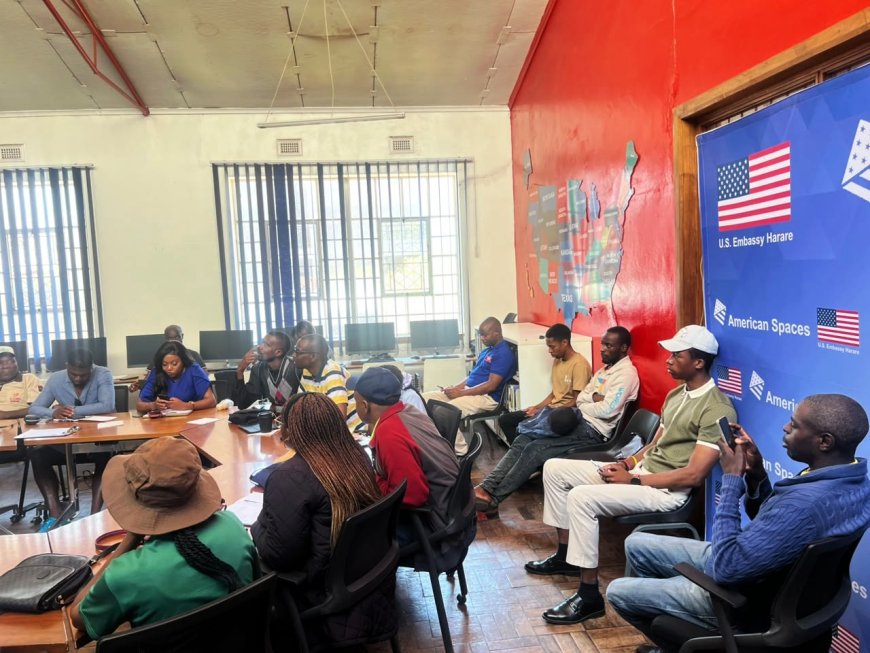
Participants should be able to assess where their innovation stands, identify gaps and make more informed decisions about intellectual property, customers, partnerships, investment and market entry.
But neither Cholele nor Chirapa suggested that three days could provide all the answers.
Cholele said further training was required in areas such as financial management, proposal writing, practical research and market research.
“We touched based on some of those aspects but we believe that within three days you cannot cover all,” he said.
“This is just one of a continuation of trainings that are going to be done to ensure that we cover all aspects.”
The real test, therefore, lies beyond the training room.
Chirapa said the impact of the programme should be measured by what participants do in the months that follow — including whether they validate their ideas with potential customers, protect and strategically manage their intellectual property, build partnerships and pursue market or investment opportunities.
For the participants, some of the value of the programme was also found in the people they met.
Zvimba said the boot camp brought together people from different professional backgrounds, including broadcasting, fashion, journalism and academia.
“We have had people from different spaces, some in broadcasting, some in fashion, some in journalism and professors as well,” she said.
The interaction exposed participants to perspectives outside their own industries.
“We don't always know everything, inasmuch as information is available on the Internet,” she said.
Zamba said those interactions could also lead to professional relationships.
“You get to link up with some people that you can say, ‘You know, I can work with this person,’” she said.
In that sense, the boot camp was not only about intellectual property or commercialisation.
It was also about helping people see connections between their different areas of work.
That broader approach is part of what the American Corner Gweru seeks to provide.
The centre, housed at Gweru Memorial Library and supported through a partnership with the U.S. Embassy, provides access to technology, learning resources and programmes focused on areas including digital skills, entrepreneurship, professional development and innovation.
For Cholele, the response from participants demonstrated the practical value of such programmes.
“For me this has been an eye opener,” he said.
“Seeing the participants that have come to this workshop, seeing the level of interactions that we have, the practical aspects that we did, the discussions that we were having, I'm seeing that the American Corner is making impact, changing lives, also capacitating our locals, our startups, our young minds to have practical skills that they can actually put into practice and generate income out of them.”
He said the programme was intended to go beyond classroom theory.
“What we are doing here is something that is not just theoretical, it's theory into practice,” he said.
“It involves the theory, the methodology, the practical aspects.”
For Ndlovu, however, the immediate outcome is more personal.
The boot camp did not create a business for him. It did not turn an informal activity into a company overnight.
Instead, it gave him a different way of looking at the work he was already doing.
“I've had my mind open to certain things, even for things that I would want to do for myself,” he said.
That may be the first step in the journey from hustling to building a business.
For Zvimba, the next step is to apply what she learned about intellectual property to Assured Elegance.
For Zamba, it means continuing to research her market and keeping pace with changes in the beauty industry.
For Karima, it means applying commercial thinking to journalism, filmmaking and digital content.
And for Ndlovu, it begins with taking another look at the activities he has always described simply as hustling — and asking whether some of them can become something more structured, protected and commercially viable.
The three-day programme has ended.
The real work begins now.