Forestry Commission Sounds Alarm as Mining Threatens Zimbabwe’s Forests
n By Dumisani Ndlovu n nn n Shurugwi - The Forestry Commission says Zimbabwe’s forests are under siege, and unless urgent, collective action is taken, the country risks losing one of its most important natural treasures. n nn n As mining ex
 anostrofy
 By Dumisani Ndlovu
Shurugwi - The Forestry Commission says Zimbabwe’s forests are under siege, and unless urgent, collective action is taken, the country risks losing one of its most important natural treasures.
As mining expansion accelerates across the Midlands and beyond, Commissioner Sylvia Sithole (pictured) says the time for passive concern is over.
She said what is required now is decisive action.
Addressing miners, industry leaders and community representatives in Shurugwi during a provincial tree planting day hosted by Cheng Xi Mine, Sithole lamented the slow pace of land rehabilitation despite years of environmental degradation.
She stressed that the efforts made to date, while commendable, fall woefully short of what is needed to reverse decades of deforestation.
“We are not satisfied by the small piece of land rehabilitated so far.
“I therefore challenge every company and every individual in our province to step up afforestation.
"Our forests are our shared heritage, and their protection is our shared responsibility," she said.
Her remarks come at a time when mining-induced land degradation is rising sharply across Zimbabwe.
In Boterekwa and Chiadzwa, almost entire landscapes have been reshaped, with river systems polluted and communities relocated to make way for mining operations.
In Gwanda, gold mining has torn through once-productive grazing lands, leaving behind scarred earth and toxic water sources.
Meanwhile, in Zvishavane and Insiza, artisanal mining continues to fuel violence, lawlessness and the rise of dangerous gangs such as MaShurugwi.
Elsewhere, Mudzi District still grapples with the deadly legacy of past conflicts, where landmine contamination remains a threat to both humans and wildlife.
Environmentalists warn that without strong governance and corporate accountability, Zimbabwe risks falling deeper into the so-called “resource curse,” where mineral-rich regions suffer from poverty, displacement and environmental ruin.
Women and children bear the heaviest burden, often losing access to clean water, safe land and natural resources essential for daily survival.
Since 2018, the Forestry Commission has partnered with several mining companies to rehabilitate approximately 120 hectares of land in the province.
These partnerships include Chen Xi, Unki, Sino-Zimbabwe, Mimosa, Besta, Zimasco, ZimAlloys and several others.
Sithole acknowledged the progress but underscored that much more must be done to match the scale of ongoing environmental destruction.
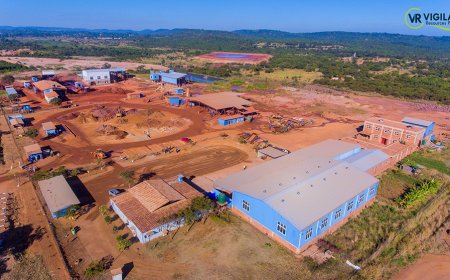
Among the companies demonstrating commitment to responsible mining is Chen Xi Investments.

Chen Xi General Manager, Simon Karimanzira, reaffirmed the company’s dedication to ensuring that development does not come at the expense of the environment.
“Environmental degradation footprint that mining can create drives our strong dedication to reforestation, land rehabilitation and sustainable environmental practices.
“Development should never come at the cost of environmental destruction. Instead, development and conservation should go hand in hand.” he said.
The company has planted more than 20,000 trees this year alone, including 11,200 in Boterekwa, achieving a remarkable 95 percent survival rate through improved nurseries and irrigation systems.
Of the 70 hectares disturbed by mining, 33 hectares have already been restored, the company claims, a significant 46 percent rehabilitation rate.
On National Tree Planting Day, the company targeted 2,000 indigenous trees, with the resilient Mumvee species taking centre stage.
Chen Xi currently produces 40,000 seedlings annually and plans to have more than double next year, with an ambitious long-term goal of planting one million trees over the lifespan of its mining operations.
To strengthen its technical capacity, Chen Xi has also forged partnerships with Hunan City University of China and several Zimbabwean Universities.
The collaborations focus on slope engineering, ecosystem restoration and advanced land rehabilitation techniques, essential tools in the battle against ecological decline.
Meanwhile, research by Midlands State University, conducted in collaboration with rural district councils, is helping map out strategies to safeguard natural woodlands and keep Zimbabwe’s forest cover above the national benchmark of 47 percent.
But despite these pockets of progress, the broader picture remains troubling. In many communities, poverty continues to push residents into dangerous artisanal mining, even as they watch their forests shrink and their water sources become unsafe.
Traditional leaders say forests, once the backbone of culture, livestock grazing and firewood supply, are vanishing at an alarming rate.
“Protecting our forests is not the work of the Forestry Commission alone,” Commissioner Sithole said in her closing remarks, adding “It is the duty of every citizen, every company and every community. If we act together, our forests will survive. If we fail, the cost will be borne by generations yet to come," she said.