Africa First, Unity Above All: Ramaphosa Closes Historic G20 With Call for Solidarity Amid US Boycott
n By Delicious Mathuthu n nn n Johannesburg - South African President Cyril Ramaphosa on Sunday, November 23, 2025, brought down the gavel on the first G20 summit ever held on African soil, declaring that “the greatest opportunity for prosp
 anostrofy
 By Delicious Mathuthu
Johannesburg - South African President Cyril Ramaphosa on Sunday, November 23, 2025, brought down the gavel on the first G20 summit ever held on African soil, declaring that “the greatest opportunity for prosperity in the 21st century lies in Africa” while issuing an impassioned plea for global unity in the face of a bullish boycott by the United States of America (US).
“The greatest opportunity for prosperity in the 21st century lies in Africa. Harnessing that opportunity will require a rather strong partnership between Africa and the G20, and indeed between Africa and the rest of the world,” Ramaphosa told leaders gathered at Johannesburg’s Nasrec Expo Centre.
In a pointed rebuke to division exhibited by the US, Ramaphosa, the group's current president, said development only comes through a united front.
“Our shared goals outweigh our differences,” he said.
The three-day summit, themed “Solidarity, Equality, Sustainability”, ended with the adoption of a leaders’ declaration despite the conspicuous absence of US delegation, a boycott ordered by President Donald Trump that turned the symbolic handover of the G20 presidency into a diplomatic flashpoint.
“When we become more successful, all of us, then the whole world becomes successful,” Ramaphosa said, laying out an “Africa first” vision that placed the continent’s debt distress, climate vulnerability and mineral wealth at the centre of the global agenda.
The rift between South Africa and the US erupted earlier in February 2025 when US Secretary of State, Marco Rubio, dismissed South Africa’s G20 priorities as “...nonsense and climate-change alarmism wrapped in anti-American rhetoric”.
Trump later revived long-debunked claims of “white genocide” in South Africa and accused Pretoria of siding with Russia and China.
The attacks by Washington demanded veto power over the final summit declaration and threatened to gut G20 working groups on climate finance and gender equality when it assumes the rotating presidency in 2026.
When Pretoria refused to delay or dilute the text, the White House pulled out entirely.
“No senior US official, not even the ambassador, will be on that stage,” a White House Spokesperson said on the eve of the summit.
South Africa rejected a US last minute proposal to have a junior embassy official receive the ceremonial gavel.
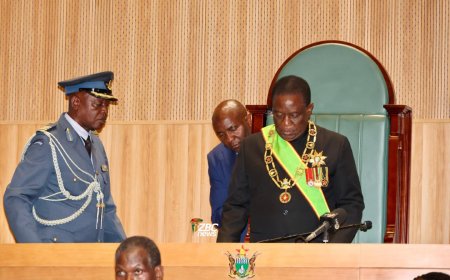
Instead, Ramaphosa closed the meeting with a measured acknowledgement, stating that, “I now say that this gavel of this G20 summit formally closes this summit and now moves on to the next president of the G20, which is the United States, where we shall see each other again next year.”
The Rift
The diplomatic crisis between the two nations was not an isolated event, but the culmination of several months of deteriorating relations between Pretoria and Washington.
Friction had been mounting well before the summit, rooted in South Africa's domestic policy changes and its increasingly non-aligned foreign policy stance.
A key turning point was the signing of the land Expropriation Act of 2024 in January 2025.
Intended to address decades of historical injustices by the apartheid-era land dispossession, the law notably allows for the expropriation of land, potentially with "nil compensation" in specific cases.
The move drew a swift and aggressive response from the US. The Trump administration publicly alleged the law discriminates against white South Africans (Afrikaners) and constitutes a massive human rights violation.
Washington's retaliation was multi-pronged. The US froze financial aid, including critical funding for health programs such as the President's Emergency Plan for AIDS Relief (PEPFAR).
President Trump further escalated tensions by signing an executive order offering refugee status to white Afrikaner farmers, a move widely seen as interference in South African domestic affairs.
The US also imposed a 30% tariff on South African goods, severely impacting trade, and expelled the South African ambassador in March 2025.
Beyond the land reform controversy, South Africa’s foreign policy decisions have fundamentally grated on US interests.
Washington views Pretoria's strengthened alignment with US geopolitical rivals, particularly Russia and China within the BRICS bloc, as a clear move against Western stability.
The antagonism was compounded by South Africa’s consistent policy of non-alignment regarding Russia's invasion of Ukraine, as well as its high-profile decision to bring a genocide case against Israel before the International Court of Justice (ICJ) in late 2023, a move that drew a hostile reaction from the US.
The hostilities between the two nations originating from global non-alignment and land expropriation are nothing new as Zimbabwe first fell victim of such after the year 2000 fast track land reform, where the late President Robert Mugabe led land apropriation in the country.
Resultantly, led by the then President George Bush, the US declared economic sanctions on Harare contributing to Zimbabwe economic crisis.
South Africa G20 Summit Successes
During the summit, delegates adopted a declaration that pledged new support for debt-vulnerable low- and middle-income countries, committed to scaling up climate finance and strengthening multilateral development banks, endorsed South Africa’s voluntary principles on disaster-risk reduction and reaffirmed the G20 Critical Minerals Framework to ensure Africa’s resources drive sustainable development rather than extraction.
“Together, we must create a virtuous cycle of reduced debt, higher public investment, and more rapid and inclusive economic growth,” Ramaphosa said as the summit came to a close.
He paid tribute to the foundations laid by previous Global South presidencies which include Indonesia, India and Brazil, and insisted the G20 remains indispensable.
“The indicative report already says that the G20’s existence should continue as it serves a good purpose in giving guidance to the economic well-being of the world,” Ramaphosa said, referring to the “G20 at 20” review commissioned under South Africa’s leadership.
In a closing flourish that drew sustained applause, Ramaphosa called for sustainable unity.
“We have laid the foundation of solidarity. Now we must build the walls of justice and the roof of prosperity.
"Let us move forward together, demonstrating to the world that we do have the capacity to confront and overcome the world’s challenges… And together, we can ensure that no one is left behind,” he said.
Earlier on, a deeper analysis of President Ramaphosa's opening address at the summit goes beyond the summit's declared themes by explicitly emphasizing the importance of multilateralism and invoking the African philosophy of Ubuntu ("I am because we are") to foster shared human progress.
He specifically framed the summit's work around the priorities of the Global South (developing countries) and Africa's development.
The United States will host the next G20 summit at Trump National Doral Miami in 2026.