Adelaide Hills Mum Builds 1,000-Hive Network to Protect Australian Food Supply
By Harry Taruva — Adelaide Hills mother, Danielle Munn, has launched 1000 Hives, a bee conservation initiative aimed at protecting Australian agriculture as Varroa mite threatens bee populations and pollination.
 Harry Taruva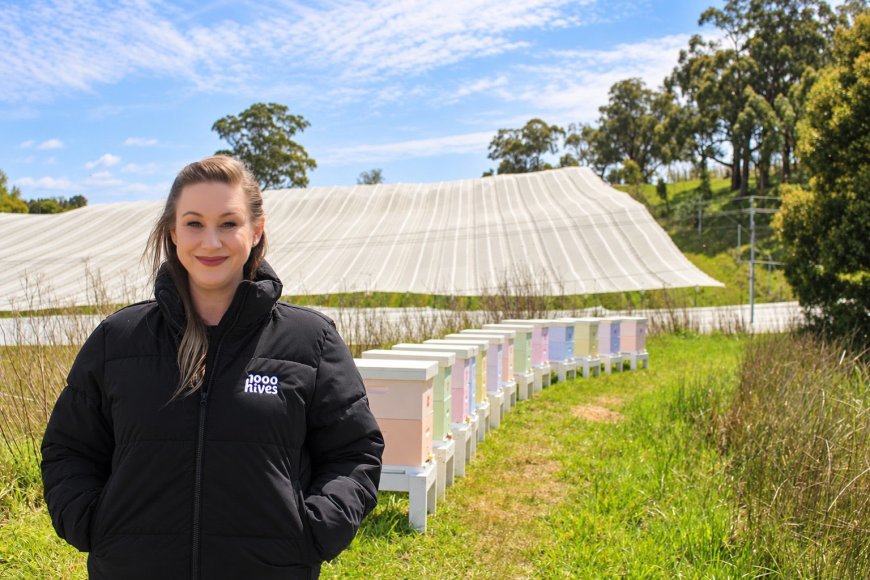
Adelaide, Australia — An Adelaide Hills mother has launched a bee conservation initiative aimed at helping Australian farmers secure pollination as the spread of Varroa mite threatens bee populations and raises concerns about food production and prices.
Danielle Munn, founder of 1000 Hives, has established the network to strengthen pollination resilience by placing permanently managed beehives on farms, orchards and rural properties across Australia.
The organisation has already placed its first 40 hives at a working apple orchard in Lenswood, South Australia, with a long-term target of establishing 1,000 managed hives.
“For generations, many Australian farms benefited from pollination happening naturally in the environment.
"As those feral populations decline, farmers increasingly rely on managed hives to maintain production,” Munn said.
The initiative comes as Varroa mite, which weakens honeybee colonies, creates additional challenges for beekeepers and growers.
Maintaining healthy managed colonies requires regular inspections and treatment, increasing the importance of organised pollination services.
Industry bodies have warned that farmers can no longer depend on wild bee populations to provide sufficient pollination.
Apple and Pear Australia has urged orchardists to plan and budget for managed hives before flowering, while Cherry Growers Australia says commercial pollination is increasingly necessary to protect fruit size and quality.
The scale of the potential problem is highlighted in the Wheen Bee Foundation’s 2026 pollination security report, which estimates that a 60% decline in managed hive numbers could leave a shortfall of approximately 290,000 commercial hives across New South Wales, Victoria, Queensland and South Australia during the August pollination peak.
Munn said the initiative was driven by the need to strengthen pollination capacity before the challenges facing farmers escalate.
“I’m not a large organisation. I’m not backed by government funding. I’m simply someone who believes that waiting until there’s a crisis isn’t the answer,” she said.
Through partnerships with professional beekeepers, 1000 Hives places colonies permanently on suitable properties rather than moving them between crops each season.
The organisation selects sites strategically, considering the crops grown on host properties and surrounding farms to build pollination capacity that benefits wider agricultural communities.
A shortage of bees during flowering could leave growers facing lower yields and poorer-quality fruit.
Increased demand for managed hives could also push up pollination costs, adding pressure on smaller farming businesses.
Munn said the consequences extended beyond farms to consumers and household budgets.
“It affects pollination, food production, farming costs and ultimately the price Australians pay at the checkout,” she said.
Under the community initiative, members of the public can contribute from $10 through a one-off payment to help establish and maintain hives.
Participating growers receive hive placement and management at no direct cost.
The organisation is also appealing to beekeepers, landowners and growers with suitable properties to join the network as it expands.
“If Australia is losing pollination capacity, we need to start rebuilding it,” Munn said.
1000 Hives describes itself as an Australian bee conservation and pollination resilience organisation focused on biodiversity, biosecurity, environmental monitoring and long-term environmental infrastructure to support agriculture and regional communities.
Munn said the network's expansion would depend on community participation and cooperation with farmers and beekeepers to establish a more reliable source of pollination in Australia's food-producing regions.