Lawyers Challenge ZHRC Chair Ouster
The removal of Jessie Majome from the Zimbabwe Human Rights Commission (ZHRC) by President Emmerson Mnangagwa has triggered a constitutional storm, with senior lawyer David Coltart joining Lovemore Madhuku and Thabani Mpofu in condemning the move as illegal.
 Dumisani Ndlovu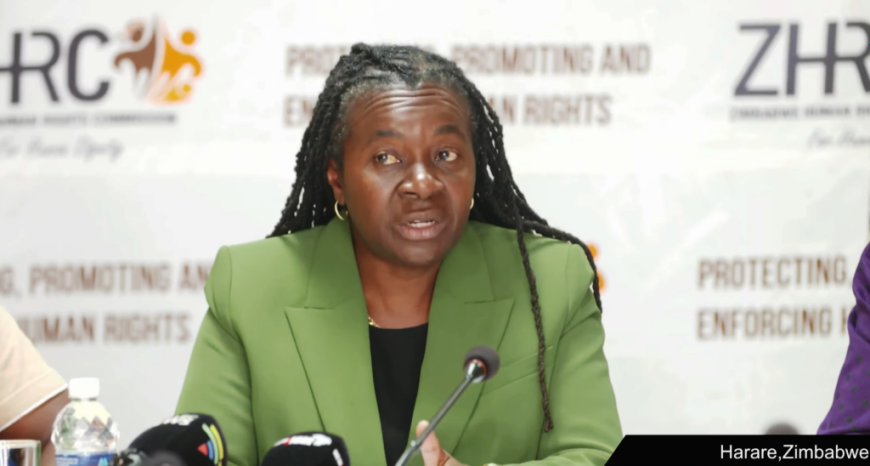
HARARE — The legal and political storm surrounding President Emmerson Mnangagwa’s decision to remove Jessie Majome from the helm of the Zimbabwe Human Rights Commission (ZHRC) is intensifying, with another senior lawyer, David Coltart, describing the move as illegal and a serious violation of the Constitution.
Coltart’s intervention adds to mounting criticism from prominent legal figures, including Lovemore Madhuku and advocate Thabani Mpofu, who have already challenged the legality of Majome’s reassignment to the Public Service Commission.
In a strongly worded statement, Coltart said the President has no authority to “reassign” a sitting chairperson of an independent constitutional commission, stressing that such an action amounts to a removal from office.
“The law is clear — this constitutes removal,” Coltart argued, warning that the decision undermines constitutional protections designed to safeguard the independence of key oversight institutions.
He pointed to constitutional provisions governing independent commissions, noting that their members can only be removed through a formal process akin to that used for judges. This includes an investigation, proof of incapacity, incompetence, or misconduct, and the involvement of the Judicial Service Commission.
Coltart emphasized that none of these procedures were followed in Majome’s case.
“There is no suggestion whatsoever that she is unfit for office,” he said, adding that the reassignment appears to be punitive and linked to Majome’s recent criticism of Constitutional Amendment Bill No. 3 (CAB#3) and the conduct of public hearings.
He further argued that, as a trained lawyer, Mnangagwa should be fully aware of the constitutional requirements governing such matters.
“This is a brazen breach of the Constitution,” Coltart said, calling for the decision to be urgently reversed.
The remarks reinforce earlier criticism by Madhuku, who described Majome’s dismissal as “unconstitutional and void,” and vowed to challenge it, warning of an escalating crackdown on dissent linked to opposition to CAB#3.
Similarly, Mpofu has argued that the reassignment is procedurally flawed, citing Sections 237(2) and 237(3) of the Constitution, which require the establishment of a tribunal and due process before any removal of a commissioner.
The ZHRC, a constitutionally mandated body tasked with protecting and promoting human rights, is designed to operate independently of executive control — a principle now at the centre of the unfolding dispute.
As legal pressure mounts, the matter is increasingly seen as a potential constitutional test case, one that could define the limits of executive authority over independent commissions and the resilience of Zimbabwe’s constitutional order.
With multiple senior lawyers now openly contesting the move, attention is turning to the courts, where a high-stakes legal battle is widely expected.