Fault Lines Exposed: Mliswa’s Broadside Lays Bare Power Struggles Inside ZANU PF
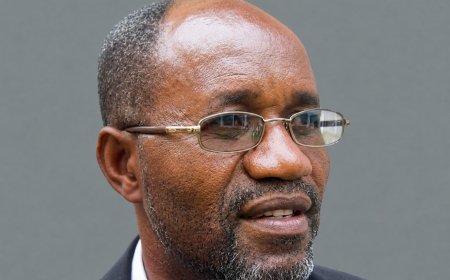
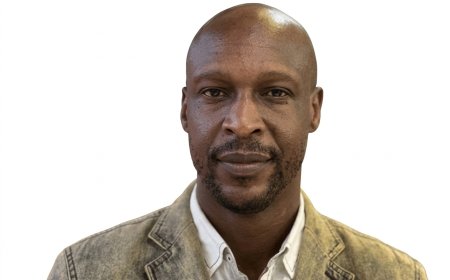
Temba Mliswa’s sharp critique of Vice President Chiwenga and Youth Minister Machakaire exposes internal tensions within ZANU PF. His remarks raise questions about party cohesion, factional dynamics, and the authority behind such interventions, offering a rare glimpse into the ruling party’s shifting power landscape.
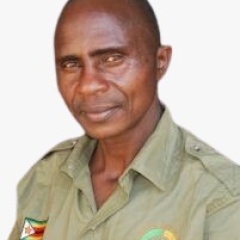 Dumisani Ndlovu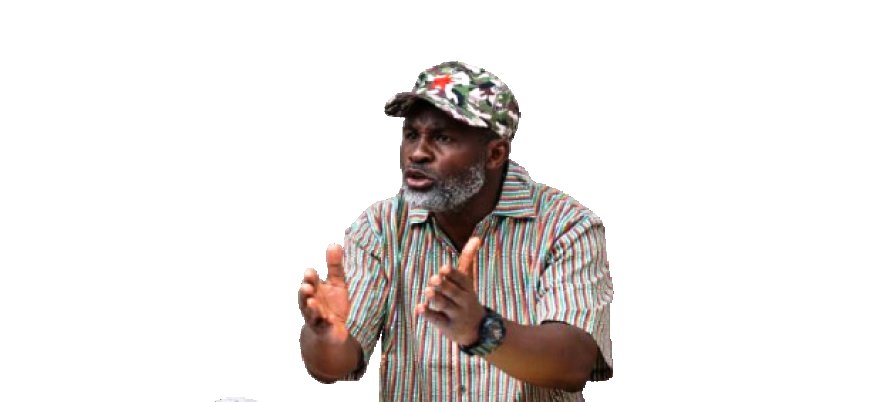
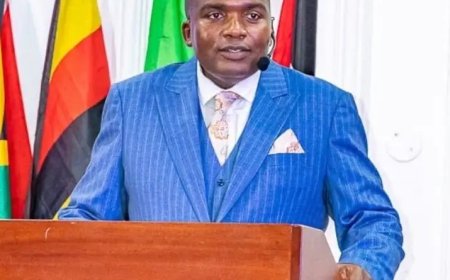
HARARE — A sharply worded intervention by Shurugwi headman and former legislator Temba Mliswa has cast a spotlight on simmering tensions within ZANU PF, raising questions about internal cohesion and the authority under which such claims are being made.
In a series of public remarks, Mliswa accused Rtd General,Vice President Constantino Chiwenga of weakening party unity and deviating from the “One Centre of Power” principle associated with President Emmerson Mnangagwa. He also directed criticism at Youth Minister Tino Machakaire, describing the ZANU PF Youth League as “toothless” and ineffective in defending party leadership.
The remarks have drawn widespread attention but also prompted a more fundamental question from party members.
"It is mindboogling,in what capacity is Mliswa speaking? He does not hold a formal position within ZANU PF structures. As a traditional leader, his role lies outside the party’s official communication and disciplinary frameworks. Yet his statements — invoking party doctrine, assessing internal loyalty, and criticising senior office bearers —the party insider who preferred to remain anonymous mirrored those typically issued .
An independent analyst note that this ambiguity is significant. His comments go beyond external critique and read as internal enforcement, raising the possibility that he is articulating views that may exist within sections of the party, even if not officially expressed.
"The focus on Chiwenga reveals the sensitivity of the moment. A former Commander of the Zimbabwe Defence Forces, he played a central role in the 2017 coup that led to the resignation of former President Robert Mugabe and the rise of Mnangagwa. His position within both the state and the party is shaped by liberation war credentials and longstanding ties to the security establishment, factors that continue to confer significant influence,"he said.
He further said public criticism of such a figure carries broader implications for perceptions of unity and authority within the ruling party.
Mliswa’s description of the Youth League as “toothless” has become a central theme of the controversy. Within ZANU PF’s political culture, the Youth League has historically been associated with mobilisation, messaging, and the defence of party positions. To characterise the structure as lacking “teeth” is to suggest a decline in assertiveness, limited effectiveness in shaping narratives, and an absence of visible engagement during internal contestation.
The criticism of Machakaire, including references to leadership style and priorities, further frames the issue as one of both performance and orientation — contrasting grassroots mobilisation with elite visibility.
Mliswa’s language, including statements suggesting that certain leaders’ “days should be numbered,” has drawn scrutiny for its tone. While the remarks do not explicitly call for violence, analysts caution that such rhetoric can heighten political tensions, particularly in environments where strong language has historically influenced mobilisation.
Observers distinguish between direct incitement, which involves explicit calls to action, and politically charged rhetoric, which may shape perceptions and responses without issuing clear instructions. Mliswa’s comments fall into the latter category — forceful and provocative, but not overtly inciting.
The episode has also renewed attention to possible factional dynamics within ZANU PF. Mliswa’s apparent defence of Mnangagwa’s leadership, alongside his criticism of Chiwenga and praise for figures such as Oppah Muchinguri-Kashiri and Lovemore Matuke, has been interpreted as indicative of emerging alignments.
Although internal differences have long existed within the party, they have typically been managed outside the public domain. The increasingly open nature of such exchanges suggests a shift in how these dynamics are playing out.
The absence of an official response from ZANU PF adds another layer to the unfolding situation. For some observers, the silence reflects a strategic decision to avoid amplifying internal tensions. For others, it points to the complexity of addressing remarks that originate outside formal structures but touch directly on internal matters.
Taken together, Mliswa’s intervention reveals a convergence of issues — authority, loyalty, mobilisation, and succession — within Zimbabwe’s ruling party. Whether his remarks represent an isolated perspective or a reflection of broader internal sentiment remains unclear. What is evident is that they have brought underlying tensions into the open, offering a rare glimpse into the dynamics shaping the party’s internal landscape.
As ZANU PF continues to navigate these pressures, the episode illustrates the challenges of maintaining cohesion while managing competing interests and expectations within its ranks.