The Indelible Mark of Norbert Mafumhe Mutasa: "A Literary Icon”
By Siphosami Ndlovu — Honouring the late Norbert Mafumhe Mutasa, a celebrated Zimbabwean literary icon who mastered deep Shona storytelling through works like Mapatya and Hondo Huru. Beyond his local government career, Mutasa created an enduring artistic dynasty, with children Felex, Norbert Jr., Miriro and Mirirai continuing his rich creative legacy.
 Kwedu News
By Siphosami Ndlovu
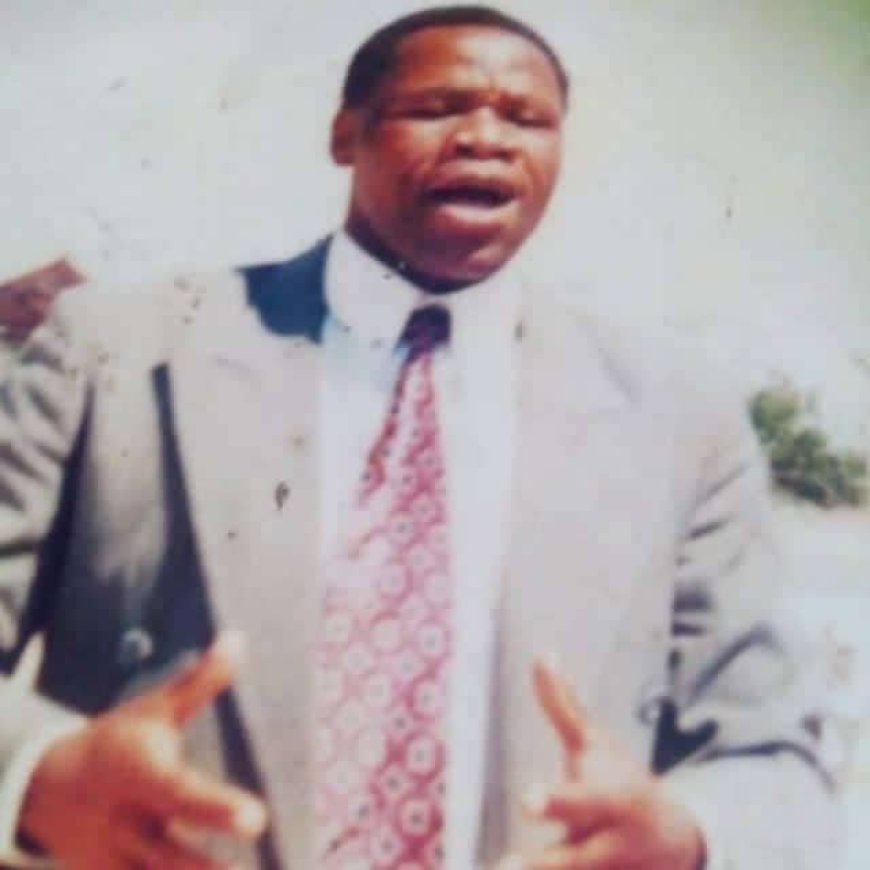
Shurugwi — In the vast landscape of Zimbabwean literature, few luminaries burn as brightly as Norbert Mafumhe Mutasa. A masterful storyteller, Mutasa’s works have woven an intricate tapestry of Shona language and culture, resonating with the very pulse of his people.
Born in 1947 in the serene village of Cheninga, kwaGutu, Mutasa’s literary journey sprouted from the fertile soil of oral traditions.
His parents, skilled narrators, wove tales that transported young Norbert to realms both magical and tangible.
These early encounters ignited a passion for storytelling that would shape his destiny.
"A testament to his innovative spirit, Mutasa's book launches were a fusion of traditional and literary flair.
"He would often brew beer and slaughter a beast, inviting community leaders and villagers to a three-day celebration.
"The festivities featured book reading sessions, interspersed with humorous storytelling, leaving attendees in awe.
"This unique blend of tradition and literature was a hallmark of Mutasa's creative genius, setting him apart as a true original," one of his children, Felex fondly recalls.
"My father's writing was like a humorous journey, leaving everyone at the edge of their seats during the reading section," he said.
He likens his father's poetic skills to those of Shakespeare, a testament to Mutasa's enduring impact on Zimbabwean literature.
Mutasa's impact on Zimbabwean literature is arguably undeniable and his legacy continues to inspire future generations of writers and readers alike.
“Indeed his book was too hard to be understood. I remember teachers from certain school demonstrating at the examination Council saying the book should be kicked out of the syllabus because the Shona was too deep to be understood by ordinary people let alone school children.
"My father had different belief about learning, he believed learning means being taught something difficulty.
"Leaning simple things is not learning. That is why we see people who learnt decades ago are geneous because they learnt difficult things.
"Mr Mutasa ended up giving the book to the 1990 Tongogara High School student in Shurugwi to examine all what they believe was difficult to be understood.
"After the student's highlights, he simplified his Shona language," Norbet Junior revealed.
Mutasa’s educational odyssey led him through Cheninga Primary School, Rupiri (formerly St. Gabriel), and Kutama Mission.
It was at the latter that he crossed paths with Patrick Chakaipa, a revered writer who stocked the flames of Norbert’s literary fervour.
The foundation was laid and Mutasa embarked on a lifelong exploration of words and worlds.
Mutasa’s professional life unfolded in local government, culminating in his role as Chief Executive Officer of the Tongogara Rural District Council until his passing in 2004.
Yet, it was his writing that etched an indelible mark, one that transcended time and circumstance.
His unique style interwove recurring characters and intricate storylines, leaving readers spellbound.
Among Mutasa’s literary gems, several titles stand tall, which include Mapatya, a vivid portrayal of rural life, where the mundane and the mystical collide; Runako Munjodzi, a poignant exploration of love, loss and resilience.
Also to his name is Hondo Huru, a gripping narrative set against the backdrop of Zimbabwe’s struggle for independence and "The Dangerous Journey”, originally titled Kushereketa Kwepwere Namapere, skillfully restructured and translated by his son, Felex Mafumhe Mutasa, to resonate with international audiences.
A Torch Passed On
Mutasa’s legacy lives on through his family. His son, Felex, an expert in literature and a graduate of the University of Zimbabwe, carries the torch.
Felex’s work as a professional scriptwriter and co-author of the popular television soap “Studio 263” continues the lineage of storytelling excellence.
Norbert Mafumhe Mutasa’s name remains etched in the collective memory of Zimbabwe, an enduring testament to the power of words, culture and the indomitable spirit of a literary icon.
Mutasa's family has proudly carried on his literary torch, though most of his children are good writers some have been discourage by the writing career which is no longer paying dividends.
Mutasa's children which include Crispen Mutasa, who is now a pastor, wrote Zano Rinonyengera, a novel which be did not publish like the majority of Mutase’s siblings and Joseph Mutasa, currently based in East London in South Africa, who is also a multi-talented writer and good at drawing and illustration.
“We all inherited drawing from our late father whose most of his book cover illustrations were created by him, and the majority of my father's siblings, including grand children, are artist inspired by my father.
"Any of my fathers can write, unfortunately some people think to be unpublished means one cannot write. It depends on the reason of what you are writing for, if you write for business, then the same business should reward you.
"If not one should think otherwise. It’s no longer business as usual in writing," Felex said.
Norbert Mafumhe Mutasa Junior, who have resorted to other sources of livelihood, recently decided to publish all his Shona poems which he wrote for the past decades.
Norbert like his brother Felex, is a good stage poet, musician, actor who together have features in various films, including Zimbabwe Broadcasting Corporation's familiar Tiriparwendo drama which they acted together and made waves due to their shona palatable sentiments.
"l have no talent in writing novels but l would like to focus more on publishing my large volumes of my Shona poems.
"Watch the space very soon ardent readers would be feasting on my art work," said Norbert Junior said in a telephone interview from Cape Town in South Africa where he is currently based.
Miriro Mutasa, a daughter to the late Norbert, has also penned over ten classic Shona novels making her a lead novelist in the family.
Mirirai Mutasa, a twin sister to Miriro, is also a published author who has co-authored several poetry anthology, short stories, children stories and one novel to her name, ensuring that the Mutasa name remains synonymous with excellence in Zimbabwean arts.