Navajo–Tonga Cultural Summit on the Cards
Chiyubunuzyo Arts & Culture Association is working with United States scholar, Professor Gordon Bronitsky on a proposed Navajo–Tonga Cultural Summit aimed at promoting cultural exchange, indigenous heritage and people-to-people relations between the United States and Zimbabwe.
 Kwedu News
By Alfred Tembo
Gokwe North — Chiyubunuzyo Arts & Culture Association (CACA) has hinted plans to complement government efforts in strengthening United States-Zimbabwe relations through a cultural summit in Gokwe.
Although no specific dates have been set, the summit is expected to be held in the near future.
CACA is working jointly with Professor Gordon Bronitsky from the United States (US) on hosting the Navajo–Tonga Cultural Summit.
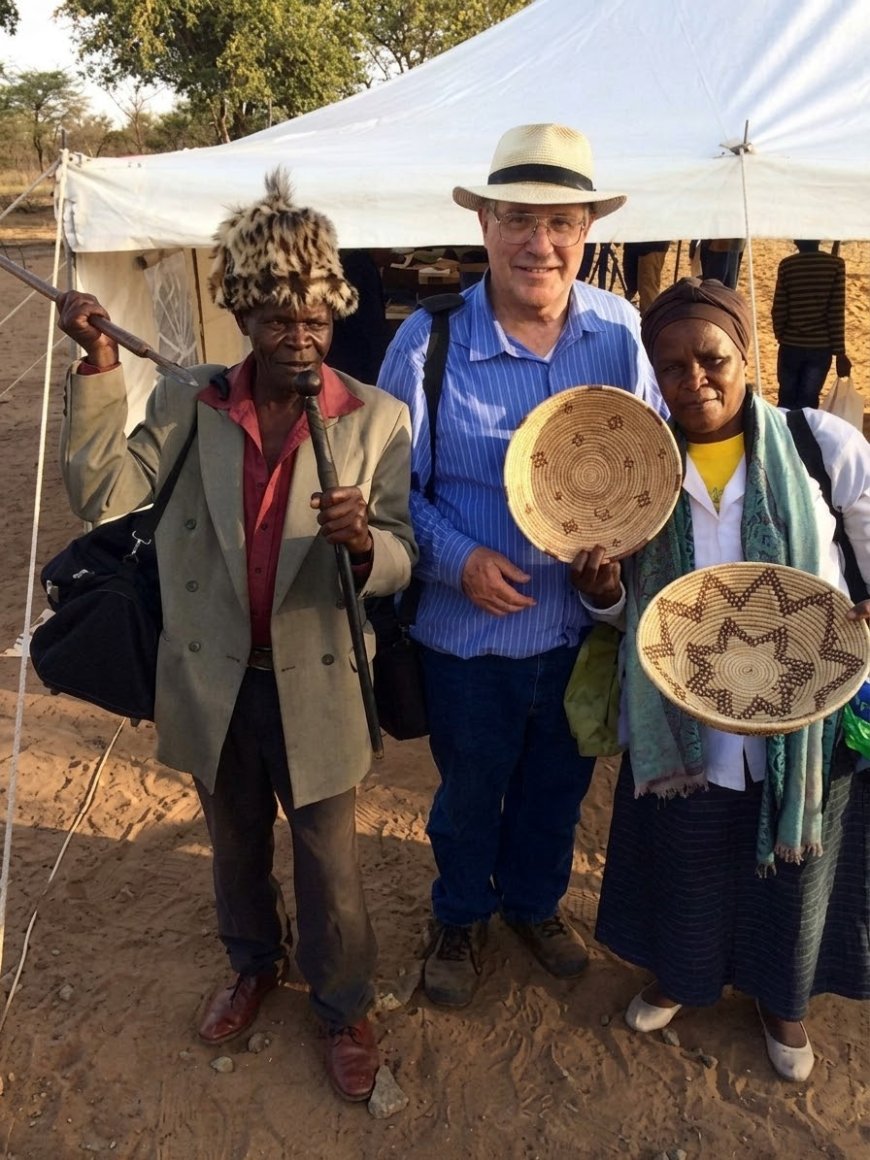 Professor Gordon Bronitsky from the United States (centre).
The summit, whose key aim is to promote cultural heritage, will help the two countries to establish a cultural exchange program between the US and Zimbabwe.
In a statement, CACA Director, Brian Kembo said this would be a creative cultural exchange programme.
"The summit intends to explore cultural connections, knowledge-sharing, and creative exchange between Navajo communities in the United States and Tonga-speaking communities in Zimbabwe," he said.
"This is our potential starting point as a country in establishing a reliable platform for cultural diplomacy.
"As a people-to-people exchange initiative, it will help create opportunities for indigenous communities to share their stories, artistic expressions, traditions, and contemporary experiences with one another and with wider audiences," Kembo said.
Chiyubunuzyo Arts & Culture Association (CACA) is based in Gokwe North, an area with a strong Tonga cultural heritage and a history of community-led efforts to preserve indigenous traditions, language and history.
The name Chiyubunuzyo, which means “revelation” in Tonga, is linked to earlier community development work in Gokwe North that encouraged local people to document their history, traditions and experiences through writing and other forms of creative expression.
The initiative worked particularly with Tonga-speaking communities in areas such as Simchembu and Nenyunga, encouraging villagers to become involved in research, writing and the preservation of their cultural heritage.
The work was also shaped by the history of the Tonga people, including the displacement of communities from the Zambezi Valley in the 1950s to pave way for the construction of the Kariba Dam.
The displacement resulted in thousands of people being moved from their ancestral lands and brought significant changes to their traditional way of life.
Efforts to preserve Tonga culture have since included documenting traditional stories, language, music and other forms of indigenous knowledge, particularly as communities adapt to changing social and economic conditions.
CACA's proposed engagement with Navajo communities in the United States comes against this background of cultural preservation and community development.
Prof. Bronitsky, who is working with CACA on the proposed summit, has extensive experience in indigenous arts and cultural development and has previously worked with cultural practitioners in Zimbabwe.
His involvement has included cultural marketing initiatives aimed at helping indigenous artists and communities develop, promote and preserve their cultural products.
The proposed Navajo–Tonga Cultural Summit is expected to bring together two indigenous communities from different parts of the world to share their cultural experiences, traditions and artistic expressions, while exploring opportunities for longer-term cultural cooperation.