
Ropafadzo Mzondo Makes History With Zimbabwe’s First Youth Olympic Gold
Zimbabwean sprinter Ropafadzo Mzondo (17) has won the men’s 200m gold at the Dakar 2026 Youth Olympic Games, securing the country’s first-ever Youth Olympic medal in a historic breakthrough.
 Kwedu News
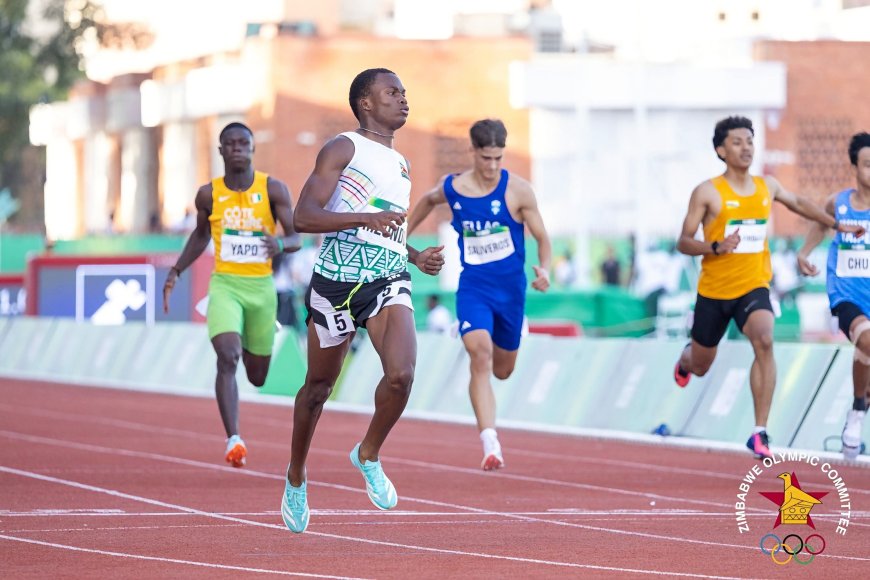
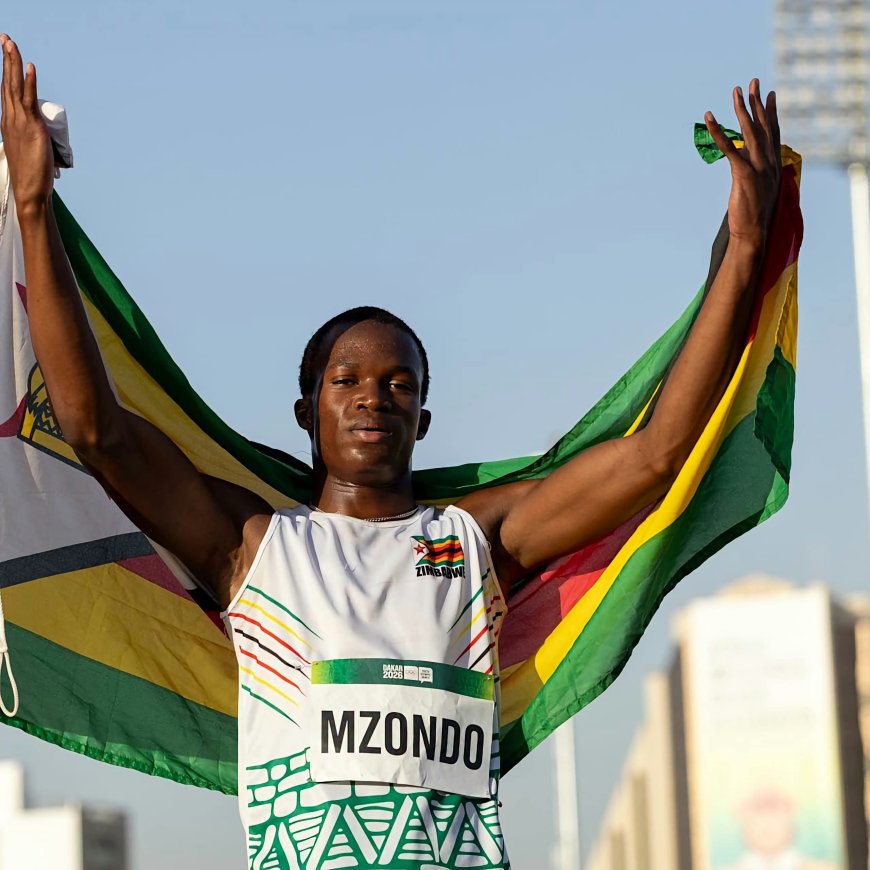
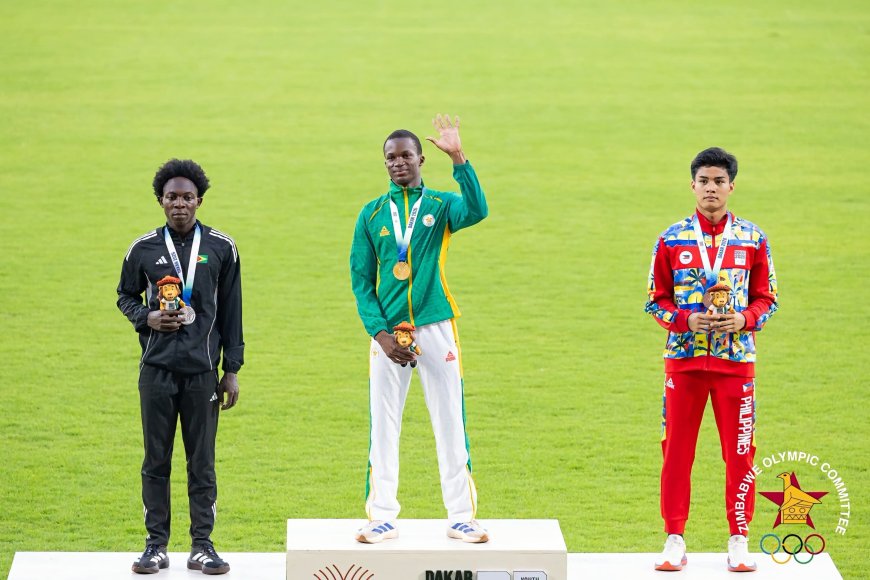
Dakar, Senegal — Zimbabwe’s 17-year-old sprinter, Ropafadzo Mzondo, claimed a historic gold medal in the men’s 200 metres at the Dakar 2026 Youth Olympic Games on Tuesday, becoming the first athlete in the country to win gold at the Youth Olympics.
Mzondo powered to victory in 21.04 seconds at the Complexe Iba Mar Diop in Senegal, finishing a clear 0.32 seconds ahead of Guyana’s Deuquan Farrell, who took silver.
The Philippines’ Pi Durden Wangkay secured bronze in a photo-finish for the minor medals.
Mzondo had already lowered his personal best to 21.01 in the semi-finals, having entered the competition with a previous mark of 21.26.
It is the nation’s first gold, and first medal of any colour in the history of the Youth Olympic Games.
The Dakar edition is also historic, being the first time the Youth Olympics have been staged on African soil.
Mzondo’s path to the Games was far from straightforward. He was not included in Zimbabwe’s original team selection and only received a late call-up in early October after an additional quota place became available through the organising committee in consultation with World Athletics.
He competed solely in the 200m.
The Goldbridge College student from Kwekwe arrived in Senegal as a rising talent rather than a favourite, but his form quickly made an impact.
After the semi-final personal best he delivered a controlled and dominant final, later saying he had expected to run that fast based on his training and felt he could have gone even quicker.
“From my training with my coach, I knew I would have run that fast,” Mzondo said.
“And personally I think I could have done way, way better here. But it is what it is. I managed to push myself to the limit and that’s what I measured," he said.
He described the achievement of delivering Zimbabwe’s first Youth Olympic gold as making him “feel a bit special” and highlighted the significance of competing at an Olympic event on African soil.
“It’s really special for me, as an African, to be able to come from Zimbabwe to Senegal to compete at an Olympic event.
"I hope with the Lord’s grace we will be able to hold more and more Olympic events in Africa," he said.
The victory held deep personal meaning.
Mzondo repeatedly credited his father, Liberty Mzondo, a former talented sprinter whose own career was limited by a lack of financial support.
Liberty first noticed his son’s potential at a school athletics meet at Lomagundi College around 2020.
“I saw him sprinting. That’s when I discovered that this young man carries my DNA,” he later recalled to Zimbabwe national publication, The Herald.
He resolved to give his son the backing he himself never received and engaged coach Njere Shumba to work with him, though the Covid-19 pandemic delayed the start of formal training.
“My dad really inspired me a lot, because he’s the person who pushed me to start athletics,” Ropafadzo said after his win.
“Without him, I wouldn’t have been a Youth Olympic gold medallist right now, because he’s the one who’s been pushing me over and over and over," he said.
Liberty nicknamed his determined son “Mushurugwi.” In roughly three years of structured training, Ropafadzo transformed his times, dropping his 400m personal best from around 53 seconds to a national Under-18 record of 46.51, set in the heats at the 2026 World Athletics U20 Championships in Oregon, where he reached the semi-finals.
He also helped Zimbabwe’s 4x400m relay team set a national Under-20 record of 3:08.56 and reach the final for the first time.
Earlier successes include gold in the 4x400m relay at the 2025 African Union
Sports Council Region 5 Youth Games and finals appearances in both the 200m and 400m at the African U18/U20 Championships in Nigeria.
Mzondo’s breakthrough arrives as Zimbabwe seeks greater consistency on the international stage.
At 17 he remains eligible for the next World U20 Championships and has spoken of targeting medals at African junior level and eventual senior representation, including possible Olympic qualification.
The gold has been widely celebrated in Zimbabwe, with the Zimbabwe Olympic Committee hailing it as “golden history.”