
More Than 4,000 Australians Die Annually From Asbestos-Related Diseases
By Harry Taruva — More than 4,000 Australians die annually from asbestos-related diseases, as millions of tonnes of hazardous materials remain in homes and buildings decades after the national ban.
 Harry Taruva
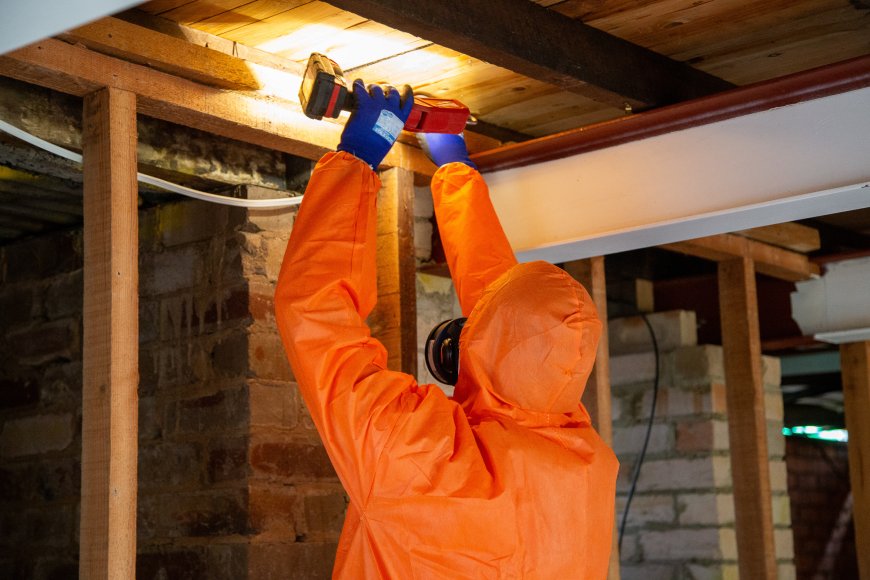
Sydney – Reports have revealed that more than 4,000 Australians die from asbestos-related diseases each year, as the presence of millions of tonnes of ageing asbestos materials in homes and buildings continues to expose workers, homeowners and renovators to potentially fatal fibres.
The scale of the problem is drawing renewed attention during National Asbestos Awareness Month, which begins in November, with campaign organisers warning that do-it-yourself renovations and maintenance work could expose people to asbestos without them knowing.
An estimated one in three Australian homes contains asbestos-containing materials (ACMs), while approximately six million tonnes remain in the country's built environment, according to the Asbestos Education Committee.
The committee says the deaths amount to approximately 11 a day, or one every two hours and 11 minutes.
The estimated annual toll is nearly three times Australia's 1,334 road deaths recorded in the 12 months to September 2026.
The figure reveals a public health risk that has persisted long after Australia prohibited the use of asbestos at the end of 2003.
Although new use is banned, materials installed in older buildings remain a potential source of exposure when damaged, drilled, cut, sanded or removed.
Asbestos Education Committee Chair, Clare Collins, said many Australians remained unaware of the risks associated with disturbing materials that could have been installed decades ago.
“Despite a complete asbestos ban in Australia almost 23 years ago, deaths from exposure to asbestos fibres are rising and will continue to rise due to a lack of education and awareness of the risks if legacy ACMs are disturbed during renovations, demolition or maintenance when people unnecessarily expose themselves to asbestos fibres,” Collins said.
The danger extends beyond former asbestos workers.
Renovation activities are emerging as an important source of non-occupational exposure, with people potentially inhaling fibres released when asbestos-containing products are disturbed.
The Australian Institute of Health and Welfare's (AIHW) Mesothelioma in Australia 2025 report, published on August 26, 2026, recorded 627 mesothelioma diagnoses for 2025 as at May 1.
The figure is provisional because some cases are reported to the registry after the year of diagnosis.
The report also recorded 688 mesothelioma deaths in 2023, up from 416 in 1997.
It found that the number of diagnoses among both men and women had increased over the past four decades.
Exposure assessments involving 1,497 people diagnosed with mesothelioma found that 94% had possible or probable asbestos exposure.
Among those assessed, 51% of participants who reported undertaking major home renovations involving asbestos products had possible or probable exposure, while 39% of those who had lived in homes undergoing renovations also fell into that category.
The findings also revealed differences in exposure patterns between men and women.
Among participants assessed as having possible or probable exposure, 94.1% of women reported non-occupational exposure only, compared with 23.1% of men.
These figures relate to the registry's exposure-assessment participants, not all Australians diagnosed with mesothelioma. Australian Institute of Health and Welfare
The findings reinforce concerns that asbestos exposure is not confined to construction sites, factories and industrial workplaces, but can also occur in residential environments.
The warning comes as Australians continue to spend heavily on home improvements.
Housing Industry Association analysis cited by the campaign puts renovation expenditure at a record AU$4.15 billion during the June 2026 quarter. Australian Bureau of Statistics figures independently recorded AU$4.119 billion in residential alterations and additions work for the same period, representing a 1.3% quarterly increase and a 12.6% rise over the year.
Cherie Barber, a renovation specialist and ambassador for the National Asbestos Awareness Month campaign, warned that rising renovation activity, household financial pressures and limited knowledge about asbestos could encourage homeowners to undertake dangerous removal work themselves.
“With Housing Industry Association (HIA) analysis revealing $4.15 billion was spent on renovations in the 2026 June quarter, the highest three-month period of spending since 1974, the lack of public knowledge on ACM identification and the risks associated with disturbing asbestos; together with the current cost of living crisis and rising interest rates; the fear is people could put their lives and the lives of loved ones at risk if they try to remove ACMs themselves to save costs,” Barber said.
The affordability problem is reflected in the Australian Government's 2025 National Asbestos Awareness Survey, which involved 1,614 respondents.
While 91% said they knew at least something about asbestos, respondents generally struggled to identify asbestos-containing materials and only 30% believed they could afford professional removal. asbestossafety.gov.au
Asbestos can remain hidden in roofing, wall and ceiling sheeting, insulation, vinyl flooring, bathroom and kitchen fittings, fences, garages and backyard structures. It was also used in numerous building and decorative products before the national ban took effect.
The campaign warns that homes built or renovated before 1990 may contain asbestos, regardless of whether they are brick, weatherboard or other construction types.
The World Health Organization's updated asbestos fact sheet, published on August 11, 2026, reaffirmed that all six recognised forms of asbestos are carcinogenic to humans.
Reports say exposure can cause cancers of the lungs, larynx and ovaries, as well as malignant mesothelioma, which affects the lining of the lungs or abdomen. Asbestos exposure can also cause asbestosis, a chronic lung disease involving scarring of lung tissue.
The WHO says people involved in construction, building maintenance and demolition remain at risk even decades after asbestos materials were installed.
Its estimates, based on global occupational exposure data, attribute more than 200,000 deaths annually to workplace asbestos exposure, accounting for over 70 per cent of deaths from work-related cancers. World Health Organization
Australia banned the importation, manufacture and use of asbestos from December 31, 2003, but the prohibition did not remove materials already installed in buildings.
Collins said preventing exposure remained the only way to prevent asbestos-related diseases.
“With another Australian life lost to asbestos every two hours and eleven minutes, when it comes to asbestos, Don't cut it! Don't drill it! Don't drop it! Don't sand it! Don't saw it! Don't scrape it! Don't scrub it! Don't dismantle it! Don't tip it! Don't waterblast it! Don't demolish it! Don't dump it! And whatever you do... DON'T remove asbestos yourself,” she said.
National Asbestos Awareness Month, established in 2011, provides free information and practical guidance for homeowners, landlords, renovators and tradespeople through its [official website]
This year's campaign runs throughout November, with Asbestos Awareness Day falling on November 27.