
ZPNU Takes Nurses’ Legal and Financial Literacy Programme Nationwide
By Delicious Mathuthu — Zimbabwe Professional Nurses Union (ZPNU) is embarking on a nurse empowerment project, taking its legal and financial literacy training nationwide targeting nurses’ professional conduct, workplace rights, financial management and ethical responsibilities.
 Delicious Mathuthu
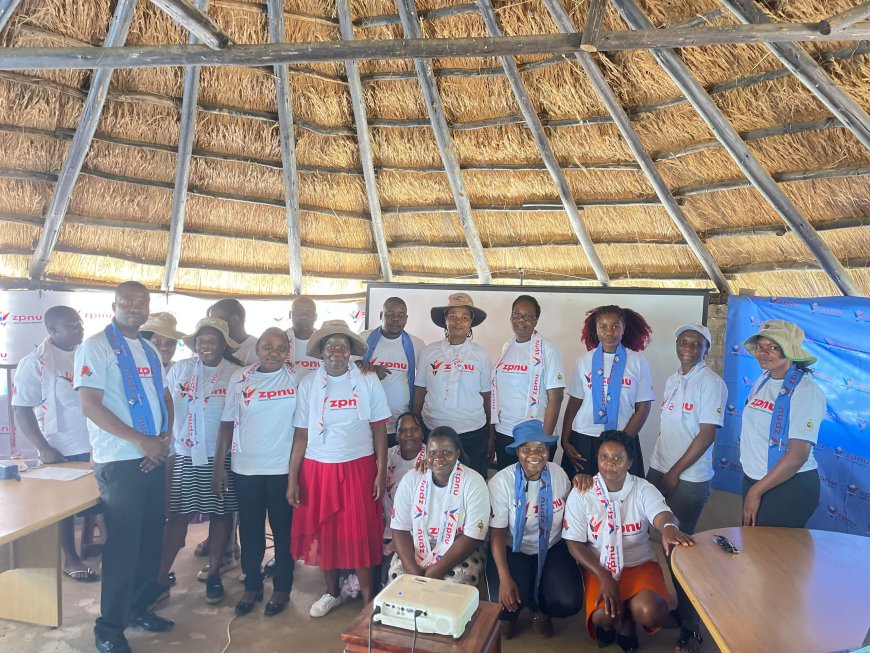
Lupane, Zimbabwe – The Zimbabwe Professional Nurses Union (ZPNU) has launched a nationwide capacity-building programme aimed at strengthening nurses’ legal knowledge, financial management skills and professional conduct, as the union seeks to move beyond salary negotiations towards broader workplace and personal development.
ZPNU president, Robert Chiduku, said the programme would be rolled out across all 10 provinces, targeting both union members and non-members as part of efforts to expand the organisation’s membership and improve the professional standing of nurses.
Speaking to Kwedu News following a legal and financial literacy workshop in Lupane, Chiduku said the initiative was intended to equip nurses with skills that would benefit them beyond their clinical responsibilities.
“We want to invest in our members in the 10 provinces of the country.And also to increase our visibility, to recruit more members into Zimbabwe Professional Nurses Union.
"Not just to recruit them, but also invest in them,” he said.
The Lupane workshop, held on the last day of October, brought together nurses from across the district for training covering legal responsibilities, workplace rights, financial management and professional standards.
Chiduku said the union was deliberately broadening its approach to nurses’ welfare by placing greater emphasis on personal development alongside its traditional role of negotiating better salaries and conditions of service.
He identified legal literacy, financial literacy, professionalism and nursing ethics as key areas the organisation intends to prioritise.
On legal literacy, Chiduku said nurses needed to understand the legal framework governing their profession, avoid professional misconduct and protect patients’ rights.
He said the programme would also address the ethical challenges emerging from technological developments, particularly artificial intelligence (AI) and the increasing diversity of patients’ cultural backgrounds.
“Because nursing today has gone transcultural. We are caring for people from diverse cultural backgrounds. So nurses should be culturally competent in terms of ethics,” he said.
“With the emerging technologies and with the evolving technologies, particularly in the age of AI, there are issues that are beginning to emerge now, issues of ethical dilemmas," Chiduku said.
He said nurses needed to be better prepared to navigate such challenges in their daily clinical practice.
 ZPNU president, Robert Chiduku, during the Lupane trading workshop. Image credit: ZPNU.
On financial literacy, Chiduku said the union wanted nurses to develop sound money-management habits rather than relying exclusively on salary increases to improve their financial circumstances.
He argued that poor financial management could leave nurses struggling financially even after securing better remuneration.
“We obviously negotiate on behalf of nurses for increase of salaries. But beyond that, we want nurses to wisely use that money,” he said.
The Lupane workshop introduced participants to the 50/30/20 budgeting strategy, which allocates 50% of income to needs, 30% to wants and 20% to savings and investments.
Other topics included debt avoidance, disciplined saving, investment opportunities and reducing unnecessary expenditure.
Legal awareness and workplace protection
ZPNU Organising Secretary, Boaz Muruki, who facilitated the legal literacy session, said a major challenge facing nurses was inadequate understanding of their professional scope of practice and individual accountability.
Responding to questions from Kwedu News, Muruki said some nurses were exposed to legal risks when they performed duties beyond their training or professional authorisation, particularly in understaffed rural health facilities.
He also identified poor clinical documentation, failure to report incidents and the mistaken belief that following a superior's instruction automatically protected nurses from liability as common problems.
“Many nurses believe ‘I was following orders’ protects them legally. It does not.
"Each nurse is individually accountable to the Nurses Council of Zimbabwe for their own actions,” he said.
Muruki said the workshop examined practical examples of professional misconduct, including administering medication without a valid prescription, failing to monitor deteriorating patients, sharing confidential patient information on social media and falsifying clinical records.
He said malpractice was not always deliberate, with fatigue, staff shortages, inadequate supervision and poor documentation contributing to professional errors.
“Knowing the law is not about fear, it is about protection,” Muruki said, outlining the central message of the training.
He urged nurses to document clinical decisions, report unsafe working conditions in writing, escalate concerns to supervisors and avoid accepting instructions that fall outside their professional competence.
 ZPNU Organising Secretary, Boaz Muruki, facilitating during the Lupane nurses training workshop.
Muruki also highlighted workplace rights that nurses might not fully understand or exercise, including access to safe working environments, union representation, fair disciplinary procedures, leave entitlements and correct payment of overtime and allowances.
He said nurses facing disciplinary proceedings should be given an opportunity to respond to charges and seek union representation.
ZPNU also wants nurses to understand the procedures governing the refusal of unsafe work and the importance of reporting situations that expose patients and healthcare workers to danger.
Beyond salary negotiations
ZPNU president, Chiduku said: “We've decided to take a different route, to focus on growing the professional stature of a nurse, financial literacy, legal literacy, professionalism and of course conditions of service as well."
He added that expanding membership would enable more nurses to benefit from the union's capacity-building initiatives