Kwekwe Silicosis Deaths Expose a Mining Health Crisis
 Dumisani Ndlovu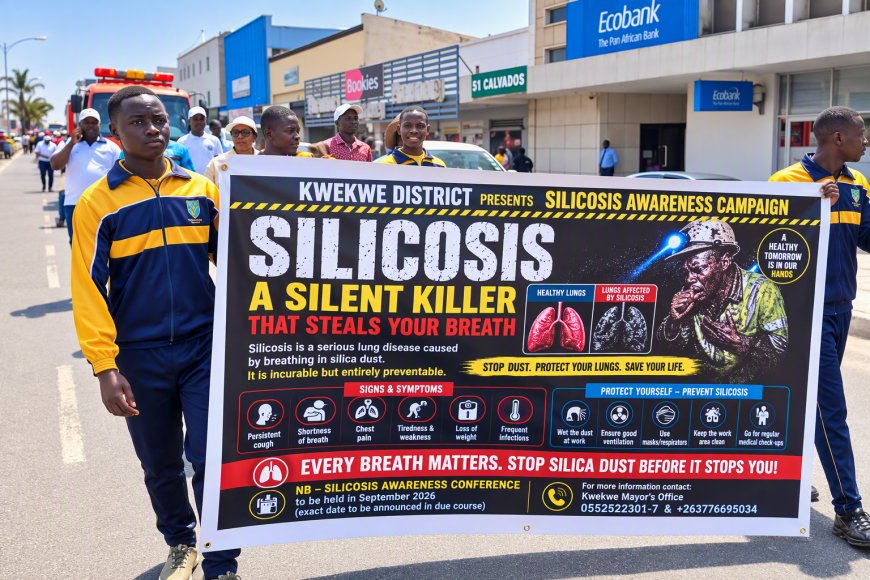
Kwekwe — Kwekwe General Hospital is recording up to 60 silicosis-related deaths a year, with as many as 15 patients at a time receiving treatment for the irreversible occupational lung disease, exposing the growing health burden facing the mining city.
The figures have prompted Kwekwe City Council to step up public awareness efforts targeting miners, mine owners, workers and communities exposed to silica dust.
The youngest silicosis patient recorded at the hospital is 17, while the oldest is 80, according to figures cited during the council's recent awareness campaign in the Central Business District, Mbizo and Amaveni.
Kwekwe Mayor, Councillor Albert Zinhanga, said the statistics showed the need for urgent action to prevent further exposure to silica dust.
“Silicosis is killing people slowly. It permanently damages the lungs, makes it difficult to breathe, causes chest pain and chronic coughing, and leaves the body weak and vulnerable to TB,” he said.
Silicosis is caused by prolonged inhalation of respirable crystalline silica dust, which is generated during activities including mining, crushing, milling, quarrying, construction and gold processing.
The disease permanently scars the lungs and is incurable once the damage has occurred, although exposure to silica dust can be prevented or reduced.
Zimbabwe's artisanal and small-scale mining sector faces particular risks, with national estimates indicating that about 19% of workers in the sector live with silicosis.
Councilor Zinhanga said the scale of the problem became clear to him after he visited Kwekwe General Hospital last year and was briefed by medical personnel about the impact of the disease.
“I was touched by the statistics. Then it became an issue that continued to bother my mind,” he said.
The Mayor said council could no longer treat silicosis as an issue affecting miners alone, given the number of people potentially exposed through mining and related activities.
“We are here as the local authority to educate our residents about the health risks caused by silicosis.
"This disease has become a menace in our community, and we cannot fold our hands,” Councillor Zinhanga said.
The awareness drive has consequently been extended beyond mining workplaces into residential communities, where council is seeking to educate residents about the dangers associated with silica dust exposure.
“We need to send the message not only to the miners, the owners of the mines, but to the people who are in the mines that we have silicosis,” he said.
Council has partnered with Kwekwe Polytechnic and other stakeholders as part of efforts to strengthen the campaign.
A district silicosis conference is expected to be held at Kwekwe Polytechnic, bringing together Government departments, miners, health experts, small-scale miners' associations and development partners.
Councilor Zinhanga said miners had been urged to bring their workers to the meeting to ensure that those directly exposed to silica dust were included in discussions around prevention and occupational health.
“We are going to have a conference on silicosis at Kwekwe Polytechnic where all stakeholders will be involved.
"We requested the miners to bring their workers along for the conference,” he said.
The campaign has also adopted an edutainment approach, with comedians Sabhuku Vharazipi, Chairman and Mbuya Mai John using comedy and drama to deliver silicosis awareness messages in Mbizo and Amaveni.