Gweru ’s Water Woes Continue as Pumping Capacity Drops
n By Delicious Mathuthu n nn n Gweru, Zimbabwe - Gweru’s water woes persist as the council struggles to maintain a steady supply, with the pumping capacity at the Gwenoro Water Treatment Plant dropping back to 45 megaliters per day, followi
 anostrofy
 By Delicious Mathuthu
Gweru, Zimbabwe - Gweru’s water woes persist as the council struggles to maintain a steady supply, with the pumping capacity at the Gwenoro Water Treatment Plant dropping back to 45 megaliters per day, following a brief increase to 63 megaliters.
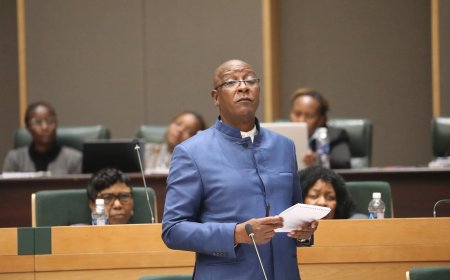
Frustration was evident at the Council Chambers during the recent 718th ordinary council meeting as Gweru City Councillors addressed the city’s ongoing water crisis.
Mayor Martin Chivhoko led discussions that focused on power cuts from the Zimbabwe Electricity Supply Authority (ZESA) and the Gwenoro Water Treatment Plant’s limited pumping capacity, recently at 63 megaliters per day, compared to the city’s demand of about 125 megaliters.
Ward 17 Councillor, Prosperity Chikwira, asked about the city’s long-term plan to solve power challenges at Gwenoro and pumping capacity issues, as high-lying areas in the city continue with dry taps.
“What plan do you have to get water to high-lying areas? The answer has been the same since I joined the council, always blaming load-shedding,” he said.
He pushed the engineering team to present a clear plan before seeking help from the central government.
“They should give us their plan to fix these issues first,” Councillor Chikwira said.
Earlier, the Environment Committee Chairperson, Ward 13 Councillor Augustine Mutusva, had made a plea to the District Development Coordinator, Tarisai Mudadigwa, to assist in seeking government assistance, especially with resources, to fix Gweru’s water woes for good.
Mayor Chivhoko echoed Chikwira’s concerns, pressing the engineering department for a long-term solution to power cuts.
Deputy City Engineer Praymore Mhlanga admitted that there were challenges.
“Power cuts are a big problem, Your Worship,” he said, describing talks with ZESA for a dedicated power line.
“We engaged ZESA, and they said they were working on it, but then they couldn’t use the (shorter) shooting range route.
The ZMA (Zimbabwe Military Academy) told them to reroute back to town and then to Gwenoro,” he explained.
Mhlanga said ZESA later admitted they lacked funds for the project, forcing the council to explore other options.
“We talked to ZESA about solar farms. It’s costly for Gweru. I don’t have the exact cost, but it’s heavy,” Mhlanga said.
He mentioned discussions with Tongogara Rural District Council, which owns land near Gwenoro and was open to providing land for a solar project.
The council also suggested a solar farm near the aerodrome to boost the national grid and help Gwenoro.
On capacity, Mhlanga was blunt. He said Gwenoro is currently back to pumping 45 megaliters daily, far below its maximum of 63 megaliters.
“We have one big pump that keeps breaking down. It’s old, like a pair of trousers patched so many times you can’t see the original colour,” he said.
The pump broke again 10 days ago, Mhlanga noted, but repairs are ongoing.
Replacing pumps is planned, but Mhlanga warned that it will not fully solve the water supply problem.
“We can’t go beyond that (63 megaliters) because that capacity is also related to the total amount of water we can draw a day from the dams without drying them,” he said.
He mentioned rumors of a new Lebongo Dam downstream, discussed by the central government, which could help.
“So, at the national level, I think the DDC is aware. There is the story of the Lebongo Dam, downstream of Gwenoro, which I have been hearing of late, that there is some discussion going on in the central government to have that dam constructed.
Besides that, we can capacitate Gwenoro to 63, which is what we are trying to determine again,” he said.
Gweru’s water troubles date back to the 2000s economic crisis, which hit its infrastructure hard.
Gwenoro, originally designed for a much smaller population, now struggles to serve the expanded city.
Years of rapid growth, droughts, dam silting, and leaking pipes have resulted in losses of up to 57 percent of treated water at times.
ZESA’s unpaid debts have also caused long outages, leaving suburbs dry.In 2019, Gwenoro Dam dropped to 7 percent capacity, forcing rationing and reliance on Amapongogwe and Whitewaters, both hampered by delays and breakdowns.
In the meantime, residents continue to turn to rainwater, open wells, and boreholes, risking diseases like cholera and typhoid.
Meanwhile, Gweru City Council said it is continuing with plans to procure prepaid water meters, despite its pilot project in the Southdowns and Ivene suburbs failing.
City Finance Director, Owen Masimba, said a tender for 10,000 prepaid water meters is still pending despite the technical challenges observed in the pilot project.