
Australian Tunnellers’ Deadly Secret Beneath Belgium’s Hill 60 Remains Unsolved After 110 Years
By Harry Taruva — The deaths of 10 Australian tunnellers in a 1917 underground explosion beneath Belgium's Hill 60 remain unexplained, 110 years after their secret wartime operation began.
 Harry Taruva
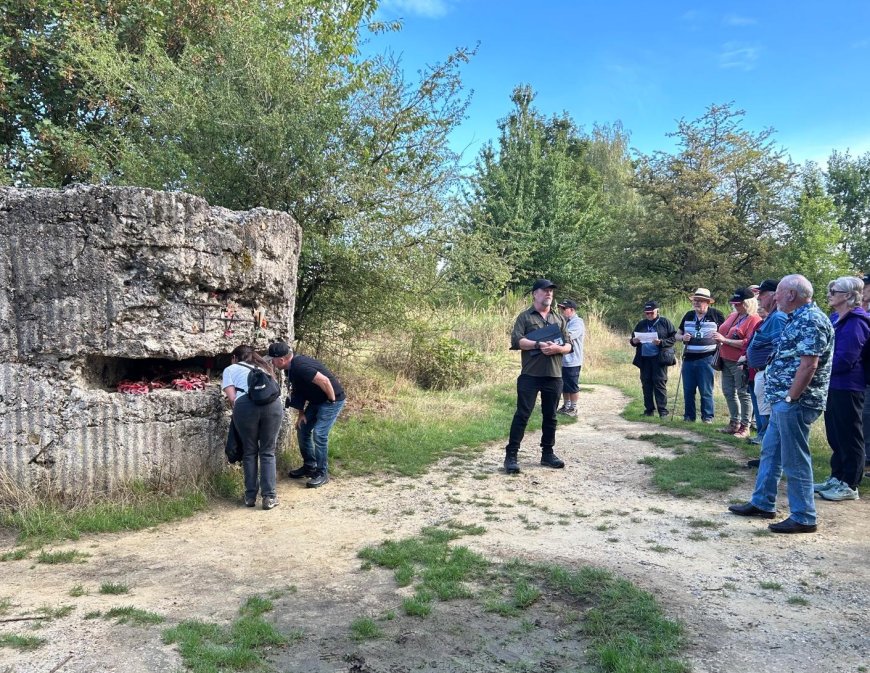
Ypres, Belgium – The circumstances surrounding the deaths of 10 Australian tunnellers beneath Belgium’s Hill 60 during World War I remain unknown, 110 years after they were killed in an underground explosion.
The men died on 25 April 1917 when an explosion ripped through the tunnels being dug by the 1st Australian Tunnelling Company near Ypres, where Australian miners were engaged in a secret underground battle against German forces.
Three officers were killed instantly in their dugout, while seven other men resting in the tunnels were trapped. None survived.
Military historian Mat McLachlan has revisited their story as he completes a five-month journey across Australian battlefields, from Vietnam to the Western Front.
The disaster happened two years after the Gallipoli landings, but its cause has never been established.
Some accounts attribute the explosion to a German shell, while Captain Oliver Woodward, who arrived with a relief party that night, believed a faulty detonator was responsible.
Among those killed were Captain Wilfred Avery of Mackay, Lieutenant Arthur Tandy, a Ballarat-trained mine surveyor who later worked at Cloncurry, and Sapper Charles Glew, a North Queensland miner who enlisted at Charters Towers.
Eight of the 10 men are buried at Railway Dugouts Burial Ground near Zillebeke, within sight of Hill 60. Avery and Tandy were laid to rest at Poperinghe New Military Cemetery.
The tragedy formed part of a wider underground conflict that began when the 1st Australian Tunnelling Company arrived in the area in November 1916 to relieve Canadian tunnellers.
The Australian miners came from across the country, including Ballarat, Bendigo, Broken Hill, Newcastle, North Queensland, Western Australia and Tasmania.
They named their underground galleries after Australian cities, including Sydney, Melbourne, Adelaide, Perth, Brisbane, Newcastle and Hobart.
Working in cramped conditions, sometimes with only a few metres of blue clay separating them from German tunnels, the men spent seven months digging in near-total silence.
They used stethoscopes pressed against the clay to listen for enemy tunnellers approaching from the opposite direction.
Their work culminated in the detonation of two enormous mines beneath the German lines on Messines Ridge on 7 June 1917.
The explosions were among 19 mines detonated simultaneously at 3.10am, destroying German positions in what was then described as the largest man-made explosion in history.
The fighting around Hill 60, however, left a much wider legacy of loss. Soldiers from Britain, Canada, France and Germany who fought for the position from 1914 were also killed, with many bodies never recovered. Hundreds of soldiers are still believed to lie beneath the hill.
McLachlan marked Remembrance Day this week at the Menin Gate in Ypres while sharing the history of the Australian tunnellers and their contribution to the Western Front campaign.
Vignacourt farmhouse yields more wartime photographs
Meanwhile, McLachlan's Western Front journey has also brought attention to new discoveries at a historic First World War photographic studio in Vignacourt, France.
Brisbane couple Donna and Michael Fiechtner have taken over the Thuillier Farmhouse, a former wartime photographic studio that had previously been marked for demolition.
As restoration work begins, additional glass plate photographic negatives have been discovered hidden inside the attic walls.
The couple have launched a crowdfunding campaign to support the restoration of the historic property.
Hill 60 remains open to visitors
Hill 60, located a few kilometres from Ypres, remains accessible to visitors interested in the history of the Western Front.
Visitors can walk along boardwalks following original trench lines, view a German pillbox and the Caterpillar crater, and visit the Australian Tunnellers' memorial.
Nearby, the Menin Gate holds a nightly Last Post ceremony at 8pm in remembrance of soldiers who died in the Ypres Salient and have no known grave.
McLachlan's Battlefield Tours of the Western Front include visits to Ypres, the Menin Gate and Hill 60.