
UNSW Study Flags Persistent Chemicals in Recycled Sewage Fertiliser
By Harry Taruva — University of New South Wales (UNSW) researchers have identified 47 chemicals in biosolids that may require closer environmental monitoring, including PFAS, pharmaceuticals and synthetic fragrances, as Australia continues recycling treated sewage sludge for agricultural use.
 Harry Taruva
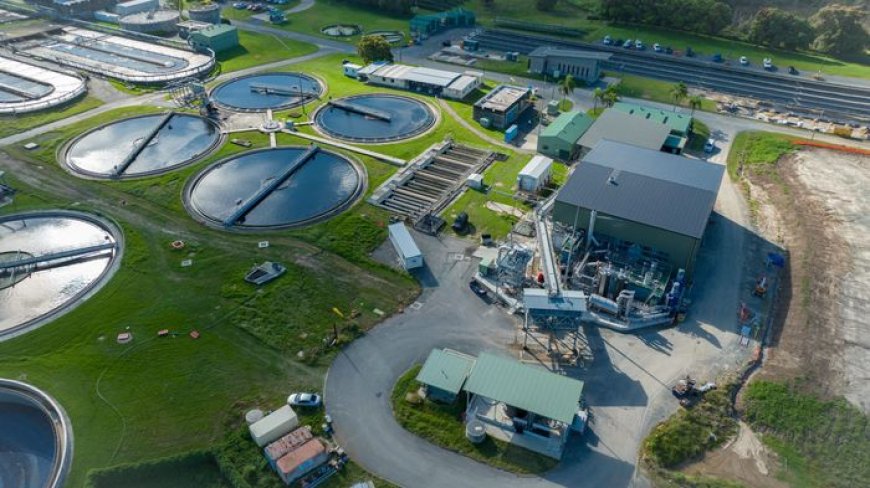
Sydney, Australia — Chemicals from medicines, personal care products and industrial materials could remain in agricultural soils for months or years after treated sewage sludge is applied as fertiliser, raising questions about the environmental monitoring of Australia's growing biosolids reuse industry.
A study by researchers at the University of New South Wales (UNSW) has identified several substances that may require closer monitoring to determine their long-term environmental effects.
The research, published in the Journal of Hazardous Materials, examined 47 chemicals previously detected in biosolids, including pharmaceuticals, antimicrobial compounds, industrial chemicals and synthetic fragrances.
Biosolids are treated sewage sludge produced from wastewater collected from household kitchens, bathrooms and laundries.
They are widely reused in agriculture because they contain nutrients and organic matter that improve soil quality and support plant growth.
About 80% of Australia's biosolids are applied to agricultural land, making their environmental management an important consideration for water utilities and regulators.
However, researchers warn that wastewater treatment does not necessarily eliminate all chemical residues entering sewage systems through everyday household and industrial activities.
Among the substances identified for further investigation were certain per- and polyfluoroalkyl substances (PFAS), carbamazepine, a medicine used to treat epilepsy and other conditions, triclosan and triclocarban, which are antimicrobial chemicals, and galaxolide and tonalide, commonly used in fragrances.
Professor Denis O'Carroll of UNSW's Water Research Laboratory, said the findings highlighted the need to identify and manage contaminants without losing the agricultural benefits of biosolids.
“It is important that biosolids can continue to be applied to the land to act as a fertiliser and get nutrients into the soil,” Prof. O'Carroll said.
“What this research has shown is that there are some potential contaminants of concern because of their concentration or how they persist in soil," he said.
The research could provide the foundation for further work to address the identified risks, he said.
The research, led by UNSW engineers, assessed three main factors which include, where chemicals move after biosolids are applied to land, how long they remain in the environment and whether concentrations reported in biosolids could potentially affect plants and animals.
Dr. Calvin He, one of the study's authors, said chemicals entering wastewater treatment plants could remain in the resulting biosolids and subsequently be introduced into agricultural soils.
“That wastewater can be treated and the resulting biosolid can be applied to farmland as a fertiliser.
"But if there are still contaminants present then they can stay in the soil,” Dr. He said.
The researchers found that chemicals behave differently depending on their properties and environmental conditions.
Some remain in soil, while others can dissolve in water and potentially move into groundwater or nearby waterways.
Temperature, moisture and oxygen availability also influence how quickly substances break down.
Chemicals that persist for extended periods could have greater opportunities to accumulate where biosolids are repeatedly applied.
The team compared concentrations reported in biosolids with existing scientific benchmarks used to assess potential effects on organisms such as algae and small aquatic animals.
However, the researchers emphasised that the work was an environmental screening assessment based on existing scientific studies, rather than new experiments conducted on agricultural land.
They said it does not establish that the identified chemicals are causing damage to farms, that food grown using biosolids is unsafe or that people are being exposed to harmful contaminant levels.
The 47 chemicals assessed also represent only a small proportion of the hundreds of substances previously detected in biosolids.
They said concentrations varied considerably between wastewater treatment plants, suggesting that monitoring should account for differences between facilities rather than treating all biosolids as having the same chemical composition.
The researchers say further investigations involving actual biosolids and agricultural soils under local conditions will be necessary to establish which contaminants pose meaningful environmental concerns.
Prof. O'Carroll said potential management measures included modifying wastewater treatment processes, changing how biosolids are applied to agricultural land and reducing the use of problematic chemicals in consumer products.
“There are management options that can potentially be applied. The design of wastewater treatment plants can be amended, or their operation can be changed slightly to optimise the removal of specific chemicals if required,” he said.
He said addressing selected contaminants at their source could also help reduce the amount entering wastewater systems.