A US$1 Dispute That Ended in Murder
Two Gokwe men get 30 years for a fatal Kwekwe stabbing over US$1. Gweru High Court applies common purpose doctrine to convict both attackers in joint assault.
 Dumisani Ndlovu
Gweru— It started over a single US dollar—a petty sum that, in a matter of minutes, bought a man his death and two others three decades behind bars.
On the afternoon of September 11, 2025, the bustling thoroughfares of Mbizo 14 Shopping Centre in Kwekwe were shattered by a sudden, chaotic brawl. Before onlookers could intervene, 35-year-old Leonard Gombakamba lay collapsing onto the sun-baked dust, his clothing saturated with blood from deep, deliberate knife wounds to his chest and back. Bystanders rushed to assist, but the damage was done; Gombakamba’s life slipped away on the pavement.
What had triggered the sudden slaughter was not a long-standing feud or an organized hit, but a trivial disagreement over a single bank note. According to the State narrative presented in court, Gombakamba had forcibly confiscated a wallet and an identity document from one of his eventual killers to recover the disputed dollar.
Instead of seeking mediation or walking away, the aggrieved party recruited back-up. An argument erupted, quickly escalating from harsh words to an exchange of fists. As the tempers flamed, stones were hurled across the shopping center. Then, the dynamic shifted from a fistfight to a homicide when a knife was drawn into the fray.
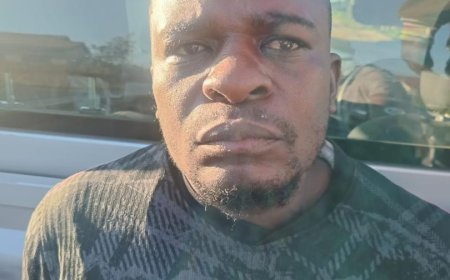
Nearly a year after the tragedy, Prince Magwati, 24, and Onard Musvunguma, 33, both hailing from Gokwe, stood shoulder-to-shoulder in the dock. They appeared before Justice Naison Chivayo during the third and final 2026 Gweru High Court Circuit, facing formal murder charges.
As the trial commenced, a familiar legal hurdle emerged for the prosecution: in a multi-assailant melee, who actually held the blade? Defense arguments sought to exploit the confusion of the fight, attempting to shield individual liability behind the mystery of whose hand delivered the fatal thrusts.
Prosecutor Thompson Hove dismantled this defense strategy by invoking the doctrine of common purpose, codified under Section 196 of Zimbabwe’s Criminal Law (Codification and Reform) Act. Hove argued before Justice Chivayo that the State was not legally required to prove which specific defendant drove the steel into Gombakamba’s chest or back.
Under the doctrine, when individuals unite in a shared criminal enterprise, every participant bears equal responsibility for the foreseeable consequences of that joint action. Hove submitted that by joining the physical assault and continuing the violent attack alongside a knife-wielding accomplice, both Magwati and Musvunguma demonstrated a clear, unified intent to inflict life-threatening harm.
Furthermore, Hove argued that the murder was committed under aggravating circumstances. The introduction of a concealed, lethal weapon into a minor public disagreement, combined with post-mortem findings showing the deliberate depth and vital placement of the stab wounds, demonstrated a conscious disregard for human life.
Justice Chivayo agreed with the State’s position, holding that the conduct of both accused persons tied them irrevocably to the outcome. Finding both men guilty of murder with constructive intent, the judge sentenced Magwati and Musvunguma to an effective 30 years in prison each.
A dispute that began over a single dollar ended with a family grieving a lost son, two young men surrendering their prime years to a prison cell, and a grim testament to how quickly minor grievances turn fatal when anger meets a weapon.