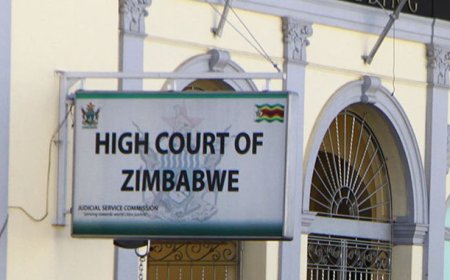
From Mhondoro to the High Court: The Making of Justice Justin Uladi
Discover the judicial trajectory of Justice Justin Uladi: from his prosecutorial beginnings in Gokwe to Chief Director of Prosecutions and elevation to the High Court Bench.
 Dumisani Ndlovu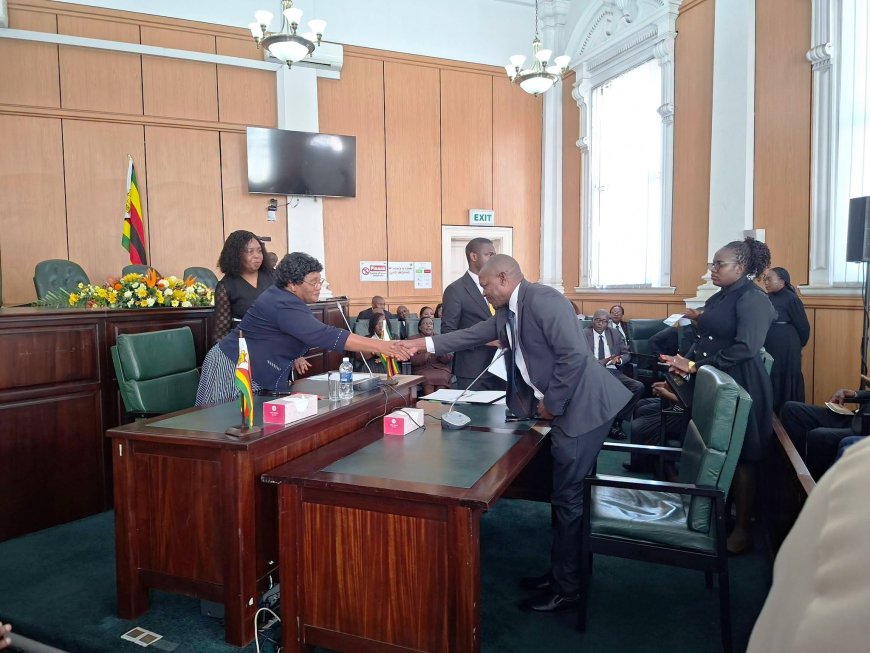
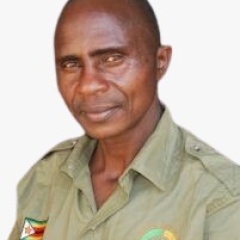
From the quiet rural community of Chief Nyamweda in Mhondoro to the highest levels of Zimbabwe's prosecution service and ultimately the High Court Bench, Justice Justin Uladi's career stands as a model of sustained professional growth, legal discipline, and public service.
Born on 18 July 1968, Uladi hails from Mhondoro under Chief Nyamweda. Yet the starting point of his legal career belongs strictly to Gokwe, where he first entered a courtroom as a junior public prosecutor in 1992. His story is defined by that distinction: his roots are in Mhondoro, but his career was built in Gokwe.
More than three decades later, the young prosecutor who began his journey in Gokwe has risen through the legal machinery to take his oath as a Judge of the High Court. His elevation capped a career spanning over 33 years across frontline trial prosecution, senior legal practice, appellate advocacy, constitutional matters, and executive prosecution management.
On August 27, 2026, a defining chapter was etched into the professional journey of Justice Justin Uladi when he stood before Chief Justice Elizabeth Gwaunza and took the solemn oath of office as a Judge of the High Court of Zimbabwe.
For Uladi, the moment represented far more than a formal elevation. It was the culmination of a long professional journey that carried him from the formative landscapes of Mhondoro to the demanding legal corridors of Gokwe, and ultimately to the country’s superior court bench.
He was sworn in alongside 14 other newly appointed High Court judges — Justices Gibson Musariri, Gladys Chidziva, Clever Tsikwa, Bianca Makwande, Loveness Ngwanga, Judith Zuyu, Donald Osmond Ndirowei, Vongayi Guwuriro, Charles Paul Manhiri, Stanford Mambanje, Timeon Makunde, Feresi Chakanyuka, Anita Tshuma and Gamuchirai Siwardi — in an unprecedented expansion of the High Court bench in recent years.
But behind the formalities of the ceremony lies a distinctly personal journey.
His career within the National Prosecuting Authority was shaped in the demanding environment of criminal justice, where the law is tested not only in statutes and precedent, but in the weight of evidence, the discipline of procedure and the consequences of decisions made in court.
As a prosecutor, Uladi established himself as a firm and meticulous courtroom practitioner. His work placed him on the side of the State, where he was required to marshal evidence, test testimony and present cases within the exacting standards of criminal justice.
His elevation to the High Court therefore represents a significant shift in responsibility — a transition from prosecution to adjudication, from advancing a case before the court to independently determining the legal questions placed before it.
It is a journey from arguing the law to interpreting it; from presenting evidence to weighing it; and from representing one side in litigation to serving the wider demands of justice from the bench.
The significance of their elevation was reinforced on September 10, 2026, during a three-day induction workshop held in Gweru for Hon. Justice Justin Uladi and his 14 fellow newly appointed High Court judges, where Chief Justice Mrs Elizabeth Gwaunza reminded the new judges that the oath they had taken was far more than a ceremonial requirement attached to judicial office.
The National Prosecuting Authority of Zimbabwe (NPAZ), in congratulating him on his appointment, characterized Uladi as a distinguished career prosecutor with over 34 years of dedicated service to the administration of justice. Recognizing his progression through the ranks—including key stints as Acting Deputy Prosecutor General—the NPAZ cited his leadership, professionalism, integrity, and steadfast commitment to the rule of law. That institutional validation frames his appointment not merely as an individual milestone, but as official recognition of his extensive contribution to Zimbabwe’s justice delivery system.
Long before entering senior administration, Uladi built his foundational knowledge through early schooling across Simbaredenga, Ruvheneko, and Kundayi primary schools, followed by secondary education at St Paul's Musami and Advanced Level studies at Lord Malvern High School.
Upon earning his Prosecutor’s Certificate from the Ministry of Justice, Legal and Parliamentary Affairs in 1992, he joined the Prosecutor General’s Office. Between 1992 and 2007, he moved systematically through the ranks—serving as Public Prosecutor, Public Prosecutor-in-Charge, and Area Public Prosecutor. These formative trial years anchored his practical understanding of evidentiary standards, court procedure, and criminal jurisprudence.
In 2007, he transitioned to the Attorney General’s Office as a Principal Law Officer, stepping into complex litigation. Rather than relying solely on experience, Uladi simultaneously expanded his formal legal training, earning his Bachelor of Laws (LLB) Honours degree from the University of Zimbabwe (2008–2011) and later a Master of Laws (LLM) in Constitutional and Human Rights Law from Midlands State University (2020–2021). This continuous academic investment paired veteran courtroom experience with advanced constitutional scholarship.
By March 2013, Uladi was appointed Chief Public Prosecutor responsible for Appeals, Reviews, and Constitutional Matters within the NPA. Moving beyond day-to-day trials, his portfolio centered on high-level legal analysis, appellate scrutiny, and constitutional rights litigation.
His institutional reliability led to executive responsibilities, including roles as Acting National Director of Public Prosecutions and Acting Deputy Prosecutor General responsible for Operations. In September 2020, he assumed the post of Chief Director of Prosecutions responsible for Superior Courts, based in Bulawayo—a leadership position he held until his elevation to the Bench.
The transition from senior state prosecutor to High Court judge marks a fundamental shift in constitutional mandate. Where decades were spent directing state prosecutions, judicial office demands absolute neutrality, restraint, and strict fidelity to the Constitution.
Justice Uladi’s rise maps a complete, deliberate trajectory through the national legal framework: from Mhondoro roots and primary schooling to trial practice in Gokwe, appellate leadership in Bulawayo, and ultimately, the High Court Bench.
As he takes his place on the Bench, the core task before Justice Uladi transitions from arguing state cases to applying the law with independence, analytical rigor, and fairness. His journey stands as a testament to incremental growth, continuous learning, and lifelong service to the rule of law.