
LINA Survey Exposes Independent Media Financial Pressures Despite AI Growth
By Harry Taruva — A LINA survey of 85 Australian news publishers finds AI adoption rising to 73%, modest revenue growth and almost half of organisations led by women, but a third face an uncertain future.
 Harry Taruva
Sydney — Australia's independent news publishers are expanding their use of artificial intelligence and recording modest business growth, but a third remain uncertain about their future amid rising costs and a weak advertising market, a new industry survey has found.
The Local & Independent News Association (LINA), which represents more than 180 independent digital news services in Australia, said 33% of surveyed publishers considered their organisations' future uncertain or at risk, highlighting the financial challenges confronting local journalism despite signs of resilience across the sector.
Its 2026 survey covered 85 member publishers operating 118 news services and found that 73% were using artificial intelligence (AI), an increase from 51% in 2025.
The association said the findings point to a sector adapting to technological change while struggling to secure the financial resources needed to sustain independent reporting in communities increasingly affected by the closure or contraction of traditional newspapers.
LINA Executive Director, Claire Stuchbery, said publishers continued to face rising operating costs, a soft advertising market and rapid developments in AI, but were demonstrating resilience.
“The broader environment has remained challenging, with the impacts of rising costs, a soft advertising market and rapid developments in AI,” Stuchbery said, adding, “But publishers are resilient.”
Research was the leading application of AI, with 86% of publishers using the technology reporting its use for that purpose, followed by administrative and operational tasks at 82%.
Image generation was used by 40% of AI users, while 16% reported using AI for content generation.
Stuchbery said publishers were primarily using the technology to save time on administrative work, with its application in editorial production remaining limited.
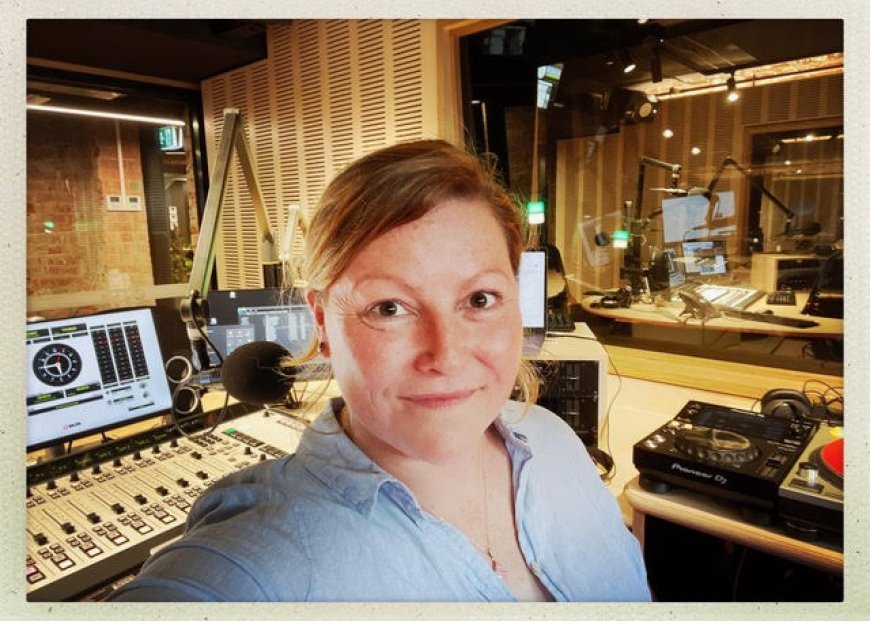 LINA Executive Director Claire Stuchbery.
She warned that automation should not replace journalists' work in communities, particularly the gathering, verification and interpretation of information requiring local knowledge and cultural understanding.
“AI cannot, and should not, replace the work of journalists spending time in communities, speaking with and interviewing people, analysing information with important cultural and locally relevant context and fact-checking and verification,” she said.
The survey also identified improvements in revenue and staffing among established independent publishers.
A comparison of 25 organisations that had participated in LINA's annual surveys since its establishment in 2023 showed that median annual revenue increased from AU$169,000 in 2025 to AU$189,000 in 2026.
Median staffing among the same organisations grew from 1.3 full-time equivalent employees to 2.0 over the period.
Government grants through the Journalism Assistance Fund increased as a revenue source, although advertising remained the leading source of income.
The findings also revealed significant female representation in the sector's leadership, with women heading 49.4% of the surveyed news organisations.
LINA said this contrasted with findings from other studies of the broader news industry, where women remain less represented in leadership positions.
Most of the surveyed publishers were established within the past decade, the association said, many emerging after traditional newspaper closures or contractions created local news gaps.
LINA said their reporting has included providing minute-by-minute emergency updates during bushfires, exposing environmental damage, highlighting previously untold community issues and investigating wrongdoing that prompted responses from councils, governments and ministers.
Independent publishers play a significant role maintaining local accountability and providing information that might otherwise receive limited coverage, the association said.
However, Stuchbery said the sector required sustained financial backing to continue delivering public-interest journalism.
She called for journalists and publishers to be compensated when their work is used by artificial intelligence models, arguing that the growing reliance on news content by AI systems should not deprive its original producers of revenue.
“It's absolutely critical that journalists and publishers are compensated for use of their work, including by AI models,” she said.
She also urged philanthropic organisations and other funders to recognise independent news services as essential community infrastructure supporting local development, leadership and regional identity.
“We need news to navigate our day to day lives, stay connected to one another, and for a functioning democracy,” Stuchbery said.
LINA is seeking additional partners to support independent digital publishers and strengthen public-interest journalism across Australian communities.
The not-for-profit organisation provides it's members with training, advocacy, capacity-building support, economies of scale and access to essential third-party services.
Some member publishers have credited the association's assistance with helping them remain operational in an increasingly difficult media environment.
South West Local News said LINA had opened up opportunities that helped sustain its business, while Fleurieu App said the association's guidance, training, advocacy and practical support had been invaluable as it approached seven years in operation.