Breaking Barriers in the Soil – How a Shurugwi Farmer Is Redefining Disability and Rural Agriculture
In Shurugwi’s Dorset Resettlement Area, farmer Tryagain Ncube defies disability-related barriers to become the best-performing farmer, showcasing resilience, climate-smart agriculture, and the urgent need for inclusive rural development in Zimbabwe.
 Dumisani Ndlovu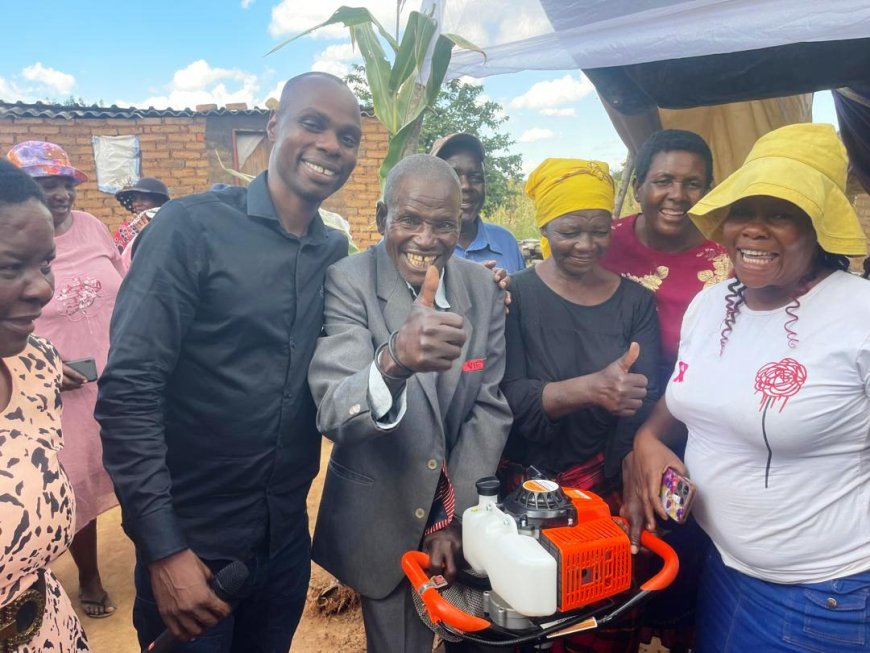
In the heart of Dorset Resettlement Area in Shurugwi, a farming story is unfolding that goes beyond yields, awards, and agricultural technique. It is a story about exclusion, resilience, and the urgent need to rethink how rural development systems engage people with disabilities.
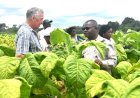
At the centre of this transformation is Tryagain Ncube, a farmer with a disability, who has been recognised as the best-performing farmer in the area after turning his 10-hectare plot into a highly productive horticulture enterprise. His achievement has not only impressed agricultural officials but has also exposed deep structural gaps in how disability is understood and accommodated within Zimbabwe’s agrifood system.
Farming households that include one or more people with disabilities face an even greater set of barriers that extend across the agrifood system. This includes the full range of actors and activities associated with agricultural production—from training and education for producers, primary production, and onward to storage, handling, transport, processing, distribution, marketing, and consumption.
However, the focus in this case remains sharply on agricultural production, where exclusion is most visible and most damaging.
Across rural communities, these barriers are not isolated. They are structural and interconnected, and they continue to disadvantage households like Ncube’s.
Attitudinal barriers – prejudice, stigma, and discrimination remain widespread. People with disabilities are often underestimated, excluded from leadership spaces, or assumed to be less productive in farming systems.
Environmental barriers – physical infrastructure and communication systems are frequently not adapted to diverse needs. Training materials, extension approaches, and demonstration methods often assume uniform ability, leaving some farmers excluded from full participation.
Institutional barriers – policies, rules, and implementation practices often fail to fully integrate disability inclusion into agricultural programming, despite broader commitments to equality.
These barriers combine to create a system where exclusion is not always intentional, but is consistently reproduced.
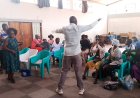
Speaking at the award ceremony, local Agriculture Extension Officer Lena Samambwa said Ncube’s performance was a clear demonstration of what is possible when farmers with disabilities are given equal opportunity and proper guidance.
She noted that Ncube followed almost all the standard Pfumvudza farming concepts, particularly mulching, which is strongly promoted under Zimbabwe’s climate-smart agriculture approach.
“Mr Ncube followed almost all the standard Pfumvudza farming concepts. His commitment to mulching across all plots is commendable and shows discipline in adopting climate-resilient agriculture,” said Samambwa.
She added that society must stop underestimating people with disabilities.
“People must not undermine the potential of persons with disabilities. What we are seeing here is evidence that ability is not defined by physical condition, but by access, knowledge, and support,” she said.
Samambwa also acknowledged the practical difficulties encountered during extension work with Ncube and his wife, Lorita Mpofu, who both have speech impairments. She said communication barriers required adaptation during training and field support.
“There were language barriers during extension work, but thanks to their skilled sign language aid, Actress Chese who played a pivotal role in the interpretation as seemed willing to learn and apply what was taught,” she said.
She further explained that while the couple successfully implemented most production requirements across their four plots, they faced challenges in meeting some infrastructure standards, including shelter and cattle pen construction.
“They lacked some of the standard infrastructure requirements, but their overall performance was exceptional. We saw it fit to award them and encourage inclusive farming practices in the community,” she added.
The large turnout at the event, which drew participants from multiple districts and provinces, was seen as a sign of growing interest in inclusive agricultural development.
The celebration took an unexpected turn when Shurugwi-based farmer and Bulawayo businessman Rodwell Mbirimi made a major donation to Ncube, offering a state-of-the-art auger drill machine.
The equipment, used for digging holes for fencing, planting, irrigation systems, and structural installations, attracted widespread attention from farmers who were seeing such technology for the first time.
Beyond supporting Ncube, Mbirimi also extended assistance to local farming leadership, distributing assorted goods valued at approximately US$1,000. Beneficiaries included village heads, lead farmers, and extension-linked community leaders.
“This is motivation for all of us. Recognition is not only for top farmers but also for those who support agricultural development at community level,” said local Councillor, Michael Sibanda.
The gesture was widely applauded, reinforcing the role of private sector actors in strengthening rural agricultural systems.
Despite the celebration, the story of Ncube also reflects a deeper contradiction in rural development: inclusion is often promoted in principle, but exclusion persists in practice.
Disability-related exclusion in farming systems is not only about physical limitations. It is shaped by attitudes, infrastructure design, and institutional frameworks that do not always account for diversity in ability.
As highlighted in development practice, these barriers must be understood across the agrifood system, but especially within agricultural production, where access to training, land use support, and extension services determines productivity outcomes.
Due to their influence and reach, development actors and implementing partners hold an important responsibility in identifying and breaking down these barriers. Without deliberate action, exclusion risks remaining embedded within systems that claim to be inclusive.
For many in Dorset Resettlement Area, Ncube’s success has become a turning point. It challenges long-held assumptions that disability limits agricultural productivity and forces a reconsideration of what inclusion truly means.
Farmers who attended the event described a shift in perception, noting that ability should be measured through performance and opportunity rather than physical condition.
Ncube’s recognition as the best-performing farmer is more than a personal achievement—it is a reflection of both progress and persistent inequality.
It shows what is possible when people with disabilities are given access to knowledge, support, and opportunity. But it also exposes the continued existence of attitudinal, environmental, and institutional barriers that restrict full participation in agriculture.
As Zimbabwe continues to promote climate-smart agriculture and rural transformation, the challenge is no longer whether persons with disabilities can contribute. The real question is whether existing systems are willing to remove the barriers that have kept them on the margins.In Shurugwi, one farmer’s success has already begun to answer that question.