RBZ Suspends 90% Export Retention Threshold for Small-Scale Gold Miners
Zimbabwe’s central bank has paused implementation of the 90 percent forex retention policy for artisanal and small-scale gold miners due to unbanked operators and logistical issues, while keeping the policy rate at 35 percent and forecasting single-digit inflation through 2026 amid strong growth and record inflows.
 Delicious Mathuthu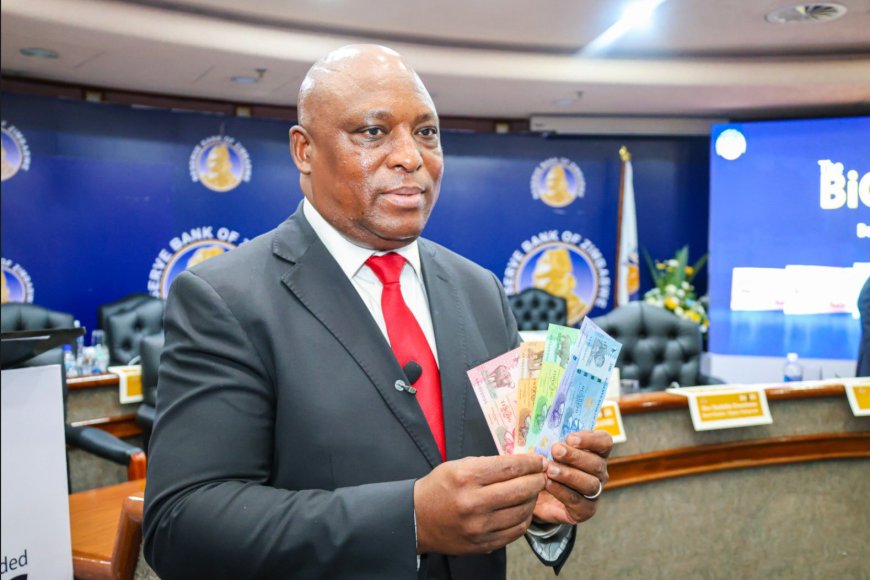
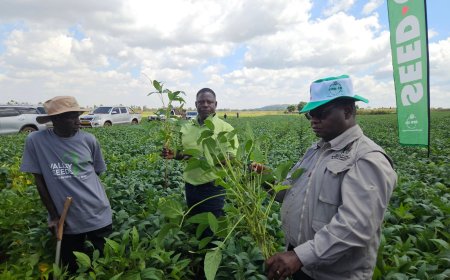
Harare - Zimbabwe’s central bank has temporarily suspended implementation of a new 90 percent export retention threshold for small-scale gold miners after the policy ran into logistical problems, as many artisanal operators remain unbanked and need more time to open accounts.
“In this regard, the Committee resolved to temporarily suspend implementation of the policy while appropriate logistics are being put in place, for the smooth operationalisation of the proposed retention requirements,” the Reserve Bank of Zimbabwe (RBZ) Governor John Mushayavanhu said on the Monetary Policy Committee (MPC) decision in a statement.
The MPC initially welcomed the introduction of the 90 percent retention threshold for small-scale miners, but the Zimbabwe Mining Federation and Fidelity Gold Refinery quickly flagged serious implementation challenges.
The federation noted that some artisanal and small-scale miners are not banked and would require more time to open bank accounts, prompting the temporary freeze.
The suspension formed the backdrop to a broader decision by the MPC to “Stay the Course” with its current tight monetary policy settings as the economy continues to record single-digit inflation and robust growth.
The committee welcomed the sustained disinflation trend that has seen annual inflation reach a single-digit level of 4.1 percent in January 2026, falling further to 3.85 percent in February and expected to remain below 5 percent in March.
“Annual inflation continued to decline to 3.85% in February 2026 and is expected to remain low at less than 5% in March 2026,” the statement said.
“The low annual inflation was achieved against a background of a robust economic growth rate of above 6.6% realised in 2025," Governor Mushayavanhu said.
Strong export performance, driven mainly by mining and particularly gold and platinum group metals, pushed total foreign-currency inflows to US$1.89 billion in the first two months of 2026, up sharply from the comparable period a year earlier, the RBZ reports.
The inflows have rebuilt foreign-exchange reserves and underpinned stability in the foreign-exchange market while providing adequate backing for the local ZiG currency.
The MPC also highlighted overwhelming positive feedback from the nationwide education and awareness campaign on the BiG 5 ZiG banknotes across all provinces and districts.
RBZ announced that an upgraded ZiG Banknote Series will be introduced on 7 April 2026 to improve transactional convenience for the public and support wider use of the local currency”.
On the external front, the committee expressed concern over the pass-through effects of recent oil-price increases triggered by geopolitical tensions in the Middle East.
The bank acknowledged that higher domestic fuel prices are likely to produce second-round effects on inflation expectations.
The MPC, nevertheless, assessed that month-on-month inflation would rise only modestly in March, April and May before returning to steady-state levels from June, ensuring that annual inflation stays within single digits throughout 2026 and the outlook period.
To anchor expectations and limit second-round effects from fuel costs, the MPC resolved to maintain the Bank Policy rate at 35 percent and to keep statutory reserve requirements unchanged, at 15 percent for savings and time deposits, and 30 percent for demand and call deposits in both local and foreign currency.
The committee also welcomed the continued build-up of foreign-currency reserves, saying the strong inflows would ensure adequate resources to support critical imports, including fuel.
“Going forward, the MPC will continue to carefully assess evolving international and domestic economic developments, outlook and the balance of risks to ensure that the monetary policy stance remains appropriate,.
"The Committee will, therefore, remain vigilant to evolving risks and stand ready to swiftly implement appropriate policy changes to support continued low and stable inflation, and robust economic growth upwards of 5% as enshrined in the National Development Strategy 2 (NDS 2)," Governor Mushayavanhu said.
The 90 percent export retention threshold, which equates to a 10 percent foreign currency surrender requirement in exchange for local ZiG currency for small-scale gold miners was introduced in the Reserve Bank of Zimbabwe’s February 2026 Monetary Policy Statement.
The policy required artisanal and small-scale miners (ASM) selling gold to the state-owned Fidelity Gold Refinery to receive 90 percent of proceeds in US dollars while surrendering 10 percent in ZiG, a sharp departure from the longstanding 100 percent US dollar payment they had enjoyed since at least 2023.
Fidelity began implementing the 90:10 structure with immediate effect in early March 2026, urging miners to submit local-currency banking details to facilitate the ZiG component.
The move aligned small-scale producers with broader exporter rules, where large-scale miners and other exporters retained 70 percent in foreign currency and surrendered 30 percent of earnings in exchange for ZiG.
It was designed to deepen domestic currency usage, bolster ZiG exchange-rate stability, widen official foreign-currency mobilisation and promote uniformity across the mining sector.
The policy shift occurred against the backdrop of ASM’s outsized and growing dominance in Zimbabwe’s gold economy.
In 2025 the country achieved a record 46.7 tonnes of gold deliveries to Fidelity, a 17-28 percent increase from 2024’s 36.48 tonnes, with artisanal and small-scale miners accounting for approximately 75 percent of the total (34.9 tonnes) compared with just 11.8 tonnes from large-scale operations.
In February 2026 alone, ASM deliveries surged 54 percent year-on-year to 2,525.6 kg, powering national output to 3,412.9 kg for the month.
Gold remains Zimbabwe’s single largest foreign-exchange earner, generating a record US$4.8 billion in 2025 and has been central to backing the gold-linked ZiG currency while replenishing depleted reserves.
Successive RBZ governors have viewed formal ASM sales through Fidelity as critical to curbing smuggling and illicit financial flows, which analysts estimate costs the country billions annually through under-invoicing, cross-border leakage to Mozambique and South Africa, and parallel-market trading.
The retention framework has a turbulent history. Throughout the 2010s and early 2020s, RBZ repeatedly adjusted forex-retention thresholds in response to cash-flow pressures and balance-of-payments needs.
Small-scale miners saw their retention cut to as low as 55 percent in 2019, triggering widespread withholding of deliveries and heightened smuggling risks.
By 2020 large-scale producers were receiving 70 percent retention while small-scale operators often retained 100 percent in cash US dollars as an explicit incentive to channel output into official channels.
In 2023-2024 the RBZ fully restored 100 percent US dollar payouts to ASM after the Zimbabwe Miners Federation, led by Henriatta Rushwaya, protested and deliveries slumped, acknowledging that tight margins, rising input costs and limited formal credit made full forex retention essential for viability.