Iran Closure of Strait of Hormuz: De Facto Sanctions on US & World After 40+ Years?
Iran blocks Strait of Hormuz amid US-Israel war, halting one-fifth of global oil flows and imposing de facto sanctions on the US and allies after decades of American sanctions. Oil prices surge toward $200/barrel as 400M barrels released from reserves.
 Harry Taruva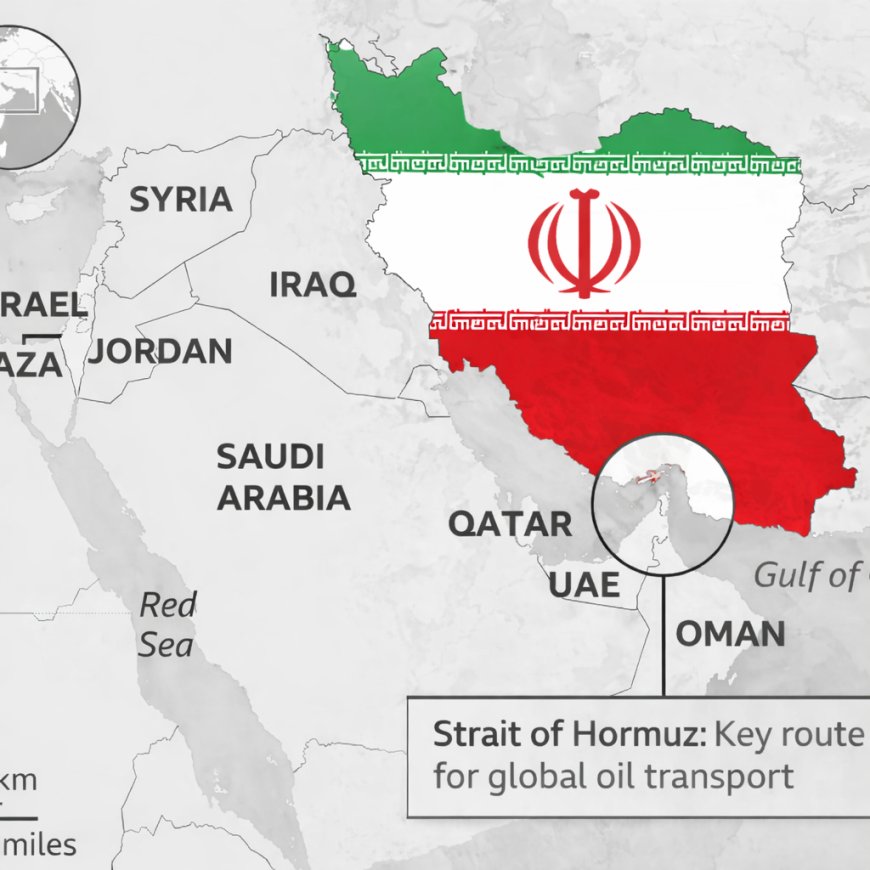
Middle East - Iran’s Islamic Revolutionary Guard Corps (IRGC) has declared it will not allow “a litre of oil” to pass through the Strait of Hormuz, effectively imposing de facto sanctions on the United States (U.S.), its allies and the broader global economy in retaliation for more than four decades of U.S.-led restrictions that once crippled Tehran’s own oil exports.
The warning, issued on Wednesday by a spokesperson for the IRGC’s Khatam al-Anbiya Headquarters, came as the U.S.-Israeli war on Iran entered its 13th day and shipping through the critical Gulf waterway ground to a halt.
Any vessel linked to the United States, Israel or their partners “will be considered a legitimate target,” the spokesperson said.
“You will not be able to artificially lower the price of oil. Expect oil at U.S$200 per barrel.
"The price of oil depends on regional security, and you are the main source of insecurity in the region," the IRGC said.
The Strait of Hormuz, through which roughly one-fifth to one-quarter of the world’s seaborne oil and significant volumes of liquefied natural gas and fertiliser normally transit, has seen traffic fall to less than 10% of pre-war levels since the conflict began on February 28, 2026.
While Iran has stopped short of a formal blockade, repeated missile and drone attacks on vessels, combined with threats of force, have rendered passage impossible for commercial shipping.
Decades of sanctions reversed
Since the 1979 Iranian Revolution and the U.S. Embassy hostage crisis, Washington has layered sanctions on Tehran, beginning with asset freezes and a trade embargo under President Jimmy Carter.
Successive administrations tightened the noose; President Bill Clinton barred U.S. investment in Iran’s oil sector in 1995; the Obama-era measures targeted Iran’s central bank and oil exports; and President Donald Trump’s “maximum pressure” campaign after withdrawing from the 2015 nuclear deal slashed Iranian oil sales from over 2.5 million barrels per day to just under 500,000 at times.
The sanctions repeatedly hammered Iran’s economy, slashing export revenues and contributing to currency collapses.
Now, analysts note, Tehran has flipped the dynamic using the geographic chokepoint it controls.
“After 40-plus years of having its oil lifeline throttled, Iran is demonstrating it can throttle the world’s,” one Gulf-based energy analyst said.
On Wednesday, three commercial vessels came under attack in the strait, including the Thai-flagged bulk carrier Mayuree Naree, struck about 11 nautical miles north of Oman.
Smoke billowed from the ship as a fire broke out in its engine room, forcing crew evacuation, according to maritime security firms and the vessel’s owner.
Iran-linked forces claimed responsibility, saying the ship had ignored warnings. Iran has also fired missiles and drones at targets in the Gulf states and beyond.
Tehran says the move is in retaliation for U.S.-Israeli strikes that hit nearly 10,000 civilian sites, including a girls’ school in Hormozgan province.
Global markets reel, reserves tapped
Oil prices have swung violently. Brent crude spiked above US$119 a barrel early in the week before pulling back amid volatile signals, but analysts warn a prolonged closure could push benchmarks toward the US$200 level Iran has projected.
In response, the International Energy Agency’s 32 member countries on Wednesday unanimously approved the largest-ever coordinated release of emergency oil stocks, 400 million barrels, to ease immediate market pain.
IEA Executive Director, Fatih Birol, called it a major action but said stability depends on the reopening of the Strait.
“The most important thing for a return to stable flows of oil and gas is the resumption of transit through the Strait of Hormuz.” Birol said.
Japan, which sources about 70% of its oil via the waterway, said it would release 80 million barrels starting Monday.
Germany, Austria and the United States are also contributing, with Washington tapping 172 million barrels from its Strategic Petroleum Reserve.
Experts however say the release offers only temporary relief.
Christian Bueger, a maritime security Professor at the University of Copenhagen, told media outlets that Europe faces a major energy supply crisis if the strait stays closed.
“For the shipping industry right now, it’s impossible to go through the Strait of Hormuz,” he said, predicting disruptions could last weeks or months.
Humanitarian and food security alarms
United Nations aid chief, Tom Fletcher, appealed for exemptions to allow humanitarian shipments, warning that supplies were failing to reach sub-Saharan Africa.
“We’re living through a moment right now of grave peril,” he said.
The blockade is also choking fertiliser exports, up to 30% of global trade in urea, ammonia and phosphates normally moves through the strait.
Urea prices have jumped from around US$450 to more than US$600 per tonne in days, threatening food production worldwide and hitting import-dependent Gulf nations hardest.
At least 85-95 countries have seen retail petrol price rises since the war began, data from Global Petrol Prices showed.
Cambodia recorded the sharpest increase at nearly 68%, followed by Vietnam (50%), Laos (33%), Australia (18%) and the United States (17%).
Asian economies dependent on Gulf crude, Japan and South Korea who import 70-95% via the strait, are particularly exposed.
U.S. stance and international response
U.S. President Donald Trump on Wednesday encouraged vessels to keep transiting the strait.
“I think they should,” he said, “I think you’re going to see great safety, and it’s going to be very, very quickly.”
G7 nations and the European Union are weighing further measures, while some European officials have floated naval escorts once conditions allow.
Iran insists the waterway remains open to non-aligned shipping.
Vessel-tracking data shows Tehran has continued limited crude exports, at least 11.7 million barrels since February 28, mostly to China.
The conflict, which analysts trace to a 2025 Iranian strategy that has drawn the U.S. and Israel into a protracted fight, shows no sign of abating.
Production curtailments in Gulf states have compounded the supply shock.
Maritime security experts warn that even limited U.S. naval escorts or mine-clearing operations carry escalation risks, given Iran’s arsenal of anti-ship missiles, drones and fast-attack boats.