Architects of Chaos: The Political Engineering of Zimbabwe’s Urban Ruin
Political actors and land barons orchestrated the systemic collapse of Zimbabwean urban planning, resulting in a US$3 billion state prejudice and a humanitarian infrastructure crisis.
 Delicious Mathuthu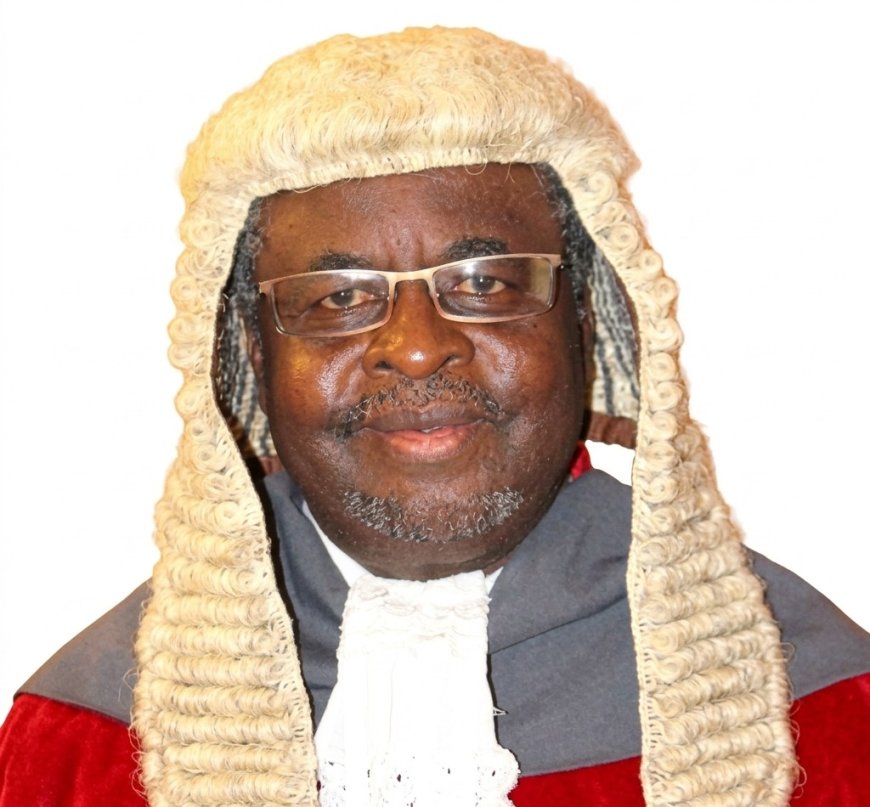
Harare - The transformation of Zimbabwe’s peri-urban landscape since 2005 has not been an accident of rapid urbanisation, but rather a masterclass in the engineering of administrative disorder.
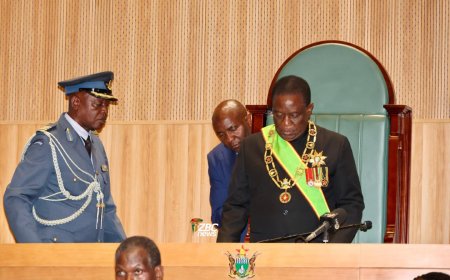
An order recently passed by the High Court to release findings of the Commission of Inquiry into the Matter of Sale of State Land in and Around Urban Areas Since 2005, Chaired by Justice Tendai Uchena, presented to President Emmerson Mnangagwa in 2019, revealed systemic rot within the country’s land management system was fueled by a deliberate blurring of lines between political patronage and public service.
The Uchena Commission’s report, only ordered released to the public in May 2026 despite it being presented to the President six years back, serves as a chilling blueprint of how architects of chaos, politically connected land barons and ambitious legislators dismantled established planning laws to create a multi-billion dollar shadow economy.
The report reveals that the methodology of the chaos was as effective as it was destructive.
The Commission established that the identification and occupation of farms was often driven by farm invasions, some led by home-seekers and others by war veterans, which eventually morphed into permanent urban settlements.
They were not merely organic movements of the landless but frequently orchestrated by aspiring or sitting Members of Parliament who viewed state land as a tool for mobilising political support.
The report reveals that by encouraging illegal settlements, the actors bypassed the stringent requirements of the Regional Town and Country Planning Act, creating a vacuum where land barons could operate as self-proclaimed authorities.
A close example of this pattern is the Woodlands Park housing development project in Gweru by River Valley Properties.
Established around 2010 on land under Vungu Rural District Council jurisdiction, the project proceeded without full prior consultation with Gweru City Council, creating ongoing boundary and service delivery tensions.
River Valley Properties Chief Executive Officer, Smelly Dube, faced arrests and investigations linked to allegations of illegal land acquisition and sales, cases that fell under the Uchena Commission’s scrutiny in the Midlands.
In response to the allegations, River Valley Properties mounted a legal challenge in the High Court in 2019 against the Commission’s summons, citing procedural issues, while Dube was later arrested in 2021 on fraud charges related to state land but was acquitted in 2022 after the charges were dropped for lack of evidence.
The developer has maintained that the project followed proper procedures and positions itself as a key contributor to addressing Zimbabwe’s national housing shortage.
On the infrastructure and environmental challenges, including flooding, poor drainage, bad sewer installation and blockages, and proximity to a dumpsite, the company has responded with direct interventions in recent years.
River Valley Properties, in an effort to fix the challenges, has funded road rehabilitation, drainage clearing, especially before rainy seasons, and sewer unblocking works, while providing relief such as foodstuffs to flood-affected residents.
Residents however continue to bear the brunt of the legacy issues.
In January 2022, heavy rains exposed the area’s drainage vulnerabilities. In a report by The Herald, one Patria Manjengwa (38), a mother of two living in Woodlands Phase 1, woke up to find her precast wall broken, blankets wet and food items and valuables destroyed.
“It’s been a week since our lodgings were flooded... We are now back at our lodgings and still counting our losses,” she said, describing how her family had to seek temporary shelter at a Nazarene church.
To date, Woodlands residents face flash floods every rain season with no permanent solution in sight yet.
Compounding the situation is the nearby McFaden dumpsite, Gweru City Council's main landfill.
As reported by NewsDay in 2023, one Edwin Moyo (43) of Woodlands Park, wakes up daily to a pungent smell of garbage, with houseflies hovering around his house and rodents scurrying across his yard.
“I have lived here for more than five years and continue to grapple with the stench, flies and rodents that come from this dumpsite.
"Most of all, I fear for the health of my minor children,” Moyo said, adding that he would have relocated if he did not own the house.
Despite Gweru city's promise to relocate the dumpsite over the years, nothing has been done as the council says it has no resources to do so, with millions needed.
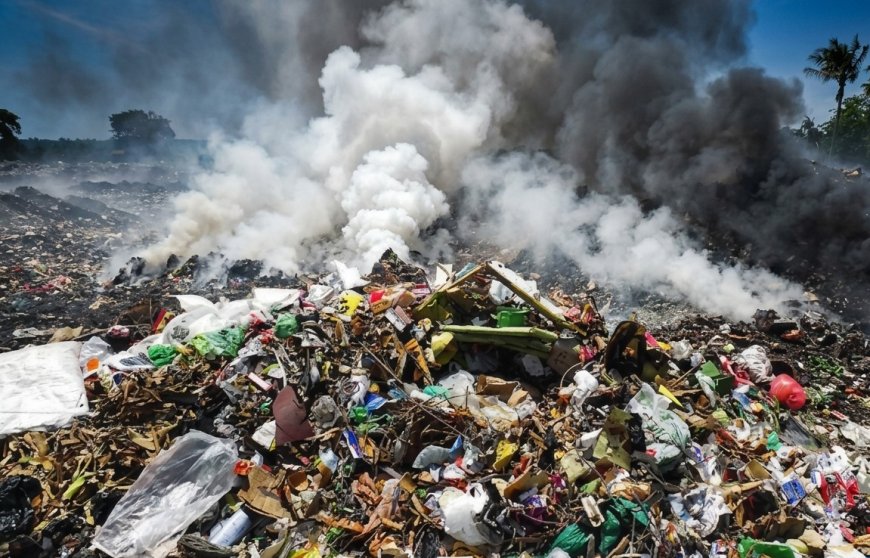 Woodlands Park suburb is located right next to Gweru City Council dumpsite downwind.
The Uchena Commission also says the human cost of the engineered disorder is visible in the 170 farms where urban development is currently taking place without the most basic of necessities.
Residents in some of these ghost estates exist in a state of permanent vulnerability, lacking access to potable water, functional sewer systems or even basic access roads.
The Commission noted with serious concern that the policy of parallel development allowing houses to be built before infrastructure is in place, has led to an environmental catastrophe.
In many of the settlements, pit latrines are built in perilous proximity to water sources, polluting underground reservoirs and inviting outbreaks of waterborne diseases like cholera and typhoid.
From a financial perspective, the chaos was highly profitable for the architects, but devastating for the treasury.
The Commission calculated that the State has been prejudiced to the tune of US$2.9 billion.
While the government is owed nearly three billion dollars in intrinsic land value, it has managed to recover less than 10% of that figure.
Meanwhile, the country now faces a burdensome bill of over US$2.5 billion just to bring these settlements up to a basic urban standard, including US$1.4 billion for roads and US$857 million for sewer reticulation.
To address this legacy of ruin, the Commission has called for a radical insulation of urban state land administration from corrupt and negative political influence.
The recommendations include the suspension of un-serviced land allocations, the investigation of 431 serious cases by the Zimbabwe Anti-Corruption Commission and the police, and the creation of a Special Purpose Vehicle (SPV) to bypass the weakened local government systems.