Chief Justice Luke Malaba Retires
Chief Justice Luke Malaba is set to retire tomorrow, May 14, 2026, after more than four decades on Zimbabwe’s bench. His tenure, marked by landmark constitutional rulings and controversy over judicial independence, ends with a farewell ceremony in Harare as succession debates intensify.
 Dumisani Ndlovu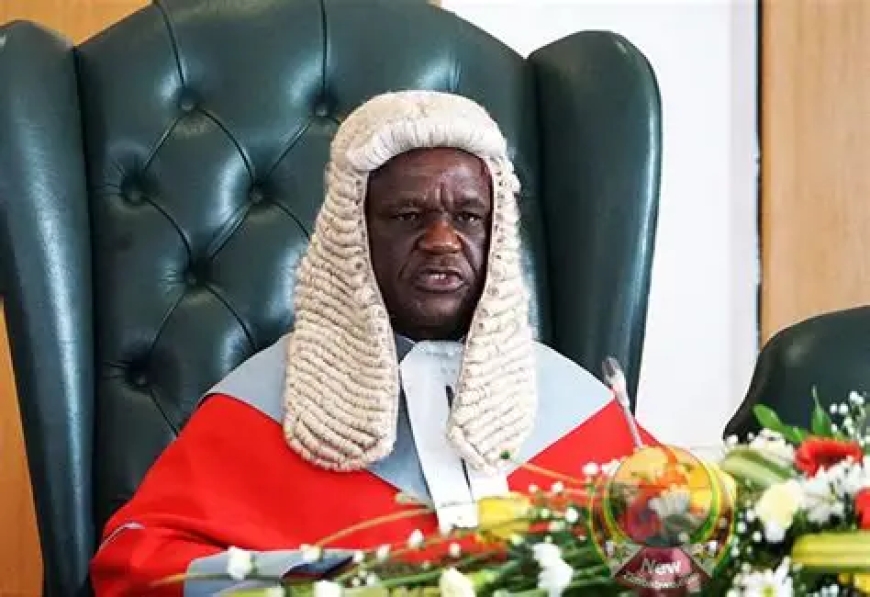
Harare - Zimbabwe’s Chief Justice, Luke Malaba, is set to retire on tomorrow, Thursday, May 14, bringing to an end a judicial career spanning more than four decades and a tenure marked by both landmark constitutional rulings and persistent controversy over judicial independence.
Justice Malaba presided over his final sitting of the Constitutional Court in Harare on Monday during a special ceremony at the Mashonganyika Building attended by senior judges, legal practitioners, government officials and members of the justice sector.
He is scheduled to officially leave office at midnight on May 14, 2026, in accordance with Section 186(1) of the Constitution, which requires judges to retire upon reaching the age of 70, unless granted an extension of up to five years, which he has exhausted.
The Judicial Service Commission (JSC) has organised a series of events to mark his departure, including a formal farewell dinner the same day expected to draw representatives from the Executive, Legislature and Judiciary.
Justice Malaba’s retirement closes a turbulent chapter in Zimbabwe’s legal history, particularly following the constitutional and political dispute that erupted over the extension of his tenure in 2021.
After attaining the mandatory retirement age on May 15, 2021, President Emmerson Mnangagwa invoked powers introduced under Constitutional Amendment No. 2 to extend Justice Malaba’s term by five years.
The amendment, passed by Parliament earlier that year, empowered the President to extend the tenure of judges serving on the Constitutional Court and Supreme Court beyond the age of 70 following medical assessment.
However, the extension immediately triggered fierce legal challenges and political backlash.
Three High Court judges ruled that Justice Malaba’s tenure had effectively ended at midnight on May 15, 2021, arguing that the constitutional amendment could not be applied retrospectively to benefit a sitting Chief Justice.
The ruling sparked an unprecedented constitutional confrontation within Zimbabwe’s judiciary, with critics describing the extension as unconstitutional and evidence of growing Executive influence over the courts.
Lawyers, opposition politicians and civil society organisations accused the government of undermining judicial independence, while some described the development as a sign of alleged judicial capture.
The matter was later overturned by the Constitutional Court in September 2021, which ruled that the High Court lacked jurisdiction to determine constitutional questions relating to the Chief Justice’s tenure.
That judgment paved the way for Justice Malaba to remain in office for another five years, until 2026.
Throughout his tenure, Justice Malaba presided over several politically sensitive and nationally significant constitutional matters, cementing his position as one of the most influential judicial figures in post-independence Zimbabwe.
Supporters credit him with steering the judiciary through complex constitutional transitions following the adoption of the 2013 Constitution and strengthening the operational capacity of the courts.
Critics, however, accused him of presiding over a judiciary increasingly perceived as aligned with the Executive, particularly in cases involving elections, opposition politicians and constitutional disputes.
Questions surrounding the independence of the Judicial Service Commission also intensified during his leadership, especially following disciplinary proceedings and resignations involving judges perceived by some sections of power as having ruled against State interests.
Despite the controversies, Justice Malaba remained one of the country’s most powerful legal figures, shaping constitutional jurisprudence and influencing the direction of Zimbabwe’s judiciary during a politically volatile period.
His departure is expected to trigger intense interest over succession within the country’s highest court, with attention now turning to who will assume leadership of the judiciary at a time when debates over judicial independence, constitutionalism and separation of powers remain central to Zimbabwe’s political discourse.