Climate Council Warns of 90% Chance Earth Exceeds Heat Threshold
The Climate Council has issued an urgent warning following a World Meteorological Organisation report indicating a 91% chance that global temperatures will exceed 1.5 degrees Celsius above pre-industrial levels for at least one year before 2031. Experts warn that continental landmasses like Australia heat faster than global averages, threatening communities with intensified climate whiplash, severe heatwaves and devastating fires driven by fossil fuel consumption.
 Harry Taruva
Canberra - Global climate authorities have warned there is a nine in 10 chance the world will smash through dangerous new temperature thresholds within this decade, carrying severe consequences for communities and economic stability.
A newly released report by the World Meteorological Organisation models a 91 percent probability that global temperatures will exceed 1.5 degrees Celsius above pre-industrial levels for at least one year within the next five years.
Climate scientists noted that while this short-term spike differs from permanently breaching the long-term Paris Agreement target, which is calculated as an average over 20 to 30 years, it represents a critical escalation in global heating.
The atmospheric modeling further indicates an 86 percent probability that at least one year before 2031 will surpass 2024 as the hottest year on record.
Analysts stated the trajectory aligns with a two-decade trend of compounding temperature spikes driven by human activity.
Welfare and policy experts warn that large landmasses remain disproportionately vulnerable to these shifting baselines.
Climate Councillor and Adjunct Professor, Andrew Watkins, stated that the findings sound a critical alarm regarding geographical vulnerabilities.
He said continental landmasses like Australia heat up faster than the oceans, causing localised temperatures to rise well above the global average.
Prof. Watkins warned that the immediate fallout will manifest as heightened environmental volatility across the continent.
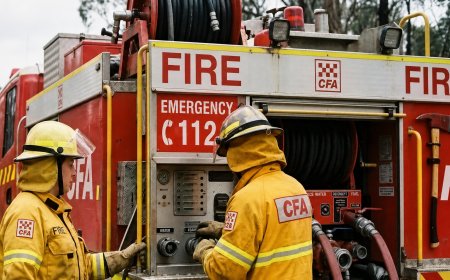
He noted that the climate whiplash witnessed already this year, from flooding rains to heatwaves and fierce fires, sometimes within days, will intensify with rising temperatures, creating more disruption, dislocation and devastation for communities.
Watkins attributed the trend directly to the burning of coal, oil and gas, stating that the further and faster climate pollution is reduced this decade, the safer future generations will be.
The projected figures have intensified scrutiny on industrial emissions and federal resource allocations.
Environmental advocates argue that escalating global averages translate directly into heightened operational and physical risks for regional infrastructure and emergency services.
Climate Council Chief Executive Officer, Amanda McKenzie, characterised the mathematical forecast as extremely worrying, emphasising that every fraction of a degree of warming makes life harder and more dangerous.
She stated that behind these numbers is real climate harm, including more dangerous fire seasons, more intense floods and more devastating heatwaves.
McKenzie leveled sharp criticism at the financial frameworks governing multinational resource extractors, questioning the efficacy of state-supported economic incentives during an active environmental crisis.
She noted that massive, multinational fossil fuel companies who are warming the planet continue to get a billion-dollar free ride through subsidies and foregone taxes.
McKenzie questioned why taxpayers continue to subsidise some of the most profitable companies in the world so they can keep polluting, calling on the government to put the brakes on fossil fuels and pump the accelerator on expanding renewables.
The ongoing temperature trajectory continues to pressure domestic policymakers to accelerate renewable grid transitions.
With baseline infrastructure facing heightened exposure to volatile weather patterns, institutional analysts warn that the cost of deferred regulatory action will directly impact civic stability and industrial productivity across the hemisphere.