A Lifeline of Hope: The Dube Couple’s Mission to Restore Dignity in Forgotten Villages
In Munyanyi Village, Shurugwi, where poverty and caregiving burdens weigh heavily on elderly residents, a steady lifeline has emerged through the philanthropy of Engineer Mncedisi Dube and Ambassador Smelly Dube. Their initiative, S & M Hand of Compassion, delivers monthly food hampers and essentials to vulnerable households across the Midlands Province, offering not just sustenance but renewed hope.
 Dumisani Ndlovu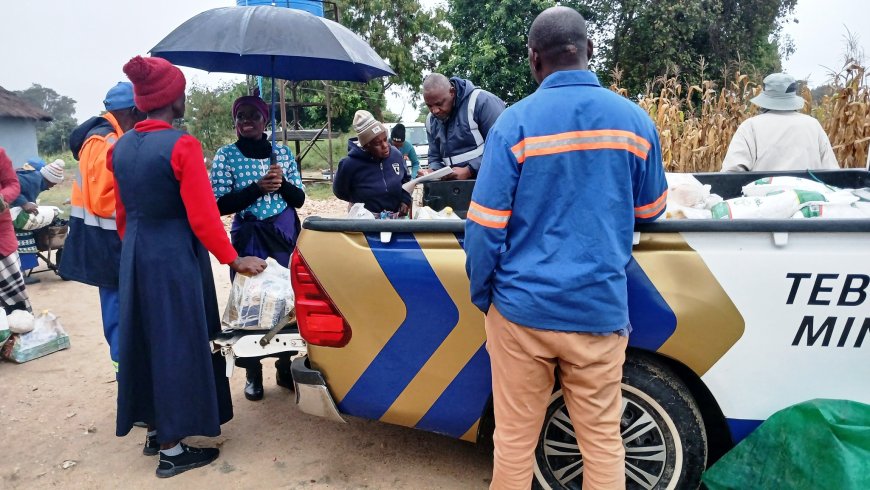
In the quiet, sun-scorched plains of Shurugwi, where survival often depends on the mercy of the seasons, a different kind of relief has begun to arrive—steady, deliberate, and deeply human.
Each month, long before dusk settles over Munyanyi Village in Chachacha, anticipation builds among elderly residents who have become the backbone of fractured families. Many are grandparents raising orphaned grandchildren, navigating the harsh realities of poverty with little to lean on. But for these communities, hope now travels on familiar wheels.
At the heart of this transformation are Gweru-based philanthropists, Engineer Mncedisi Dube and Ambassador Smelly Dube, whose commitment to giving back has evolved into a structured humanitarian lifeline through their initiative, S & M .
What began as a personal promise has grown into a sustained outreach programme targeting some of the most vulnerable households across the Midlands Province.
On their latest visit to Munyanyi Village, the couple delivered food hampers containing maize meal, cooking oil, sugar, beans, rice, chicken, and essential household items. But beyond the groceries, what they brought was less tangible—and perhaps more powerful.
For 69-year-old Molly Marevegwa, the gesture was more than just aid.
“This means we can eat well tonight. My grandchildren will smile again,” she said, her voice carrying both relief and quiet joy.
Across the village, similar sentiments echoed. In communities where assistance is often sporadic or absent, the consistency of the Dubes’ visits has created something rare: certainty.
Christina Mubaiwa, another beneficiary, described the programme as a revival of a fading social fabric.
“Many people leave and never come back. But they remembered us. That matters,” she said.
In a landscape where humanitarian support is often associated with non-governmental organisations, the Dube initiative represents a notable shift. Here, the lifeline is not being delivered by NGOs, but by business leaders reinvesting directly into the very mining communities that shaped their journey.
Shurugwi, a district long defined by its mining activity, has produced many success stories—yet few structured efforts have consistently channelled resources back to the grassroots level in this manner.
By stepping into this space, the Dubes are redefining the role of private sector players in community development—demonstrating that sustainable impact can be driven from within.
For Engineer Dube, the initiative is not charity—it is a fulfilment of a deeply personal vow.
Raised in the same rural environment, he recalls a childhood shaped by simplicity, struggle, and community support.
“I made a promise to myself that if I ever had the means, I would come back and uplift my people,” he said.
Today, that promise is honoured not in words, but in action—month after month.
Ambassador Smelly Dube shares that conviction. With roots in Mberengwa, she has ensured the programme extends beyond Shurugwi, reaching her own home district where similar distributions are already underway.
“We are not just giving food. We are reminding people that they are not forgotten,” she said.
Rural communities across Zimbabwe continue to face mounting socio-economic pressures, with elderly caregivers often bearing the burden of supporting extended families in the absence of younger generations.
Village Head Munyanyi, who has witnessed the impact of the programme firsthand, believes initiatives like this are critical.
“When people succeed,
they should remember where they come from. This is what development looks like at community level,” he said.
The Dubes’ approach stands out not only for its generosity but for its consistency. Unlike once-off donations that offer temporary relief, their monthly outreach has become a dependable support system—one that families can plan around.
While their work continues to change lives in tangible ways, the couple sees their mission as part of a broader movement—one that challenges business leaders to take a more active role in social responsibility.
They are calling on other professionals, entrepreneurs, and individuals with rural roots to take similar steps—no matter how small.
“You don’t need a lot to make a difference,” said Eng Dube. “What matters is starting.”
As the sun dips behind the rolling hills of Shurugwi, elderly villagers walk back to their homes carrying bags of groceries—symbols of relief in a landscape where scarcity is common.
But perhaps more importantly, they carry something less visible: renewed hope.
In a world where many rural communities feel left behind, the work of Engineer Mncedisi Dube and Ambassador Smelly Dube is quietly rewriting that narrative—not as external aid providers, but as sons and daughters of the soil returning to uplift their own.
One village, one family, one meal at a time.