The Legal Battleground: Common Purpose vs. Active Restraint
A human interest feature on the Gweru High Court trial where three men received 20-year sentences for murder under the doctrine of common purpose, despite claims that one accused tried to prevent the killing.
 Dumisani Ndlovu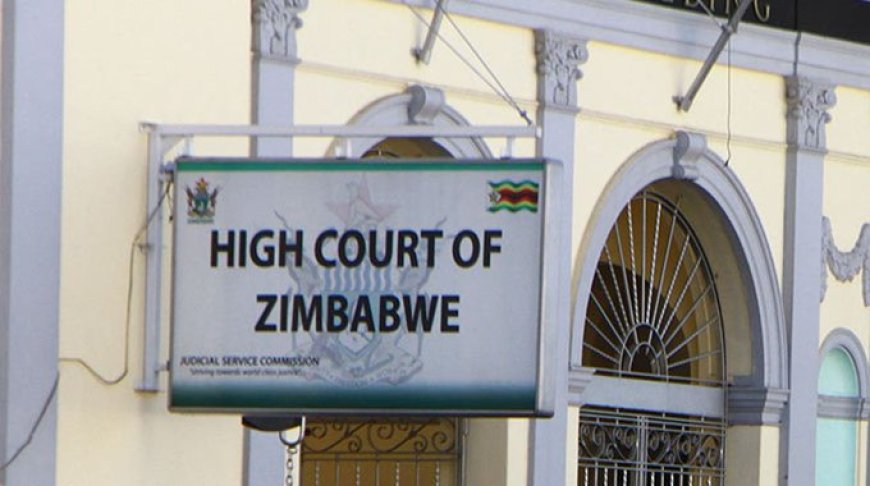
Gweru— The courtroom air was heavy with the weight of an impending two-decade sentence, but for defence counsel Charles Chigomere of Mutatu and Partners, the fight was over something far more fragile than simple freedom: it was a desperate, high-stakes battle against the crushing machinery of collective guilt.
In a gripping murder trial that played out at the High Court circuit in Gweru, the doctrine of common purpose became the ultimate battleground. Three men—Bornwell Matonhodze, Artwell Sibanda, and Donald Sibanda—stood in the dock accused of the brutal, fatal assault on Josphat Ncube. Yet as the trial reached its dramatic climax, the entire case narrowed down to a single, devastating question of law and human intent: can a man be condemned for a murder he actively tried to prevent, simply because he was standing in the shadow of the killers?
State Prosecutor Michael Mhene built the prosecution’s case on the unforgiving legal doctrine of common purpose, asking the court to hold all three accused persons collectively responsible for Ncube's death.
The prosecution argued that the evidence clearly established the essential legal elements linking each man to the fatal assault: their physical presence at the scene, clear awareness that violence was unfolding, an intention to participate or foresight of the possible criminal consequences, and conduct demonstrating active association with the group's actions.
Mhene insisted that the men could not untangle their actions from the resulting tragedy, arguing directly to the bench:
"An accused person cannot simply rely on the fact that another member of a group carried out the fatal act where the evidence establishes that he had associated himself with the common criminal purpose."
Assessing their conduct within a single, unbroken sequence of events, the prosecution contended that their collective actions demonstrated the requisite association with an unlawful enterprise.
From the defence table,Charles Chigomere of Mutatu and Partners launched a fierce counter-offensive to carve his client—Donald Sibanda, the third accused—out of the tragedy. He strongly challenged the State’s reliance on common-purpose liability, asserting:
"Mere presence at the scene, knowledge that an assault was taking place, or association with the other accused persons is not, on its own, sufficient to establish criminal liability. The State must prove that the third accused actively associated himself with the criminal conduct and shared the intention to commit the offence."
Chigomere submitted that Donald Sibanda’s physical actions were directed strictly at grabbing his co-accused to restrain them and de-escalate the violence, rather than supporting or participating in the attack on Ncube.
Desperately seeking to draw a line between being present during a violent incident and deliberately associating oneself with an unlawful purpose, the defence asked:
"How could a gesture of restraint be twisted into a pact of death?"
The ultimate burden fell upon the court to decide whether the State had proved, beyond a reasonable doubt, that each accused actively associated himself with the common criminal enterprise and either shared the intention to commit the offence or foresaw and accepted the fatal outcome.
In reaching its decision, the court had to carefully weigh whether Donald Sibanda’s alleged intervention broke the chain of common purpose.
Yet the court ultimately rejected the defence's submissions.
Evaluating the entire sequence of events rather than isolated moments, the judge found that Donald Sibanda's conduct did not break the chain of common purpose linking all three men to the fatal attack. Delivering a stern, uncompromising judgment.
The judge ruled: "The State has proved beyond a reasonable doubt that the crime was committed in aggravating circumstances and under a common purpose. All three accused persons are found guilty of murder as charged."
Praising Prosecutor Mhene for the exemplary manner in which the State presented its case, the court sentenced Matonhodze, Artwell Sibanda, and Donald Sibanda to 20 years’ imprisonment each.
For the family of Josphat Ncube, the verdict brought the somber resolution of justice served.
Accused one, Bornwell Matonhodze, was represented by Kwekwe lawyer Xolani Moyo of Chinamatira Jonasi Nyambira and Tambanewenyu Legal Practitioners, while accused two, Artwell Sibanda, was represented by Tafadzwa Komboni of Dzimba Jaravaza and Associates.
Accused three, Donald Sibanda, was represented by Charles Chigomere of Mutatu and Partners.
But for Donald Sibanda and his co-accused, the 20-year sentence delivered a terrifying, final reality: in the eyes of the law, standing alongside violence can forever entangle a person in its deadly end.