From Patrols to Pixels: How Technology Is Transforming Policing in Shurugwi
Shurugwi's fight against crime is entering a new era as the Zimbabwe Republic Police adopts drone technology to strengthen surveillance and investigations across the district's challenging mining terrain. Through recent court cases, the feature explores how technology is reshaping law enforcement while examining the complex relationship between artisanal mining, organised crime, poverty and community survival.
 Dumisani Ndlovu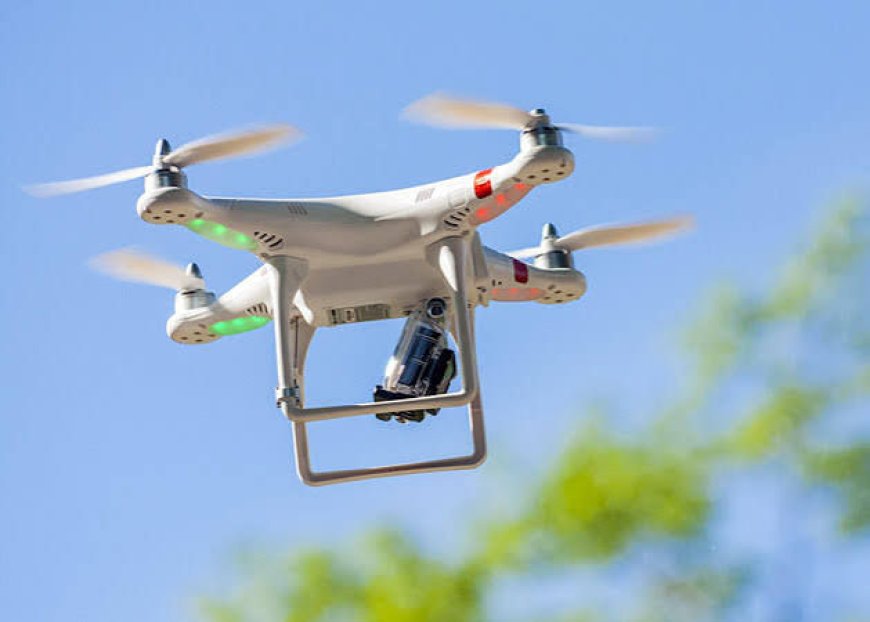
SHURUGWI — When Chief Inspector Hazvinei Jindu stood before mourners at the funeral of veteran poet Brighton Mashazhu and declared, "Shurugwi is no longer a hiding place for criminals," it was more than a tribute. It was a statement of intent.
For decades, this rugged mining district has tested the limits of conventional policing. Criminal suspects disappeared into sprawling artisanal mining camps, commercial centres, commercial farms and isolated villages connected by dusty roads and winding bush paths. Officers often relied on foot patrols, informants and painstaking investigations to pursue offenders across unforgiving terrain.
Today, however, the landscape of policing is changing.
Instead of relying solely on boots on the ground, the Zimbabwe Republic Police (ZRP) is increasingly looking to the skies. Drone technology is becoming a critical tool in surveillance, search operations and crime detection, enabling officers to monitor vast areas that were once almost impossible to police effectively.
The transformation is already being reflected in the courts.
Over the past weeks, more than 15 suspects have appeared before the Shurugwi Magistrates' Court and the Gweru Regional Court facing allegations ranging from murder and armed robbery to unlawful entry and public violence. While every accused person remains innocent until proven guilty, the cases illustrate an intensified law-enforcement campaign against violent crime in the district.
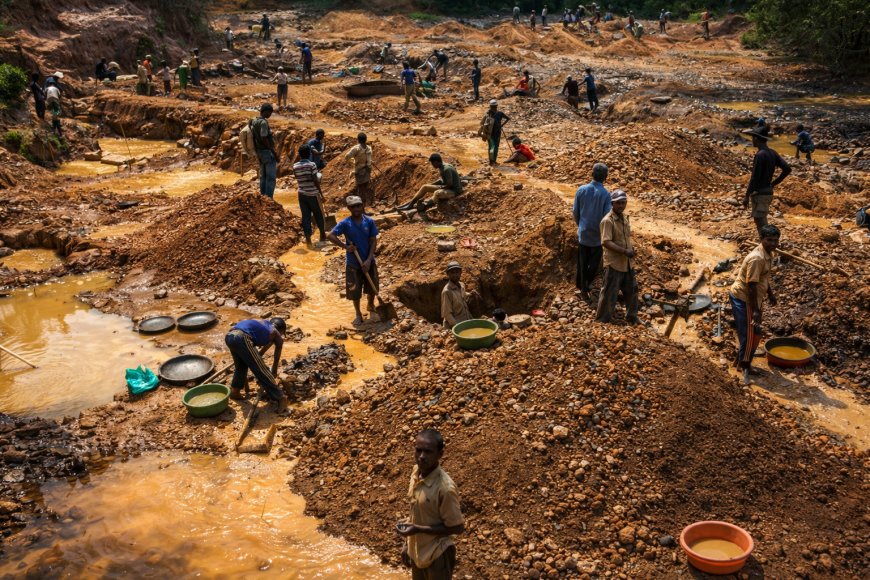
Shurugwi's geography has always been both its greatest asset and one of policing's greatest challenges.
Rich in gold deposits and characterised by scattered mining settlements, commercial farming areas and mountainous terrain, the district has historically provided ideal escape routes for offenders. Illegal mining sites, abandoned shafts and dense bush have often complicated investigations and delayed arrests.
Traditional patrols, however determined, could only cover so much ground.
Technology is beginning to change that equation.
Drone surveillance now allows officers to observe expansive areas from above, monitor suspected criminal activity, trace escape routes and gather aerial evidence following serious offences.
Inspector Jindu says drones are not replacing detectives or community policing, but strengthening them by extending the eyes of law enforcement into places previously beyond immediate reach.
At a press briefling, Commissioner Patson Nyabadza, Officer Commanding Midlands Province, emphasisewd the importance of technological innovation in policing, saying the ZRP is equipping districts with advanced monitoring systems while simultaneously increasing police visibility.
"In terms of curbing crime, which is our core mandate, we are deploying adequate personnel in all areas to enhance police visibility," he said.
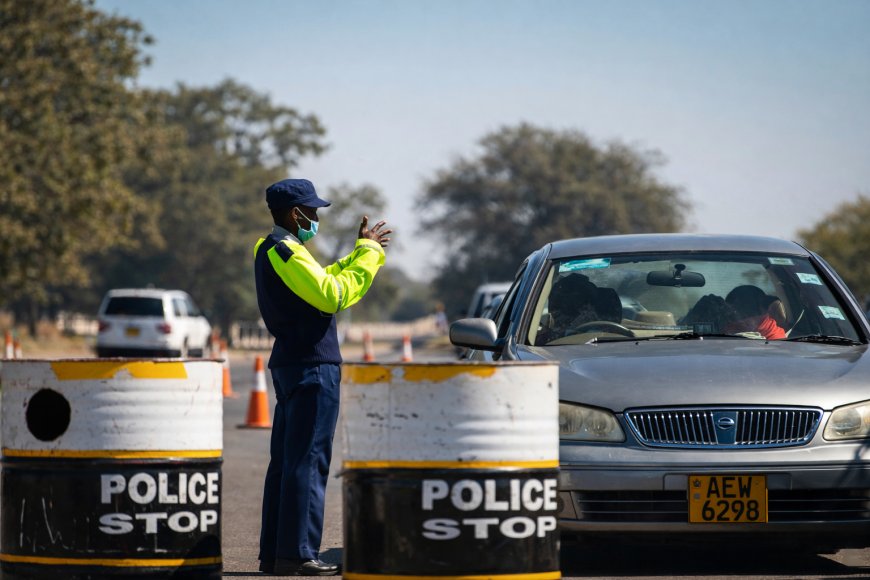
The recent succession of court appearances demonstrates both the diversity and seriousness of crimes confronting the district.
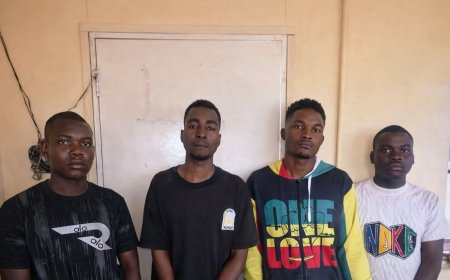
Among those brought before the courts were four accused persons jointly facing allegations of armed robberies involving US$8,000, another US$8,000, US$1,100 and US$2,100, together with the alleged theft of cellphones. Their matter was heard before Gweru Regional Magistrate Sibongile Marondedze, with Sibangani Dube appearing for the State.
Lovemore Shakaod (25) appeared in connection with armed robbery allegations involving US$8,000 and US$2,100 and is also linked to a 2022 murder investigation.
Tafadzwa Hore (22) also appeared before the Gweru court on allegations relating to armed robberies involving US$8,000 and US$2,100.
Dennis Tawagunisa (21) faces allegations of unlawful entry, unlawful possession of a pistol and cash, together with armed robbery allegations involving US$8,000 and US$1,100.
Other accused include Macdonald Chinyowa, Jethro Chimudura (28), Jethro Chukweta and Tatenda Musara (27), all appearing on armed robbery allegations involving US$8,000.
Public violence allegations were brought against Piason Tibanani Ndabele (28), Tinashe Harandaa (23), Anymay Chanadya (20), Panashe Mavhuna (25), Kandawadene Zhai (22) and Luke Sera (23).
Meanwhile, Thembalami Mthethwa (22) was arrested in Shurugwi before being transferred to Birchenough Bridge Police, where he is facing allegations of murdering his 69-year-old uncle, Watson Mthethwa, and stealing a gold wristwatch which was recovered when he was arrested.
Court records show that some accused persons were legally represented while others appeared without counsel. Accused 1 and 3 were represented by Taurai Mabuto of Mandipa, Makwara & Chikukwa Legal Practitioners; Accused 6 was represented by Rashid Parere of Mapfumo Maurese Legal Practitioners; while Accused 4 and 5 were represented by Happiness Magazini of Mukushi & Maupa Legal Practitioners. Others, including Accused 3, 7, 8 and 9, appeared without legal representation.
Collectively, the matters provide a snapshot of the criminal activity confronting investigators and prosecutors as law enforcement intensifies operations across the district.
Crime in Shurugwi cannot be understood without acknowledging the phenomenon that gave rise to the name maShurugwi.
Originally associated with violent artisanal mining gangs operating around Shurugwi and neighbouring Zvishavane, the name has since become synonymous across Zimbabwe with organised groups linked to illegal mining and violent criminal activity.
Armed with machetes, knobkerries and, in some cases, firearms, these groups have been associated with robbery, extortion, rape and murder. Their influence has extended far beyond Midlands Province, leaving communities living under intimidation while undermining lawful mining operations and local economic stability.
The notoriety of the maShurugwi gangs has become one of Zimbabwe's most enduring symbols of the darker side of the country's artisanal gold sector.Successive government interventions have sought to contain the violence while recognising the economic importance of artisanal mining.
Authorities have strengthened police and military deployments, intensified arrests and prosecutions, introduced licensing frameworks aimed at formalising artisanal mining, promoted community engagement programmes through institutions such as the Zimbabwe School of Mines, and launched anti-crime initiatives including Operation Chikorokoza Ngachipere.
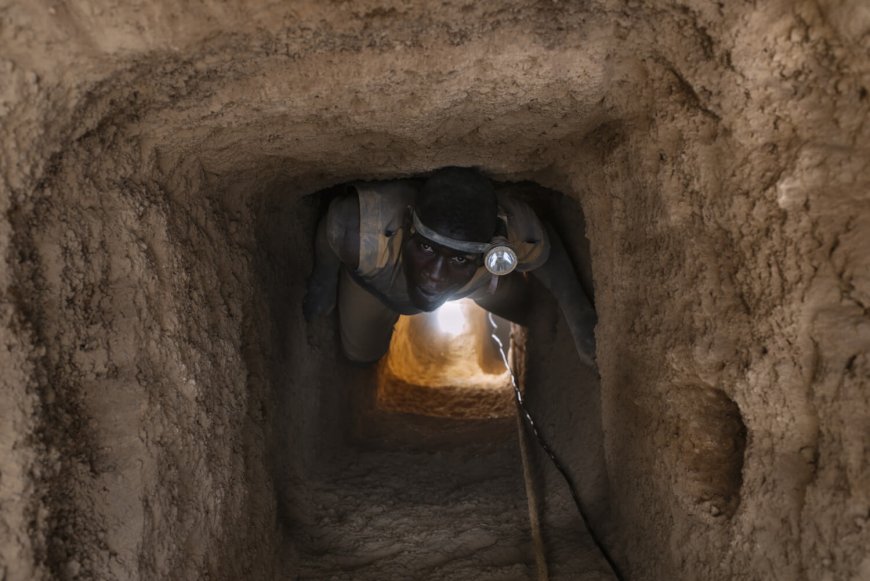
An artisanal miner emerges from a narrow underground mining shaft in Shurugwi, reflecting the harsh realities of small-scale gold mining.
These measures have yielded significant arrests, including 369 suspects apprehended during anti-illegal mining operations in January 2020. Yet the profitability of illegal gold mining and the socio-economic realities driving thousands into the sector continue to present formidable challenges.
Artisanal mining remains one of Zimbabwe's greatest contradictions.
For thousands of families, it provides livelihoods where formal employment opportunities are scarce. Entire communities depend on small-scale gold production for survival.
At the same time, the sector has become intertwined with violent disputes, organised criminal networks, environmental degradation and dangerous working conditions.
Illegal mercury use contaminates rivers and soil. Deforestation scars once-productive landscapes. Women and children in mining communities remain particularly vulnerable to exploitation and abuse.
Across Africa—from Ghana and Tanzania to the Democratic Republic of Congo—artisanal mining contributes significantly to national economies while simultaneously presenting governance, environmental and security challenges. Zimbabwe reflects this same paradox: a sector that sustains livelihoods while also generating conditions that fuel violence and lawlessness.
Shurugwi today stands at the intersection of tradition and technology.
The district's rocky hills, mine shafts and scattered settlements and not changed. Neither have the economic pressures that continue to draw thousands into artisanal mining.
What is changing is the way law enforcement responds.
Drone technology is giving police unprecedented visibility over terrain that once concealed offenders, complementing conventional investigations rather than replacing them. The growing number of arrests and court appearances suggests that technology is becoming an increasingly important weapon in the fight against violent crime.
Yet drones alone cannot resolve the deeper forces shaping Shurugwi's story.
Behind every arrest lies a wider narrative of poverty, opportunity, migration, mineral wealth and survival. The district's future will depend not only on smarter policing, but also on creating economic alternatives that reduce the conditions in which violence flourishes.
As drones now hover above mine dumps, villages and winding bush roads where officers once relied only on foot patrols, Shurugwi offers a glimpse of policing's future. The district is becoming a place where pixels increasingly guide patrols, where technology strengthens justice, and where the long pursuit of law and order is being rewritten from the ground—and from the sky.