Category Controversy at Midlands 2026 Skills Fair
Midlands artists have criticised the Ministry of Skills Audit and Development’s Skills Fair Competitions for placing musicians, poets, and dramatists under a single arts category. The programme, running from May 5 to June 15, 2026, aims to identify talent and promote rural industrialisation.
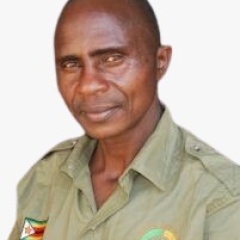 Dumisani Ndlovu
Gweru - A wave of anger has erupted among Midlands artists after the Ministry of Skills Audit and Development’s Skills Fair Competitions reportedly placed musicians and poets in the same arts category, sparking accusations that the structure is undermining both visual and performing arts.
The national programme, which runs from May 5 to June 15, 2026, is designed to identify talent, promote rural industrialisation and bridge skills gaps across seven competition categories.
Inception meetings were held in districts including Rushinga, Mbire, Matobo, Bulilima and Gweru, with mobilisation extending to both rural and urban communities.
But in the Midlands, artists say the arts category has become a source of frustration rather than empowerment, arguing that fundamentally different art forms are being forced into unfair competition.
A musician from Gokwe described the arrangement as confusing and demoralising.
“How do you compare a song to a poem? These are different languages of expression. What they are calling competition is actually the destruction of fairness in arts.
“We were ready to showcase our music, but now we are told we are competing against poetry. It feels like the value of our work is being reduced,” he said.
At the inagural fair, poet Pugen Tarirai from Gokwe South said rural creatives had entered the programme with high expectations of exposure and development, only to be met with disappointment.
“As poets from rural areas, we thought the Skills Fair was a big opportunity to showcase our talents in line with inclusive development and to grow and get marketed.
“But what we witnessed here was disappointment of the highest degree.
"It is unheard of that it became a mixed bag of arts disciplines, musicians, poets and dramatists made to compete under one category.
"It was unfair and illogical. We were deeply hurt and crushed in spirit,” he said.
He urged organisers to engage knowledgeable arts stakeholders to avoid similar situations in future, warning that failure to correct the structure could undermine national development ambitions.
“If this is not fixed, we will never achieve Vision 2030 which is being preached by the President of Zimbabwe, Cde E.D. Mnangagwa.
“As Zimbabweans, we must fairly promote each other without favouritism," he said.
In Shurugwi, a poet expressed similar disappointment, saying the format ignores the distinct nature of performance and written expression.
“Poetry is rhythm, voice, emotion and depth. Music is instrumentation, melody and composition.
“Putting us in one basket is not unity, it is erasure. It is like asking a painter and a sculptor to be judged with the same brush.
"For example, making basket ball team compete with a soccer team. Or a boxer compete with a rubgy team. Does that make sense?" Said one female musician.
Gokwe South musician Arthur Tatenda Mhoswa also castigated the arrangement, describing it as damaging to the arts sector.
“This is highly unprofessional and uncalled for. How can drama actors compete with musicians and poets? I doubt whoever ordered that was in their normal senses.
"Even in music there are categories, reggae is not jazz, sungura cannot compete with choral music. So why mix all arts together?” He said.
He called for urgent professionalisation of the categories to protect artistic integrity and ensure fair evaluation.
“This is killing the arts spirit rather than promoting it,” he added.
Veteran poet Brighton Mashazhu argued that the structure reflects disregard for artistic disciplines and accused organisers of failing to properly segment the categories.
“They must not make us a mixed bag. In other categories everything is clear, from number one to four per category, but in arts it was different altogether.
"I think this was by design. Whoever planned this has an attitude towards arts and does not wish it to grow," he said.
He further questioned the inclusion of certain musical groupings alongside poetry and drama without clear classification.
“How can you mix Mapiyano musicians and Cluks boys with poets and dramatists?” he said.
Adding another dimension to the controversy, a judge involved in the competitions who spoke on condition of anonymity, defended the evaluation process while distancing adjudicators from the final selection outcome.
The judge said the panel carried out its mandate professionally and produced rankings from number one to four across the respective arts sub-sections, including music, drama and poetry.
“Our duty was to judge, and we did our work well. We came up with number one to four in each category, music, drama and poetry.
“Please note that after everything is said and done, we informed the Skills Audit officials of the results.
"However, we were later told that they would only take number one in poetry, number one and two in drama, and number one and two in music. It was beyond our control," the judge said.
The revelation has further fuelled concern among artists, who argue that the final selection process undermines the integrity of the judging system and raises questions about transparency in implementation.
A cultural coordinator based in Midlands said the core issue is not participation, but design and governance.
“No one is rejecting the Skills Fair. What artists are rejecting is a system that treats all art forms as interchangeable and then overrides professional adjudication," the coordinator said.
As criticism grows, pressure is mounting on organisers to review the arts category framework, with calls for separate sub-categories for music, poetry, visual arts, dance and theatre, and for greater respect of independent judging outcomes.