
Calls to Lower Voting Age to 16 Gain Momentum in Australia
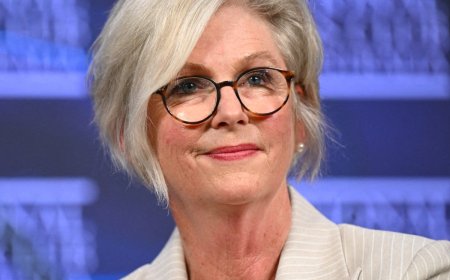
By Harry Taruva — Professor Judith Bessant has called for Australia to lower the voting age from 18 to 16, arguing that the change would give young people greater representation and encourage long-term policymaking.
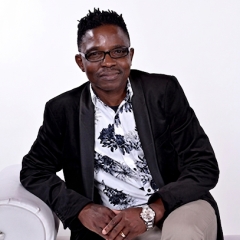 Harry Taruva

Melbourne — An Australian University professor has called for the voting age to be lowered from 18 to 16, arguing that the change would give young people a greater voice in democracy and encourage politicians to consider long-term policy issues.
Professor Judith Bessant, from the Royal Melbourne Institute of Technology (RMIT) University's School of Global, Urban and Social Studies, said existing age restrictions were discriminatory and based on assumptions about young people's maturity and ability to make political decisions.
"Age limits on voting are discriminatory and arbitrary.
"They rely on assumptions about young people's competence and maturity that are not supported by evidence," Prof. Bessant said.
Prof. Bessant, a Member of the Order of Australia, writes on politics, youth studies, public policy, sociology, media technology and history.
She also advises governments and non-governmental organisations.
She pointed to Austria, Argentina, Malta and Cuba, where 16-year-olds are already allowed to vote, as examples of countries that have adopted a lower voting age.
The debate is also gaining momentum in Britain, which plans to extend voting rights to 16 and 17-year-olds.
Bessant argued that excluding people under 18 from elections denied a significant section of the population the opportunity to choose political representatives.
She cited an estimated 4.9 million young people who are unable to vote because of the current age restrictions.
"Lowering the voting age could move politicians away from the politics of short-termism to longer-term thinking, developing policies that will take us into the future," she said.
The professor also questioned why young people faced a different standard from older voters when it came to assessing their ability to participate in elections.
"And importantly, we do not test any other age group for their cognitive capacity, political knowledge or civic maturity before 'letting' them vote.
"There is no compelling reason to apply a different standard to young people," she said.