
Analysts Warn Of Chinese 'Dual-Use' Port Strategy in Africa As Its Military Footprint Expands
Observers raise alarms over China’s involvement in 78 African trade ports, suggesting that commercial infrastructure at strategic maritime choke points is being built to military specifications for potential naval use.
 Harry
Harry
By Own Correspondent
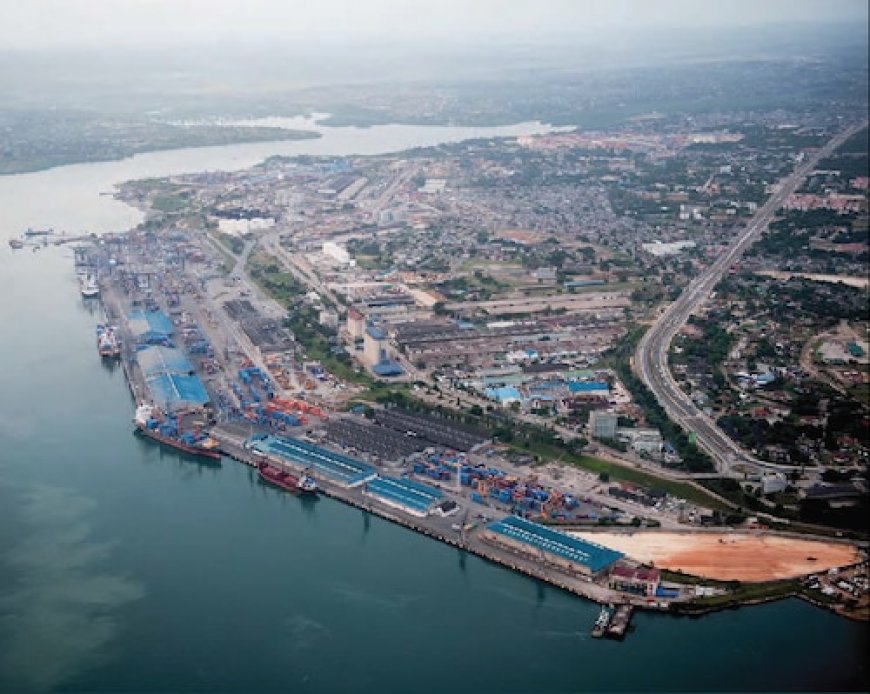
Mombasa - China’s extensive investment in African maritime infrastructure is increasingly viewed by security analysts as a coordinated strategy to project military power under the guise of commercial development.
New data from the Africa Center for Strategic Studies reveals that Chinese firms now have a presence in more than one-third of all African port developments. As part of Beijing’s Belt and Road Initiative (BRI), China has financed, built, or secured operational stakes in approximately 78 ports across the continent, positioning itself at the world's most critical maritime choke points.
"African ports matter to China for one simple reason. They sit at the choke points of trade," said Irina Tsukerman, president of Scarab Rising Inc. quoted in the Africa Defense Forum magazine online.
"The fastest way to shape that flow is to shape the ports where cargo is cleared, stored, priced, and routed onward," Tsukerman said.
The primary concern for Western observers is the "dual-use" nature of these facilities. Experts suggest that at least seven Chinese-backed ports in Africa feature design specifications, such as depth and berth length, that allow them to accommodate large naval vessels, even if their primary function remains commercial.
Specific sites of concern include:
•Mombasa, Kenya: Satellite imagery indicates a 245-meter military-grade dock capable of berthing surface combatants, including guided-missile destroyers.
•Walvis Bay, Namibia: Designed with the capacity to house up to eight Chinese guided-missile destroyers.
•Luwanda, Angola: Capable of hosting major Chinese surface combat vessels.
•Victoria, Seychelles: Suitable for modern littoral combat-oriented corvettes.
A 2024 research paper from the Royal United Services Institute (RUSI) notes that building to "dual-use" specifications allows Beijing to avoid international suspicion regarding naval buildup. However, these facilities can be "flipped" to military use with minimal notice.
The precedent for this transition was established in Djibouti.
In 2017, the Chinese-developed Doraleh Port opened as a commercial achievement.
Within months, reports say China inaugurated its first overseas military base just minutes away, providing the People’s Liberation Army Navy (PLAN) with exclusive access to at least one berth overlooking the strategic Bab-el-Mandeb Strait.
"The proximity between port and base reflects the integration of Chinese commercial and military interests," wrote researcher, Monica Wang, for the Council on Foreign Relations.
While Beijing’s 2019 defense white paper officially called for a shift toward "far seas maneuvering operations," China continues to maintain a public stance of non-interference.
Nevertheless, PLAN warships have already been documented docking at facilities in Lagos, Durban and Dar es Salaam.
"My assessment is that China will definitely build a new military base in Africa," said Paul Nantulya, a research associate at the Africa Center.
"But it is difficult to guess which port will be selected for this purpose," he said.