2026 Aussie Budget: Labour Grasps the Nettle on Housing Tax, Leaves Climate Action in the Dust
The 2026-27 Australian Budget introduces landmark housing reforms, targeting "sacred cows" through negative gearing and capital gains tax changes to assist first-home buyers. While the government committed A$2 billion to housing infrastructure and made Medicare Urgent Care Clinics permanent, it faced heavy criticism for maintaining A$19 billion in fossil fuel subsidies. Environmental and education sectors labeled the plan a missed opportunity, arguing that massive support for coal and gas giants undermines Australia’s long-term climate goals.
 Harry Taruva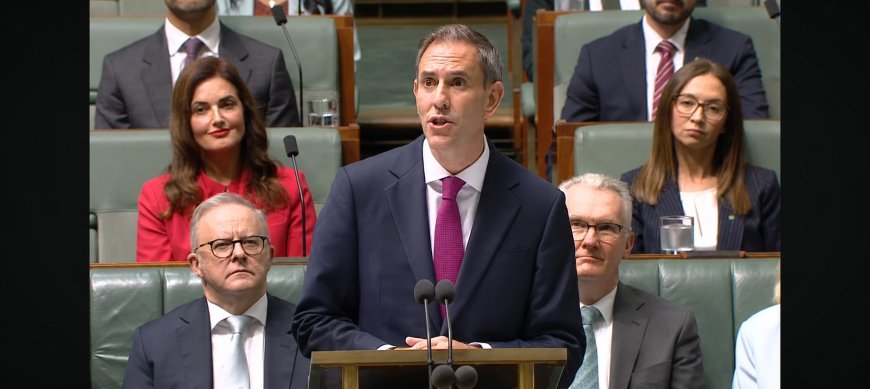
Canberra - The Albanese administration has delivered a 2026-27 Federal Budget that reads like a tale of two nations; one seeking to dismantle the "sacred cows" of a broken housing market, and another doubling down on a multibillion-dollar "gravy train" for fossil fuel giants.
The Australian Federal Budget for 2026-27, handed down yesterday, May 12, details approximately A$833.2 billion in total expendoture.
In a fiscal roadmap defined by structural shifts and reported missed environmental opportunities, Treasurer Jim Chalmers has triggered a firestorm of debate across the Pacific, with reactions ranging from cautious praise for tax equity, to scathing rebukes over climate "missteps."
At the heart of the government’s agenda is a bold, politically sensitive strike at the Australian housing crisis.
For decades, the system has been criticised for favouring established wealth over aspiring homeowners.
This year, the government signaled a definitive end to that era by reforming negative gearing and capital gains tax (CGT) arrangements.
"Australia should not be a country where the system makes it easier to accumulate multiple investment properties than it is for younger Australians to buy a first home," declared Rob Stokes, Chair of Faith Housing Australia.
"These reforms begin addressing some of the long-standing ‘sacred cows’ of housing policy in a measured and practical way, while continuing to support investment in new housing supply.
"The Albanese Government deserves credit for being willing to engage with structural reform in the housing system, not simply short-term measures," Stokes said.
The reforms are designed to redirect investment toward new housing stock, with the government projecting that approximately 75,000 new homeowners will be ushered into the market over the next decade.
The move is bolstered by a A$2 billion Local Infrastructure Fund intended to unlock housing delivery and A$59,4 million targeted specifically at community housing for young people at risk of homelessness.
Michael Livingstone, acting Chief Executive Officer (CEO) of Jesuit Social Services, echoed the sentiment that tax reform was long overdue.
""It is encouraging to see reform of our tax system, which for too long has overwhelmingly benefitted the wealthy," he said.
"Without access to stable housing, it is near-impossible for marginalised people to escape entrenched disadvantage.
"It is vital that housing supports are targeted to go towards those most in need," Livingstone said.
While the housing sector celebrates a shift toward equity, the climate and energy sectors are however reeling from what they describe as a "patchwork" budget that keeps Australia tethered to the past.
The Australian Conservation Foundation (ACF) launched a blistering critique, noting that the budget allocates seven times more spending to initiatives that damage the climate than to those that protect it.
"This is a budget of thinly veiled fossil fuel subsidies that redirects public money to coal, oil and gas giants," said Annika Reynolds, ACF’s national climate policy adviser.
"Australians are left exposed to highly inflationary fossil fuels in our homes, cars and lives.
"In this moment, Australians are calling for government to tax gas exports fairly and use that money for cost-of-living relief and the restoration of nature," Reynolds noted.
The figures are staggering with the budget maintaining a A$46,2 billion Fuel Tax Credit scheme, allowing multinational mining corporations like BHP and Glencore to access tax-free diesel.
Furthermore, a A$10 billion fuel security package was confirmed, intended to buffer the nation against oil price shocks, a move that critics say treats the symptom rather than the disease.
Climate Council CEO Amanda McKenzie was unequivocal in her assessment of the priorities.
"This Budget maintains the A$19 billion gravy train for big fossil fuel corporations," she said.
"That is A$19 billion in the wrong direction, keeping us tied to foreign oil, rather than supporting the expansion of renewable energy solutions that Australians want to deliver a safer, cleaner, more secure energy future."
The Climate Council’s frustration is shared by Rewiring Australia, which argued that the government missed the cheapest way to solve energy security by helping households transition away from petrol and gas entirely.
Rewiring Australia CEO, Francis Vierboom, noted the irony of the government’s massive investment in stockpiling fuel.
"This Budget spends billions preparing for the next oil shock but misses the chance to help families use less petrol and gas in the first place," Vierboom stated.
"Fuel stockpiles can help manage an energy crisis, but household electrification helps prevent one.
"The real energy security measure is not more imported oil. It is Australian homes and cars running on Australian electricity," he said.
In the realm of healthcare, the budget offered a mix of permanent solutions and "unfinished business."
The government committed A$1,8 billion over five years to make Medicare Urgent Care Clinics a permanent fixture, a move welcomed by Bupa APAC CEO Nick Stone.
"Medicare Urgent Care Clinics play a critical role in ensuring people can access the care they need, when they need it, and in the right setting," Stone said.
"But, to future-proof our world-class health system for generations to come, we need to recognise that we have to invest in both the public and private systems so they can work seamlessly together," he said.
The Australian College of Nursing (ACN) however warned that the celebration should be tempered.
Acting ACN CEO Dr. Zach Byfield pointed out that significant nursing reforms remain in the shadows.
"Big-picture health reform, especially for nurses and nursing, remains unfinished business," he said.
"We urge the Government to release the much-anticipated National Nursing Workforce Strategy... Funding the National Nursing Workforce Strategy is vital to ensure Australia has the nursing workforce in the right numbers in the right places to care for our growing and ageing population."
Education, too, saw a budget that failed to ignite hope for a structural overhaul. The National Tertiary Education Union (NTEU) expressed deep disappointment that the government failed to scrap the "Jobs Ready Graduates" scheme, a legacy of the previous administration.
"Jobs Ready Graduates has been a policy dumpster fire that this government didn’t start, but it has failed to extinguish," said NTEU National President Dr. Alison Barnes.
"This is a fundamentally unfair, ineffective and corrosive model that is widely seen as an abject failure. It punishes students and cuts funding Failing to fix Job Ready Graduates with a government now in its second term is beyond disappointing."
On the social justice front, the budget received a lukewarm reception.
While some welcomed the A$300 million for employment service reforms, others pointed to the glaring omission of increases to income support payments like JobSeeker.
Michael Livingstone of Jesuit Social Services noted that "income support recipients are continuing to bear the brunt of our current cost-of-living crisis," and called the budget a "missed opportunity to ensure all members of the community can live life with dignity."
Internationally, the budget drew criticism for its shrinking footprint.
Plan International Australia CEO Susanne Legena acknowledged the government’s effort to hold aid steady but highlighted a worrying trend. "Australia’s aid investment has slipped even further as a percentage of our total national federal budget, down to just 0,63%... a historic low," she remarked.
As the dust settles on the 2026-27 Federal Budget, the Albanese government finds itself at a crossroads.
It has demonstrated a willingness to touch the third rail of Australian politics by reforming property taxes, yet it remains heavily criticized for its fiscal loyalty to the fossil fuel industry.
Australians trying to buy their first home, there is a glimmer of hope; for those concerned about the warming climate and the rising cost of energy, the budget feels like a fortress built of coal and oil, protecting the status quo while the future waits at the gates.
In the words of WWF-Australia's Nicole Forrester, "Nature underpins our economy, our food systems and our communities, yet it only receives a fraction of the funding it needs. Scaling up renewable energy, restoring landscapes and investing in nature-based solutions will... build the kind of long-term prosperity that no fuel stockpile can buy."
For now, Australia watches to see if these structural seeds will grow into a more equitable nation, or if they will be choked by the persistent fumes of a 20th-century energy model.