ZANU PF Youth Leader Calls for African-Led Rewriting of Liberation History
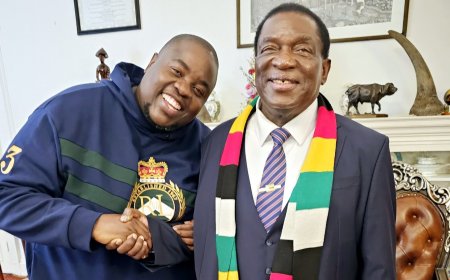
Renewed calls are emerging in Zimbabwe for citizens to reclaim and document their liberation history through locally driven narratives. ZANU-PF Youth League official Yemurai Takudzwa Guvheya has urged historians to capture firsthand testimonies from liberation war participants, arguing that much of the existing record was authored by foreigners and lacks authenticity.
 Dumisani Ndlovu
Gweru - Renewed calls for Zimbabweans to reclaim and document their liberation history are gaining traction, with a ZANU-PF Youth League official urging a shift toward locally driven narratives grounded in firsthand accounts.
Yemurai Takudzwa Guvheya in an interview with Kwedu News, statef that much of the country’s historical record was authored by colonialists, limiting the authenticity of liberation war accounts.
“Most of the history we have was written by imperialists,” Guvheya said, arguing that this has shaped and, in some cases, distorted narratives of the liberation struggle.
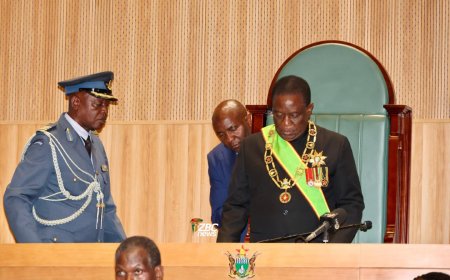
He called for Zimbabwean historians to take the lead in documenting testimonies from liberation war participants and key figures, including President Emmerson Mnangagwa, to produce a more accurate and inclusive national narrative.
Drawing on the philosophy of Chinua Achebe, Guvheya said Africa’s history has often been told from outside perspectives, disadvantaging local voices.
“The challenge is that those who recorded history were not us. As Africans and Zimbabweans, we had few historians at the time and that limited our ability to capture the true experiences of the liberation struggle,” he said.
His remarks come within a broader context of ongoing efforts by national leaders to clarify and strengthen liberation war narratives.
During a visit to Mutapa Hall in April 2025, Vice President Constantino Chiwenga presided over the handover of the Independence Torch and used the occasion to reinforce key historical perspectives.
While touring the facility, the retired general reportedly disputed some of the historical information displayed on the walls, calling for urgent corrections to ensure the accuracy and integrity of the liberation narrative presented at the site.
In his address, Chiwenga gave emphasis to the inclusive nature of the liberation struggle, emphasising that it was not solely fought by armed combatants but supported by civilians, including women who provided food, shelter and logistical backing to freedom fighters.
He also reaffirmed the historical significance of Mutapa Hall, identifying it as the site of the first ZANU Congress in 1964, and cautioning against narratives that may downplay its role in the country’s liberation history.
The Vice President further stressed the importance of unity and cohesion, warning against divisions while encouraging a collective national memory anchored in shared sacrifice.
The clarifications align with growing calls such as those by Guvheya, for a more structured and locally grounded approach to documenting Zimbabwe’s past.
At the centre of this effort are permanent historical displays found at sites like Mutapa Hall.
These displays engraved on glass and stone, fall under glyptic art, commonly referred to as engraved works.
Depending on technique, they are classified as intaglios, where designs are carved into the surface, or cameos, where images are raised in relief.
The written records embedded in these works are known as inscriptions, serving as enduring carriers of historical narratives.
Guvheya said the presence of such inscriptions reinforces the need for accuracy, as they represent authoritative accounts accessible to the public and future generations.
While declining to delve into contested liberation narratives, he maintained that differing accounts highlight the urgency of capturing testimonies from those directly involved.
He added that despite its symbolic importance, Mutapa Hall has yet to fully realise its potential as a major educational and tourism hub.
Guvheya placed responsibility on young leaders and citizens to actively promote and preserve national heritage.
“The older generation laid the foundation. The responsibility to implement, to give value to our heritage, lies with us,” he said.
He emphasised that preserving and accurately documenting history is central to shaping Zimbabwe’s future.
“A nation that does not understand its past risks losing direction. History defines and shapes the future,” he said.
Guvheya’s narrative points to the pressing need to revisit and reorganise Zimbabwe’s historical record by prioritising the accounts of those who directly participated in the liberation struggle, instead of depending on interpretations that may be biased or prone to change over time.